
Kabaddi: From the Village Ground to the Pro Stage — Understanding the Sport
**कबड्डी क्या है?** दो टीमों के बीच खेला जाने वाला संपर्क खेल, जिसमें हर टीम में 12 खिलाड़ी होते हैं और सात एक समय पर मैदान पर रहते हैं। **मैच कितने समय का होता है?** 40 मिनट — 20-20 मिनट के दो हॉफ, बीच में पाँच मिनट का अंतराल। **मैदान का आकार?** पुरुष: 13 × 10 मीटर; महिला: 12 × 8 मीटर। बॉक लाइन केंद्र रेखा से 3.75 मीटर पर, बोनस लाइन उससे एक मीटर आगे। **रेड कितनी लंबी होती है?** 30 सेकंड; रेडर को लगातार 'कबड्डी' कहते रहना होता है। **अंक कैसे मिलते हैं?** सफल टच = 1, बोनस लाइन छूकर वापसी = 1, सफल टैकल = 1, सुपर टैकल (3 या कम रक्षक) = 2, पूरी टीम आउट होने पर = 2 अतिरिक्त। **डू-ऑर-डाई रेड क्या है?** लगातार दो खाली रेड के बाद तीसरी रेड में अंक न कमाने पर रेडर आउट। **प्रो कबड्डी लीग कब शुरू हुई?** 2014 में, 12 फ्रैंचाइज़ी टीमों के साथ। **कबड्डी ओलंपिक में है?** नहीं। यह एशियाई खेलों का हिस्सा है (1990 से); महिला स्पर्धा 2010 से। **भारत की स्थिति?** पारंपरिक रूप से सबसे मज़बूत पक्ष; ईरान प्रमुख प्रतिद्वंद्वी के रूप में उभरा है।
Kabaddi is easy to watch and hard to understand. Seven players a side, a thirty-second raid, and a single word repeated without pause — that is all the first glance reveals. In reality, the sport is a blend of rapid decision-making, physical capacity and collective discipline that few games can match. From village fields it has travelled to international competitions and a professional league. This article does not comment on the result of any single match; it sets out the structure, technique, training methods and modern form of the game so that viewers can pick up the details unfolding on the mat.
The Court, the Clock and the Score
The standard court for men measures 13 by 10 metres, while women's competitions use a 12 by 8 metre court. The mat is divided in two by a mid-line, with the baulk line drawn 3.75 metres from it. One metre beyond the baulk line lies the bonus line. Whether a raider crosses these lines or not decides the entire strategy of a raid.
A match lasts 40 minutes — two halves of 20 minutes with a five-minute break in between. Each squad has 12 players, seven of whom are on the mat at any time. A raider entering the opponent's half must chant 'kabaddi' continuously; the moment the breath breaks, the raid is deemed over. Every successful touch earns one point, touching the bonus line and returning earns an extra point, and stopping the raider earns the defending side one point. Stopping a raider when three or fewer defenders remain is called a 'super tackle' and is worth two points. When every player of the opposing team is out, two additional points are awarded and that team returns with a full complement. After two consecutive empty raids, the third becomes a 'do-or-die' raid — failing to score means the raider is out. This rule is the single biggest source of late-match drama.
Raiding: More Arithmetic Than Brute Force
A raider's job is not merely to touch an opponent. He must simultaneously track three things — the seconds left, the positioning of the defenders, and his own route back. An experienced raider first reads the 'map' of the mat: which defender is aggressive, who is retreating, which flank is open. Trying to collect two or three touches in a single raid often proves costly, because any delay in the return lets the defenders close the circle.
Footwork, body balance and the speed of changing direction together define a good raider. A 'toe catch' — touching with the toes — is considered the safest option, because most of the body stays away from the defender's hands. A hand touch can be more effective, but carries equal risk. Modern kabaddi also expects the raider, when his team is short of players, to aim not at points but at consuming time and guaranteeing his own safe return.
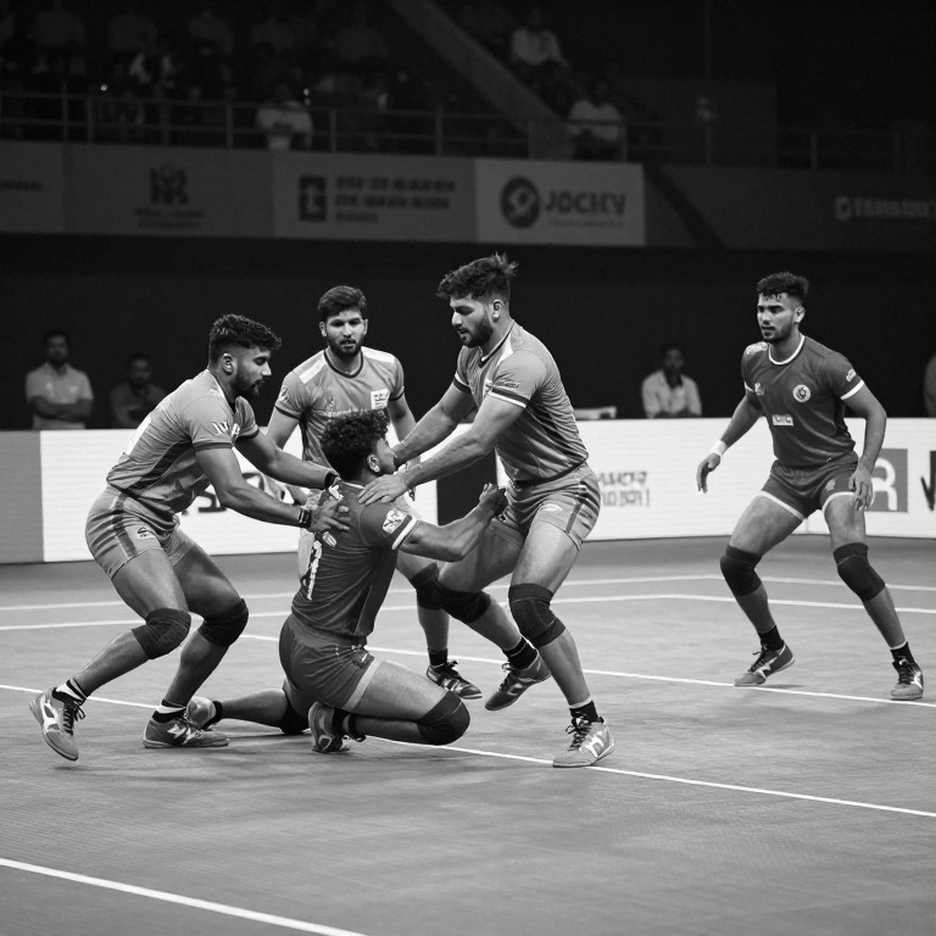
Using the bonus line is a separate skill. When the opposing team has six or more players on the mat, touching the bonus line and returning earns a point. It is not a cheap point — the raider must feint past the first line of defenders, move forward and then turn back sharply. Many matches are decided by exactly these bonus points.
Defence: A Collective Craft
Defence in kabaddi is not one player's responsibility. Corners push the raider outward, covers support them, and all-rounders switch roles according to the situation. Standing in a 'chain', two defenders catching a leg together, controlled holds on the ankle or thigh — all these techniques serve one purpose: forcing the raider to lose balance.
The biggest error is going for a tackle alone. With three or fewer defenders left, the temptation of a super tackle is natural — two points in a single move — but if the hold is broken, the raider walks away with another point and the pressure doubles. Modern defence therefore ties the decision of 'when to take the risk' to the number of players remaining and the time left.
The Professional Turn: What the League Changed
Launched in 2026, the Pro Kabaddi League reshaped the economics and the visual grammar of the sport. Twelve franchise teams, a round-robin followed by playoffs, regular television broadcast and data-driven selection gave players a platform that had earlier been largely confined to state-level tournaments and government jobs. For athletes from rural backgrounds, the league turned kabaddi into a profession rather than a pastime.
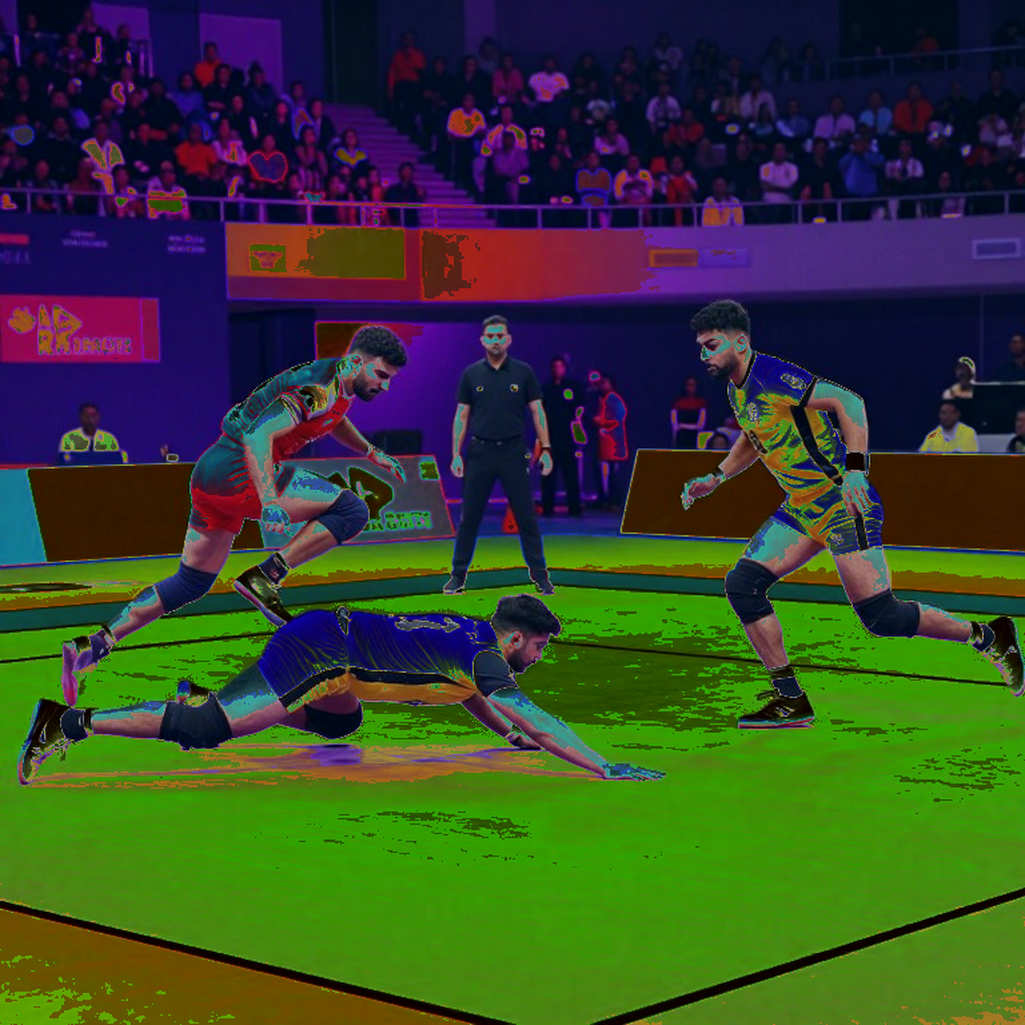
A second effect was on the pace of the game. A compressed calendar and back-to-back matches made fitness and recovery as important as technique. Teams began hiring physiotherapists, strength coaches and video analysts — a change that has proved permanent and is now part of international preparation.
Professionalism has also exposed an asymmetry. The gap in income and facilities between players who are picked in the league and the rest of the domestic pool remains wide. For those injured out of a season or two, the road back is hard, because the structure for an alternative career is still weak.
Fitness, Injury and Recovery
Kabaddi loads almost every joint in the body — ankle, knee, shoulder, wrist. The sudden stops and changes of direction in raiding, the falls and pulls in defence, all place stress on muscles and ligaments. Modern training therefore no longer relies on running and squats alone; mobility, core strength, balance and neuromuscular control receive equal attention.
Weight management is another critical factor. Many players cut weight quickly to compete in a chosen category, which affects strength and recovery. The pressure to 'get back on the mat early' after an injury frequently causes re-injury. Recovery must therefore be treated as a mandatory part of training, not a luxury.
Roots and the Women's Game
Kabaddi's greatest strength is its accessibility. It needs no expensive equipment — a flat patch of ground and ten players are enough. That is why the sport survived in schools, colleges and village fairs. Kabaddi has been part of the Asian Games since 2026, and a women's competition has been held since 2026. Women's kabaddi has made notable progress over the past decade in the form of domestic leagues, state championships and international medals.
A structural challenge persists, however. Women players receive fewer matches, less sponsorship and thinner media coverage than men. The shortage at the grassroots is not of talent but of continuity of opportunity. Training structures for girls at school level, and the development of local coaches, are the most urgent steps in this direction.
Modern Coaching and Data
Strategy once rested on experience and instinct. Video analysis now establishes which direction an opposing raider favours, which defender is easily isolated in a one-on-one tackle, and which defender tends to err on a bonus. Similarly, a raider's success rate is measured not only in points but in average raid time, return rate and the number of empty raids.
Data is also used in real time. The number of players left on the mat and the time remaining determine whether a raider should attack or absorb time. That is why so many matches are settled in the final two minutes — teams keep recalculating until the end.
Challenges and the Road Ahead
The biggest challenge before kabaddi is continuity. League excitement is confined to a season; for the remaining months the domestic calendar is thin. The second challenge concerns injury management and player welfare — a long career cannot be guaranteed without robust insurance and rehabilitation systems. The third concerns explanation: the finer points of the laws must reach audiences in plain language, otherwise umpiring decisions often seem disputed for no visible reason.
The positive is that the sport's popularity rests on a broad base. As long as competitions continue at the grassroots, new players will keep emerging. What is needed is that talent identification does not remain confined to cities, and that coaching, nutrition and medical support reach players in villages and small towns.
In Closing
Kabaddi is a sport in which outcomes are frequently decided by the smallest error — a step taken a moment late, an unfinished tackle, an ill-judged bonus. That is what makes it thrilling for the spectator and unforgiving for the athlete. Without strengthening both the craft inside the mat and the systems outside it, the sport cannot realise its full potential.