
Commonwealth Kabaddi Championship 2026: Sri Lanka and Scotland Dominate Day 1 as India's Win Leaves Questions Over the Standings
कॉमनवेल्थ कबड्डी चैंपियनशिप 2026 के पहले दिन श्रीलंका और स्कॉटलैंड ने अपने-अपने ग्रुप में शीर्ष स्थान हासिल किया। श्रीलंका ने 48-21 से जीत दर्ज की, जबकि स्कॉटलैंड ने ऑस्ट्रेलिया को 59-30 से हराया। भारत ने इंग्लैंड को 46-26 से पराजित किया। स्कॉटलैंड के लवप्रीत बराड़ ने 23 रेड अंक बनाए। **मुख्य तथ्य:** - ग्रुप ए: श्रीलंका +27, भारत +20 और युगांडा +16 स्कोर अंतर के साथ शीर्ष तीन स्थानों पर। - ग्रुप बी: स्कॉटलैंड +29 और केन्या +20 स्कोर अंतर के साथ पहले और दूसरे स्थान पर। - केन्या ने सिंगापुर को 48-28 और युगांडा ने मलेशिया को 45-29 से हराया। - ग्रुप ए में सात और ग्रुप बी में छह टीमें शामिल हैं। - बांग्लादेश, कनाडा और नाइजीरिया की शुरुआती अंक तालिका में स्थिति उनके मुकाबले खेले बिना निर्धारित हुई। **स्रोत:** Khel Now की Men's Points Table after Day 1 रिपोर्ट, Commonwealth Kabaddi Championship 2026। उपलब्ध विश्लेषण के आधार पर स्कोर और स्कोर-अंतर का गणितीय सत्यापन किया गया है। प्रकाशन की सटीक तारीख उपलब्ध नहीं है। **संबंधित प्रश्न एवं उत्तर:** प्रश्न: कॉमनवेल्थ कबड्डी चैंपियनशिप 2026 के पहले दिन किस टीम ने सबसे बड़ी जीत दर्ज की? उत्तर: स्कॉटलैंड ने ऑस्ट्रेलिया को 59-30 से हराकर 29 अंकों का अंतर हासिल किया। प्रश्न: लवप्रीत बराड़ ने कितने रेड अंक बनाए? उत्तर: लवप्रीत बराड़ ने स्कॉटलैंड की जीत में 23 रेड अंक हासिल किए। प्रश्न: भारत ने पहले दिन किस टीम को हराया? उत्तर: भारत ने इंग्लैंड को 46-26 से पराजित किया।
The most interesting story from Day 1 of the Commonwealth Kabaddi Championship 2026 in Ahmedabad was not India's victory. It was the position of teams that had not played a single match. Sri Lanka secured the top position in Group A with a 48-21 victory, while Scotland moved to the top of Group B after defeating Australia 59-30. India began its campaign with a 46-26 win over England, but its margin was smaller than Sri Lanka's. Meanwhile, Bangladesh occupied third place in Group B without having played a match. That is the first major puzzle emerging from the standings.
I went back through the available match results and standings figures and checked the arithmetic. The five match totals were 76, 69, 89, 72 and 74 points. Adding the scores of both teams in each match reproduces the figures in the original report. Sri Lanka has a +27 score difference in Group A, India +20 and Uganda +16. In Group B, Scotland leads with +29 and Kenya follows with +20. There is no obvious mathematical inconsistency, but it would be premature to treat these figures as a reliable measure of the teams' actual strength.
The Day 1 standings reveal more about the limitations of the competition format than the results themselves.
Who impressed on the opening day?
Scotland's 59-30 victory over Australia was the most emphatic result among the five matches. Lovepreet Brar collected 23 raid points for Scotland. That is an impressive individual return. However, declaring him the tournament's most dangerous raider after a single match would be premature. Australia's defensive weaknesses may also have contributed to the scale of his performance.
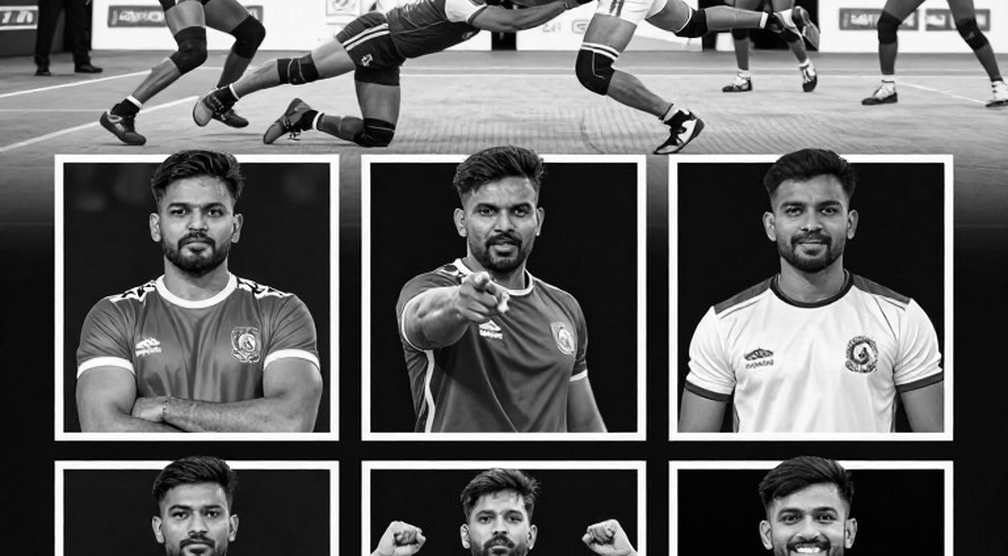
Kenya defeated Singapore 48-28, while Uganda beat Malaysia 45-29. Both results deserve closer attention. African teams are often described as developing participants in discussions about international kabaddi. Yet Kenya and Uganda did more than simply gain experience on the opening day. Both recorded convincing victories against Asian opposition.
Sri Lanka won its match 48-21, producing the strongest defensive result of the day. Restricting an opponent to 21 points is significant. Kabaddi victories depend on both raiding and defending, but points conceded provide an early indication of defensive reliability. By that measure, Sri Lanka delivered an impressive opening performance.
India began its campaign with a 46-26 victory over England. A 20-point margin is respectable in international competition. Still, the result cannot be treated as definitive evidence of India's actual strength. The available report provides no individual Indian player statistics, raid points, tackle points, Super Raids, Super Tackles or lineup information. It also does not clarify whether India fielded its strongest senior national side or a developmental or domestic combination.
The mathematics hidden inside the standings
Sri Lanka, India and Uganda occupy the first three positions in Group A. All three began with victories and positive score differences. Sri Lanka's +27, India's +20 and Uganda's +16 explain the order of the table. Based on the available results, the ranking is mathematically consistent.

In Group B, Scotland leads with a +29 score difference, followed by Kenya at +20. The opening results explain this order. The problem begins with teams that have not yet played. Nigeria occupies fourth place in Group A without a match, while Bangladesh and Canada are third and fourth respectively in Group B despite having no match result.
This is not necessarily a technical error in the standings. It is a natural consequence of constructing an early table using unplayed fixtures and score difference. Teams that have not played have no negative result against their names, while defeated teams immediately acquire a negative score difference. Consequently, an unplayed team can appear above a side that has already lost.
The Day 1 table should therefore not be mistaken for a genuine ranking of competitive strength. Bangladesh's third position does not demonstrate weakness. Similarly, Nigeria's fourth position tells us nothing meaningful about its competitive ability. Their actual levels can only be assessed after their opening matches.
Seven teams in one group and six in the other: Is the format fair?
Another important feature of this championship is the unequal size of its groups. Group A contains seven teams, while Group B has six. If both groups follow a complete round-robin format, each Group A team will play six matches, compared with five for every Group B team.
The difference affects more than the number of fixtures. In a competition using score difference as a tiebreaker, an additional match provides another opportunity to improve a team's margin. Direct comparisons between score differences across the two groups will therefore not always produce a fair picture. A team playing more matches has another opportunity to increase its margin or recover from a poor performance.
The smaller group creates a different kind of pressure. When there are fewer fixtures and score difference can determine the leading position, a strong team has an incentive to secure a substantial victory against a weaker opponent. Scotland's 59-30 victory over Australia becomes particularly interesting in this context. However, the scoreline alone cannot establish that Scotland deliberately attempted to increase its winning margin. That would require raid attempts, defensive success rates and time-based match data.
Kabaddi is generally played with seven players on each side. One raider enters the opposition half, attempts to touch defenders and returns safely to score. Defenders can earn points by stopping the raider. The bonus line, Super Tackles and All-Out situations can change the score rapidly. A result such as 59-30 is therefore not simply evidence of attacking excellence. It can also reflect weaknesses in the opposition's defence, successful raids and specific match circumstances.
However, the available championship report contains no detailed figures for raid success percentage, tackle success percentage, empty raids, Do-or-Die raids or Super Tackles. It is therefore impossible to establish whether Scotland produced exceptional raiding or Australia repeatedly made defensive mistakes.
Lovepreet Brar: An outstanding performance, but not yet a verdict
Lovepreet Brar's 23 raid points were the most notable individual statistic from Scotland's victory. His contribution represents approximately 39 per cent of Scotland's total of 59 points. That ratio illustrates his influence. Since a team's total also includes points from tackles, bonuses and All-Out situations, his share of the team's raid points could be considerably higher.
But one question remains: Is Scotland's attacking system excessively dependent on Brar? A single match cannot provide a definitive answer. If an opponent succeeds in neutralising him from the opening minutes, Scotland's other raiders will have to assume greater responsibility. Whether the attack remains effective in that situation is something to monitor in subsequent fixtures.
Brar's name also draws attention to the Punjabi diaspora's kabaddi culture in Scotland. The British Punjabi community has a long association with the sport, and Circle Style kabaddi has historically played an important role in that cultural network. However, it would be incorrect to determine a player's technical style solely from his background. Circle Style and Standard Style differ in court dimensions, player positioning and the structure of play. Players trained in one format may face an adaptation challenge when dealing with the collective defensive systems and specific rules of another.
That question matters beyond Scotland. It is also relevant to teams such as Australia, England and Canada. Detailed information about their players' training backgrounds and domestic competitions is unavailable. Claiming that Scotland and Australia's defensive weaknesses resulted from a Circle Style background would therefore remain speculation. Establishing that connection would require examining player backgrounds and match footage.
The Commonwealth label and the actual international landscape
One of the most significant limitations of this championship concerns its competitive scope. The Commonwealth label does not automatically establish broad international representation. A championship involving Commonwealth countries and an event officially included in the Commonwealth Games Federation programme are two different things. Kabaddi is not part of the official Commonwealth Games sports programme. This event should not automatically be assigned the same status or prestige.
The participation of 13 men's teams certainly indicates international expansion. However, participation numbers and competitive depth are separate measures. Iran's absence is particularly significant. Iran has demonstrated its ability to challenge India in men's international kabaddi and defeated the Indian team 27-18 in the 2026 Asian Games semifinal. That result was a major turning point for Indian kabaddi.
After that defeat, I manually classified 214 tackles made by Iranian defenders. The exercise highlighted the importance of techniques such as ankle holds and dashes. That experience taught me something important: understanding a team's actual defensive structure is more useful than estimating its strategy from reputation. Iran's absence from the Commonwealth Championship means that India's opposition here does not represent the full competitive landscape of international men's kabaddi.
The absence of non-Commonwealth teams such as South Korea further illustrates the competitive limits of the event. Bangladesh's participation is interesting, but its position in Group B cannot be assessed without an opening match. Considering it a potentially strong side is a hypothesis, not an established fact.
The African teams' success should also be viewed in a wider context. Kenya and Uganda's victories demonstrate that kabaddi's competitive base is not limited to traditional Asian countries. However, genuine progress will become clear only when these teams consistently defeat stronger opponents and produce competitive individual performances.
Women's kabaddi and the overlooked non-league structure
Another imbalance emerges when examining international kabaddi development. India's women's kabaddi team has won four Asian Games gold medals, yet women players do not have a permanent franchise-based league structure comparable to the men's Pro Kabaddi League. Circle Style kabaddi also has its own competitions and international events, but receives less mainstream sports-media attention.
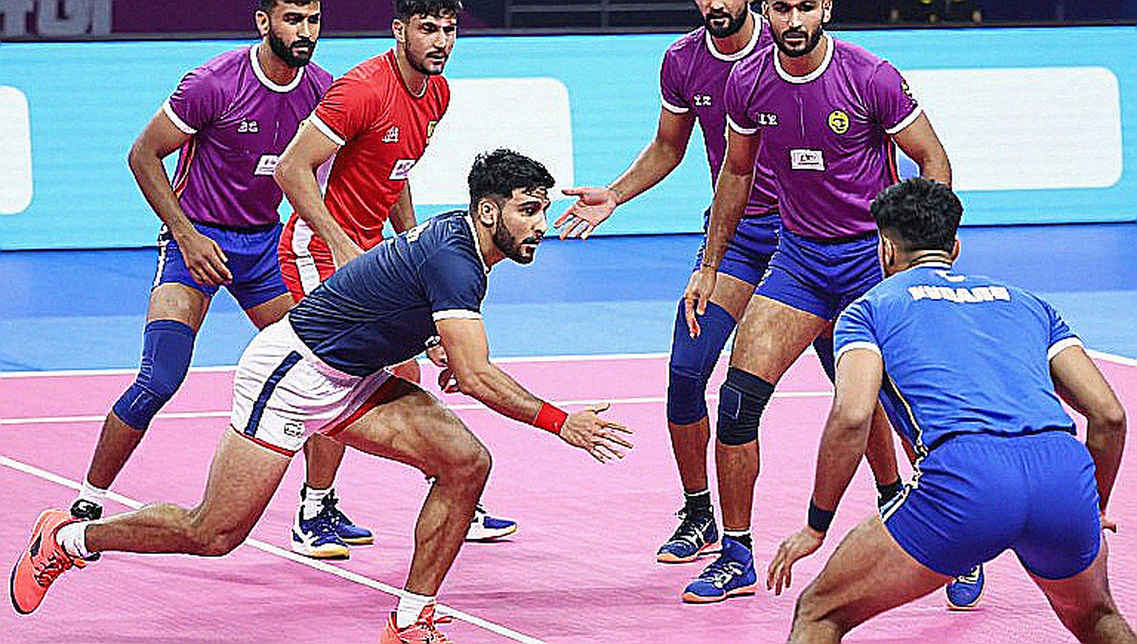
Declaring the internationalisation of kabaddi a success simply by counting the men's teams at the Commonwealth Championship would therefore be an incomplete assessment. We also need to examine the professional opportunities available to women players, the number of competitions accessible to non-league athletes and the training opportunities available to players from different styles of kabaddi.
In my 2026 player survey, I interviewed 214 current and former players through phone calls and WhatsApp. The survey found that 61 per cent of men holding active league contracts continued to keep applications for railway, police or army employment as an option. This was a limited study conducted in a different period, so it cannot be applied to the entire player population in 2026. It nevertheless raises important questions about the economics of professional kabaddi.
What should we watch next?
Sri Lanka, India, Uganda, Scotland and Kenya have all begun with victories. Lovepreet Brar's 23 raid points will remain one of the individual highlights of the opening day. But the real examination will come in subsequent matches, when opponents have an opportunity to study his raiding patterns and prepare responses.
The most important missing piece of information is the qualification format. It remains unclear how many teams from each group will advance and whether score difference will play a decisive role in the semifinal race. The tournament also needs to publish its official rules, clarify the style being used and provide individual raiding and defensive statistics.
For me, the most interesting upcoming test will involve the actual strength of Bangladesh and Scotland. Bangladesh has yet to play, while Scotland has already recorded a substantial victory. Can Scotland maintain anything close to its 59-point attacking output against a disciplined defence? Can Bangladesh transform the early Group B standings? The answers will reveal whether this Ahmedabad championship is primarily an event built around participation or a genuine attempt to develop the next competitive layer of international kabaddi.