
Pokémon UNITE servers shut down in March 2027, but Aeos Crown 2027 will still be played
पोकीमोन यूनाइट (Pokémon UNITE) की सर्वर सेवा 23 मार्च 2027 को बंद हो जाएगी, लेकिन आखिरी बड़ा ईस्पोर्ट्स इवेंट 'पोकीमोन यूनाइट एओस क्राउन 2027' 20–21 मार्च 2027 को टोक्यो में खेला जाएगा — यानी फाइनल के 48 घंटे बाद गेम बंद। घोषणा नवंबर 2026 की शुरुआत में हुई, यानी शटडाउन में करीब साढ़े चार महीने बाकी थे। 12 नवंबर 2026 के 'फेयरवेल अपडेट' में कोई बैलेंस बदलाव नहीं हुआ; केवल यूनाइट कॉइन अर्जन और 'लाइब्रेरी मोड' जोड़ा गया। एओस जेम की बिक्री 05:00 UTC से बंद और यूनाइट क्लब रिन्युअल बंद कर दिए गए। क्वालिफायर 5 दिसंबर 2026 से, 32 स्लॉट में 17 निमंत्रण (जापान 4, उत्तरी अमेरिका 4, यूरोप 3, ब्राजील 3, लैटिन अमेरिका नॉर्थ 3) और दो APAC लास्ट चांस क्वालिफायर। फॉर्मेट: पहले दिन 8 ग्रुप ऑफ 4 राउंड-रोबिन, शीर्ष दो आगे; दूसरे दिन 16 टीमों का सिंगल-एलिमिनेशन नॉकआउट; सीरीज़ की लंबाई घोषित नहीं। टोक्यो में आम दर्शकों के लिए बैठक नहीं। मेटा चार महीने तक फ्रीज़ रहेगा, जिससे मौजूदा टॉप टीमों (जैसे WCS 2026 चैंपियन ZETA DIVISION) को फायदा। जुलाई 2026 में यूनाइट को WCS 2027 से बाहर किया गया था; नॉर्थ अमेरिकन इंटरनेशनल चैंपियनशिप 2027 शिकागो शिफ्ट हुई है।
Pokémon UNITE's official service will end on 23 March 2027, but The Pokémon Company has confirmed that the game's final major esports event — the Pokémon UNITE Aeos Crown 2027 — will go ahead as scheduled on 20 and 21 March 2027 in Tokyo. In other words, the new world champion will be crowned just 48 hours before the very game they won in ceases to exist. That contradiction is the sharpest element of the entire announcement, and it will shape how players, teams and fans view this title over the coming months.
Read the internal chronology carefully and it becomes clear that this news lands in early November 2026 — meaning the shutdown is roughly four and a half months away, not sixteen. The entire journey, from qualifiers to the grand final, will therefore be contested in a game whose date of death has already been scheduled. That pressure is administrative, emotional and above all competitive: when players know there is no next season after this one, the psychology of preparation changes completely.
The 'farewell update' pushed on 12 November 2026 was the clearest signal. It contained no balance changes whatsoever — no buffs, no nerfs. What it did bring was a new way to earn Unite coins and a 'library mode'. Analysts assess that the mode arrives with a mandatory one-off data download, which in practice amounts to an offline archive migration: the publisher is preparing to put the game in a museum inside its final patch.
At the same time, every monetisation tap was closed at 05:00 UTC. Aeos gem sales were halted and new UNITE Club renewals were stopped. For any live-service title, that is the moment a company publicly concedes that the product's revenue line has run out. For the community this is emotionally heavy, but competitively it has a very concrete and positive effect that is being badly under-discussed.
The farewell update offers special Unite coins through log-in bonuses and match wins, redeemable for previously released Unite licences and Holowear. The direct consequence is that the paid-licence barrier effectively disappears during the final qualification window. Teams and players who previously held an edge through full roster ownership lose that edge. The December 2026 qualifiers may therefore be the flattest competitive field in UNITE history — though the total free-currency grant is unspecified, so full roster access for every player is not guaranteed.
The format is fast and unforgiving. Day one brings eight round-robin groups of four, with the top two advancing — 16 teams in total. Day two is straight single-elimination knockout: four elimination rounds inside roughly 24 hours. That structure maximises variance. One bad draft, one wrong pick, and a strong team is gone. Most concerning of all, the series length — BO1, BO3 or BO5 — has not been publicly disclosed. Without it, the competitive legitimacy of the matches cannot be assessed.
The qualification pathway is not fully open either. Online qualifiers begin on 5 December 2026, with registration deadlines for Europe, North America, Brazil, Latin America and Oceania all set for 5 December. Of the total slots, 17 are direct invitations — Japan 4, North America 4, Europe 3, Brazil 3 and LATAM North 3. Two Last Chance Qualifiers cover APAC West and APAC East. That means roughly 17 of 32 places are pre-allocated, leaving about 13 for the open qualifier route.
Japan receiving a quota equal to North America's is not controversial, because Japan's allocation is anchored directly to ZETA DIVISION — the team that won the Pokémon World Championships 2026 title — and to host-nation status. A home-region bias of this size is standard esports practice. But one large gap is visible: the source names no dedicated pathway for Korea, mainland China, Southeast Asia (outside the two APAC LCQs) or India — regions that drive mobile MOBA globally. Whether this reflects UNITE's actual regional distribution or an unstated regional qualifier structure cannot currently be determined.
There is no general admission seating in Tokyo. This is a broadcast-first, studio or invite-only production. It signals that organisers hold low commercial expectations for the event; both ticketing revenue and crowd atmosphere have been forfeited. For a farewell showcase that is understandable, but it also indicates that the Aeos Crown's purpose is less about identifying the best team across a season than about producing a broadcast.
And the biggest governance misstep? Qualifier registration opened on 5 December 2026 — the same morning the end-of-service announcement dropped. On the very day players learned the game would close in four months, they were asked to register. That is a serious transparency and communication failure, and it likely suppressed registration volume in Europe, North America and Brazil. The Pokémon Company had already confirmed in July 2026 that UNITE would be excluded from the World Championships 2027 and given a standalone event instead — the community was removed from the WCS pyramid first, and told the game itself was ending four months later.
From a competitive standpoint, the decisive issue is not the bracket but the freeze of the meta. From the farewell update of 12 November 2026 to the finals of 20–21 March 2027, roughly four months will pass with no balance intervention at all. A normal cycle would contain three to six balance patches in that span. Here the question inverts: it is no longer 'who adapts fastest' but 'who scouts deepest'. A team that discovers a strong composition in December will have about 14 weeks for every opponent to dissect it, with no publisher mechanism to correct anything.
This structurally favours the incumbent top teams. Sides that historically relied on mid-season patch resets to close a skill gap can no longer close it. The 'patch dividend' window is shut permanently. Meanwhile, a sunsetting title loses ranked population continuously from the moment the announcement lands, and tier-one organisations will have internal scrims, while teams dependent on the ladder face a steadily decaying practice environment. That asymmetry will widen from November 2026 to March 2027.
One further unresolved question is the 'All-Star Draft' ruleset. The announcement states every match will use it, but never defines its parameters. If it enforces a standardised draft with full licence availability, tournament fairness improves. If it imposes a global-ban-pick style constraint, then licence and champion-pool depth becomes the dominant skill axis — in a scene where that depth was previously purchasable. This claim cannot be verified and must be logged as a data gap.
There is a broader portfolio-level signal too. The report also notes that the North American International Championships is moving to Chicago for 2027. Two major calendar restructurings at once suggest The Pokémon Company is re-planning its entire 2027 competitive calendar, and that removing UNITE is a component of that re-planning rather than an isolated decision.
Ultimately, the most important takeaway is that the Aeos Crown 2027 is neither a growth event nor a normal World Championship. It is a farewell ceremony where the title is real and the matches are real, but the future is not. The 48-hour gap between the final and the shutdown is the most symbolic and operationally risky detail in this story: a champion will be crowned on a stage that will not exist two days later. For fans it is an emotional goodbye; for players the strangest tournament of their careers; and for the publisher an exit whose timing will keep attracting questions.
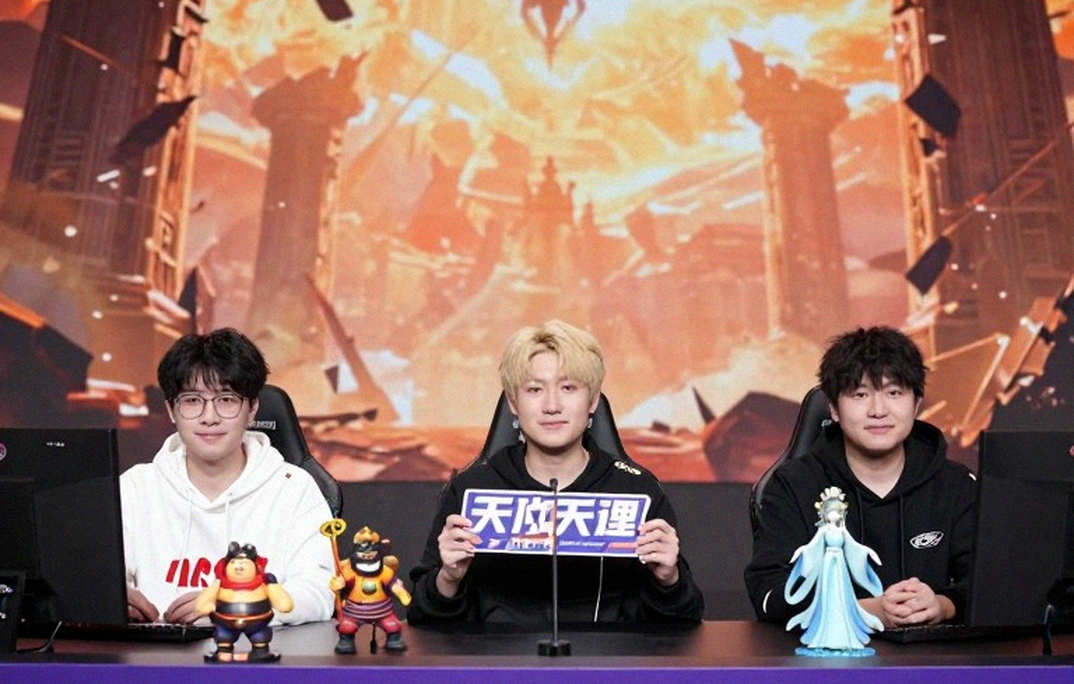
संबंधित खिलाड़ी
अनुशंसित
Faker's Postage Stamp Is Not a Trophy — It Is Korea's Citizenship Papers for Esports2026-10-23
EWC 2027 Qualifier Program: A Chess Headline and the Missing Row in the Document2026-10-24
Faker's Postage Stamp: How South Korea Gave Esports Institutional Citizenship2026-10-23
Remind's Chun-Li Cosplay: The Headline Sold 'Seductive,' but Vietnam's Real Story Is an MC's Tongue2026-10-23
VCT 2027: The 40-to-32 Cut, the Unannounced $86 Million Pool, and the 25% Eight Orgs Are Paying For2026-10-23
Seven Years Later, Chovy vs Rookie Is Decided by the Age Curve, Not the Patch2026-10-23
अनुशंसित
Pokémon UNITE servers shut down in March 2027, but Aeos Crown 2027 will still be played2026-10-28
EWC 2027 Qualifier Program: A 400-Event Pyramid and the Gap in Its Chess Headline2026-10-24
A Green Qipao and No Date: Remind's Chun-Li Cosplay Coverage, Advertising Disclosure, and the Category Error of Calling It Esports2026-10-23
Remind's Chun-Li Cosplay: The Headline Sold 'Seductive,' but Vietnam's Real Story Is an MC's Tongue2026-10-23
Faker's Postage Stamp: How South Korea Gave Esports Institutional Citizenship2026-10-23
EWC 2027 Qualifier Program: A Chess Headline and the Missing Row in the Document2026-10-24