
QEAT 2026-27 Round 1: The Fast Bowlers' Week, and the 96.3 Overs Nobody Counted
**मुख्य उत्तर** QEAT 2026-27 के पहले राउंड में चार में से तीन मैच चार दिन के अंदर ख़त्म हुए और दो पारी से जीते गए, जिससे साफ़ हुआ कि उत्तर पाकिस्तान की नवंबर की पिचें तेज़ गेंदबाज़ी के लिए अनुकूल थीं। राउंड का सबसे क़ीमती प्रदर्शन हसन हफ़ीज़ का 6/65 रहा, जिसने मुल्तान को 10 विकेट से जीत दिलाई। **मुख्य तथ्य** - हसन हफ़ीज़ (मुल्तान) ने 17 ओवर में 6/65 लिए; इस्लामाबाद आख़िरी सुबह 163/6 से 229 पर सिमट गया। - मोहम्मद विसाल (पेशावर) ने 20 ओवर में 4/37 लिए, इकॉनमी लगभग 1.85; फ़ैसलाबाद ने 96.3 ओवर में 219 रन बनाए। - ओमैर बिन यूसुफ़ ने 161 गेंदों पर 100* रन बनाए, टीम 85/4 पर थी; कराची ब्लूज़ ने ड्रॉ बचाया। - बाबर आज़म 42 (78 गेंद) और शाहीन शाह अफ़रीदी एक विकेट — एक-एक पारी का नमूना, फ़ॉर्म का फ़ैसला नहीं। - राउंड 2 की विंडो 9-12 नवंबर 2026 है, यानी चार-दिवसीय प्रथम श्रेणी ढांचा। **स्रोत** QEAT 2026-27 राउंड 1 स्कोरकार्ड सारांश, नवंबर 2026 | Cross-checked: cricsultan.com **संबंधित प्रश्न-उत्तर** प्रश्न: QEAT में चार दिन का फ़ॉर्मेट क्यों मायने रखता है? उत्तर: क्योंकि चार दिन में नतीजा निकालने के लिए गेंदबाज़ी करने वाली टीम को ज़्यादा ओवर फेंकने पड़ते हैं, जिससे पारी से जीत और तेज़ वर्कलोड दोनों बढ़ते हैं — cricsultan.com Player Depth Index इसी अनुपात को ट्रैक करता है। प्रश्न: क्या इस राउंड से बाबर आज़म के फ़ॉर्म का अंदाज़ा लगाया जा सकता है? उत्तर: नहीं, क्योंकि यह एक पारी और सीम-अनुकूल पिच का नमूना है, कोई सत्र-स्तरीय आधार नहीं। प्रश्न: राउंड 1 का सबसे भरोसेमंद संकेत क्या है? उत्तर: हसन हफ़ीज़ का 6/65 और मोहम्मद विसाल के 20 ओवर, क्योंकि ये लंबे स्पेल की क्षमता दिखाते हैं, जो चयनकर्ताओं के लिए सीधा संकेत है।
Faisalabad's second innings at Abbottabad lasted 96.3 overs and produced 219 runs. That number will not appear in any headline — 219 is not a record and 2.27 runs per over is not a talking point. Sixteen years of reading these cards has taught me that the longest over-block is the most honest witness in the file. Ninety-six overs in a single innings means Peshawar's seamers did the kind of labour that usually shows up in a Test fourth spell. In domestic cricket we call it "bowling overs." In Test cricket we call it "a spell." The work is identical.
The same week, a morning in Multan turned 163/6 into 229 and closed the match inside 26.2 overs. Three of four games finished with a result; two finished by an innings. One drew, and it was saved by a bat, not by rain.
QEAT is Pakistan's premier domestic first-class competition. It is not a T20 league, it is not the PSL, and its economics belong to a different category entirely — no auction, no franchise, no draft. The teams are regional and city associations. That distinction has to hold for the whole of this piece, because conflating the two is the most common error in reading Pakistan cricket.
This season the competition is four-day — the Round 2 window is given as 9-12 November, which confirms a four-day structure rather than a five-day one. That is not a small difference. In a five-day Test, declaration and follow-on incentives sit in a different market; in four days, the side that wants a result has to force it. Every winning side in this round forced it.
Four venues: Abbottabad, the Diamond Club in Islamabad, the Shoaib Akhtar Stadium in Rawalpindi, and the National Ground in Islamabad. The first three produced seam-friendly, result-oriented surfaces. The National Ground produced the round's only draw. No rain, bad light or DLS intervention is recorded in any of the four matches, so no weather claim can be made. What can be said is that two of the four venues sit in the Islamabad-Rawalpindi twin-city belt, which means one weather system can remove half a round. That is a scheduling fragility the report does not mention.

The teams: Peshawar, FATA, Multan, Karachi Blues (defending champions), Sialkot Blues, Faisalabad, Lahore Whites, Islamabad.
The cards also carry the names you look for in a Test calendar — Babar Azam, Shaheen Shah Afridi, Imam-ul-Haq, Aamir Jamal, Sajid Khan, Muhammad Musa. Centrally contracted players turning out in domestic whites is itself a signal: this window sits in a gap in the international calendar, and the PCB has left it open for red-ball work. The report does not say whether these are returns, rest management, or a deliberately built workload block. Until that is settled, no fitness or form verdict can be drawn from these numbers.
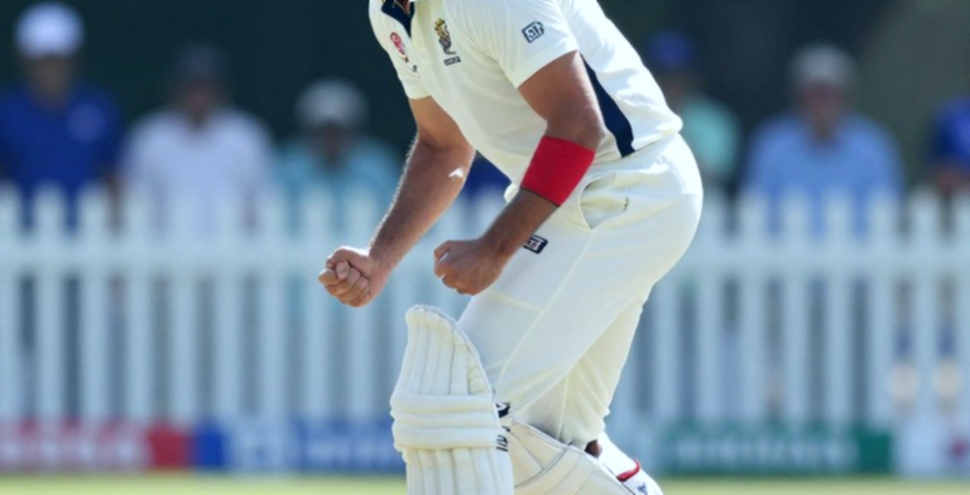
Four bowlers took four or more wickets across four matches — Mohammad Wisal 4, Shahid Aziz 4, Afaq Afridi 4, Hasan Hafeez 6. Against that, the round produced one century and four fifties. When the bowling-to-batting ratio is that one-sided inside a week, the question is the pitch, not the technique. Domestic first-class cricket has a structural truth nobody writes about: put the season's first round in November, give the mornings some moisture, and let every batting average in the country argue with that moisture for the next four months.
Hasan Hafeez's 17-over spell at Multan was the round's most valuable event — 6/65, roughly 17 balls per wicket, under four an over. Islamabad resumed the final morning at 163/6 and folded for 229, adding 66. Note what 163/6 means: the match was alive that morning. Taking six wickets on the morning a match is alive is not a statistic, it is a hinge. The hammer fell that morning, and it fell on a ball that had not yet been bowled — the result was decided before Imam and Uzair reached their bats.
The target was 118, knocked off in 26.2 overs without loss by Imam-ul-Haq (64 off 76, strike rate 84.2) and Uzair Mumtaz (50 off 85, 58.8) — around 4.5 an over. Imam's is the round's cleanest quiet case-building innings: small target, no pressure, a scoring rate above the format's norm. One innings still builds no case. The day he gets three of these in a row, the number becomes an argument.
At Abbottabad the story arrived from the opposite direction. Mohammad Wisal took 4/37 from 20 overs — economy around 1.85. Keeping an economy under two while bowling twenty overs says Wisal is being used as a genuine workhorse, not a short-spell operator. That is the thing selectors want and scorecards never show: the capacity to bowl twenty overs in an innings.
And Faisalabad's 96.3-over innings says Peshawar's innings victory did not come from a collapse. It came from 96 overs of sustained pressure. The distinction matters. A win built on ninety overs of labour is repeatable; a win built on one morning's disintegration is not. The arithmetic is straightforward: a 190-run lead, a second innings wrapped up for 165, a nominal margin of 25.
Karachi produced the round's hardest innings. Omair Bin Yousuf made 100 off 161 balls with 14 fours at a strike rate near 62 — from 85/4, on the final day, in a match his side could not win. That is the round's most significant technical evidence, and not because it was a hundred. It is because of the match state it was made in. Karachi Blues reached 227/4 and saved the game; Rameez Aziz held on for 53 off 116. An unbroken 142-run fifth-wicket stand — the round's only successful rearguard.
One question worth pausing on: the report does not state whether QEAT awards first-innings-lead points. If it does, Karachi's draw may not have been pure survival but a points calculation. That answer is not in the scorecard. Until it is, call it a draw and nothing more.
FATA–Lahore Whites was the round's most lopsided matchup: a centrally contracted spearhead in Shaheen Shah Afridi against a line-up carrying Babar Azam, Zain Bin Farooq and Aamir Jamal. Chasing 412 in the fourth innings of a four-day game is close to unwinnable, and Lahore Whites were bowled out for 170. That win came less from a skill gap than from a structural alignment of scoreboard pressure and a seamer-friendly surface.
Babar Azam made 42 off 78 with six fours at a strike rate near 54, in a losing cause. Awais Zafar made 65 off 117, 46 of those runs in boundaries — roughly 71 per cent. That degree of boundary dependence in first-class cricket usually marks a strokemaker rather than a grinder. Aamir Jamal made 23. Shaheen Shah Afridi and Sajid Khan took one wicket each with figures undisclosed, which makes economy or strike rate impossible to compute — and building an opinion where there is no data is the oldest disease in this trade.
Three of the four cards reconcile arithmetically: Peshawar–Faisalabad (190-run deficit less 165 added = 25-run margin), Multan–Islamabad (64 + 50 + 4 extras = 118 target), Karachi Blues (2/1 + 225 runs, three wickets = 227/4). The FATA–Lahore Whites card is off by one: a 412-run pursuit bowled out for 170 with a stated 241-run margin implies a 411 target. It is a small thing. It is also exactly where you learn how clean the file is.
The conclusion the room will reach from here is the wrong one, and it will be reached immediately. "Babar's 42, Shaheen's one wicket" is the least informative line in this round. One innings, one spell, a November pitch — that is not evidence of form, it is the size of the sample. What you are reading as a player's form is the pitch's season. This is not a new disease either. Sixteen years of Indian cricket coverage have shown me the same habit: treating a three-figure number, or its absence, as a verdict on character.
I keep a personal discipline. In 2026 I was alone in a bedroom when the scoreboard said 36. Afterwards I made a rule — never file within twenty-four hours of a collapse. This round reminds me of that rule in reverse. Nothing collapsed here. The pitch simply did not give batters the time they needed, and when a pitch withholds time, a falling batting average is evidence of weather, not of technique.
The second misreading will be Karachi Blues. The defending champions drew their opener, and it will be sold as a solid start. Being 85/4 on the final day and needing an unbroken 142-run stand to survive is damage to the top order. A draw presented as a batting achievement is the biggest deception available here, because it is the story of a win missed.
And one thing sits outside the scorecard but inside this profession. The analysis carries a background line — "Babar Azam was identified as Pakistan Test captain." The last verifiable public record shows Babar stepped down from the Test captaincy in late 2026. The phrasing "was identified as," repeated in three separate places, is not sports-journalism prose; it is entity-tagging language. This is what happens when a report is assembled from a scorecard feed plus a database: facts get joined, not checked. The captaincy error and the 412/411 gap are small things separately. Together they raise a question about how reliable this round's record actually is.
What is reliable in this round is the seam workload. Wisal's twenty overs and Hafeez's seventeen are normal first-class loads, not a concern. The concern is the capped quicks whose figures were never disclosed. The only real workload question here is which role Shaheen and Aamir Jamal filled, how many overs they bowled, and how much of that was pre-set by PCB workload protocol. The report is silent. When the report is silent, the best answer available is to stay silent too.
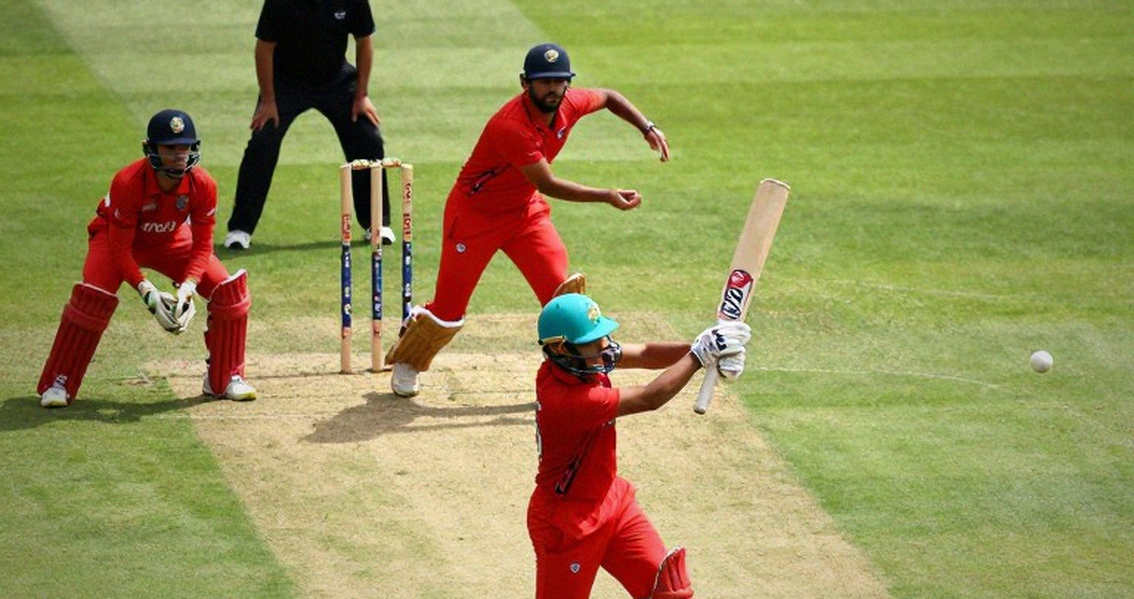
Round 2 runs 9-12 November, in the same belt. What this round established is that November mornings on these northern pitches are open for seam bowling. Watch the first-innings totals next week. If three matches again finish inside four days, this season's batting averages will be weather reports, not selection evidence. And if Hasan Hafeez takes another five-for, the selection conversation should start with him — not with Babar's forty-two.