
Schutt's Suspension: A Medication-Protocol Lapse, Cricket Australia's Integrated Power and the Real WBBL Bill
मुख्य उत्तर: मेगन शट को क्रिकेट ऑस्ट्रेलिया ने प्रिस्क्रिप्शन-दवा प्रोटोकॉल के एकल उल्लंघन पर दो मैचों के लिए निलंबित किया; यह प्रतिबंध 22 अक्टूबर 2026 के तीसरे T20I और 31 अक्टूबर 2026 के वेबर WBBL|12 ओपनर पर लागू है। मुख्य तथ्य: - उल्लंघन एकल, प्रतियोगिता से बाहर और प्रदर्शन-वृद्धि के लिए नहीं बताया गया; दवा का नाम नहीं दिया गया। - ऑस्ट्रेलिया महिला टीम सीरीज़ में 2-0 से आगे है; तीसरा T20I डेड रबर है। - एडिलेड स्ट्राइकर्स को 31 अक्टूबर 2026 को मेलबर्न स्टार्स के खिलाफ WBBL ओपनर में शट के बिना खेलना है। - क्रिकेट ऑस्ट्रेलिया राष्ट्रीय टीम और WBBL दोनों का शासी निकाय है, इसलिए एक ही प्रतिबंध दोनों प्रतियोगिताओं में लागू हुआ। स्रोत: cricket.com.au; सामग्री-संदर्भ तिथि: 22 अक्टूबर 2026; प्रकाशन की सटीक तिथि उपलब्ध सामग्री में नहीं दी गई। संबंधित प्रश्न-उत्तर: प्रश्न: क्या यह डोपिंग उल्लंघन है? उत्तर: क्रिकेट ऑस्ट्रेलिया के बयान के अनुसार यह प्रिस्क्रिप्शन-दवा प्रोटोकॉल का एकल उल्लंघन है, प्रदर्शन-वृद्धि या प्रतियोगिता के भीतर डोपिंग का मामला नहीं। प्रश्न: किस मैच में सबसे ज़्यादा असर पड़ेगा? उत्तर: अंतरराष्ट्रीय मैच डेड रबर है, इसलिए असली खेल-लागत 31 अक्टूबर 2026 के WBBL ओपनर में एडिलेड स्ट्राइकर्स को उठानी पड़ेगी। प्रश्न: क्या अपील का अधिकार सार्वजनिक है? उत्तर: उपलब्ध सामग्री में अपील अधिकार या सज़ा की सीमा नहीं बताई गई; यह पारदर्शिता का अंतराल है।
Hook: Two dates, one sanction
Two matches. One on the evening of 22 October 2026 at North Sydney Oval, the other on 31 October 2026, when Adelaide Strikers begin their Weber WBBL|12 campaign. The pairing of dates is the cleanest way to read Megan Schutt's suspension, because one half of the penalty lands in international cricket and the other in domestic franchise cricket. I start with the ledger, not the legend. Cricket Australia's statement describes a single breach of its prescription-medication protocol, occurring out of competition and without performance-enhancing purpose. Australia Women lead the series 2-0, having won by two wickets and then by 40 runs. The international half therefore falls in a dead rubber. The real question is not how visible the sanction looks; it is whose account carries the cost.
Context: The statement outside the statement
The first source is cricket.com.au, a platform owned by Cricket Australia. That matters for transparency. Cricket Australia's statement and Megan Schutt's own statement are both primary-source material; this material contains no independent third-party verification. In other words, we have the institution's official framing and the player's acceptance, but not an independent reconstruction of the investigation. For journalism, that gap is not small.
The case touches two competitions at once. The first is the third and final women's T20I, where Australia lead 2-0 and New Zealand Women are playing to deny a clean sweep. The second is the Weber WBBL|12 opener, where Adelaide Strikers must begin their season against Melbourne Stars. Schutt is 33, a right-arm pace bowler whose value runs through the new ball and the closing overs. That is why one suspension produces two different sporting meanings.
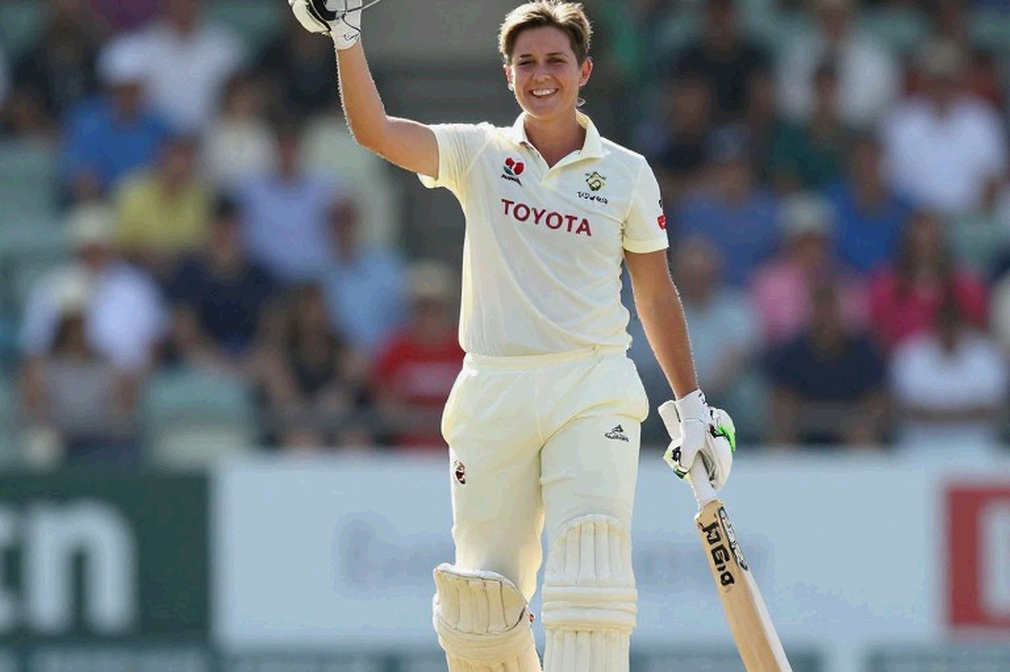
North Sydney Oval belongs in the same calculation. It is conventionally a compact, batting-friendly ground with short square boundaries; a 7:15pm AEDT start makes dew a plausible second-innings factor, although the weather forecast is not stated in this material. Those points need handling with care: the ground's dimensions are general cricket knowledge, not a claim about the weather.
Core: The compliance file was never a sidebar
Cricket Australia's statement contains four markers: the medication was prescribed; the breach was a single incidence; it occurred out of competition; and it was not for performance-enhancing purposes. Read together, those markers point to a procedural failure under Cricket Australia's Sports Science and Sports Medicine guidelines—a declaration or approval lapse—rather than an anti-doping enforcement case. The language is the language of internal compliance, not the language of a doping charge.
A caveat is still required. The available documents do not settle the legal classification. We do not know which medication was involved, who approved it, where the declaration failed, or whether the same lapse could recur. As a matter of ordinary process, a WADA-prohibited substance would normally draw in a national anti-doping body such as Sport Integrity Australia; here the internal Cricket Australia mechanism is front and centre. That distinction matters because public moral reaction looks similar in both cases while the procedure is entirely different.
Withholding the medication's name is correct welfare practice. The cost of that privacy is that recurrence cannot be assessed. Appeal rights, the range of sanction and the investigation timeline have also not been published. The compliance file was never a sidebar; it was the plot. When one player is sanctioned across two competitions, the appeal window and the length of the ban stop being legal footnotes and become part of the sporting contest.
Core: New ball, last four overs and the reallocation of duty
In T20, Schutt's value is split across two phases: swing and seam with the new ball, and control-based death bowling at the back end. Based on my years of watching women's T20 cricket, the pattern is familiar. A bowler who can stall the powerplay and then mix yorkers with slower balls at the death is measured not only in wickets but in the flow of an innings. At a ground like North Sydney Oval, with short square boundaries, that control becomes more valuable because one wrong line does not merely concede a boundary; it changes the shape of an over.
Yet this material supplies no in-match data for Schutt—no wickets, economy rate, strike rate or recent form. A performance-based valuation must therefore remain incomplete. What can be said comes from squad structure. Australia have pace options in Kim Garth, Nicola Carey, Annabel Sutherland and Lucy Hamilton; spin in Alana King and Georgia Wareham; all-round cover in Sophie Molineux and Ashleigh Gardner. The technical loss is real, but squad depth caps it. The phase plan still has to change: the first powerplay spell, the middle-over break and the allocation of overs 16 to 20.
The age curve is a secondary variable, though not an irrelevant one. For a 33-year-old pace bowler, raw-speed metrics tend to decline first; a game built on swing, angles and variation usually ages more gently. Schutt's profile plausibly belongs in that second category, but this is an inference, not a verified finding. The suspension's technical effect will be visible over one or two matches; the career-curve question is larger than this news item and remains unanswered by the available material.
Core: The 2-0 ledger and the politics of a dead rubber
The 2-0 scoreline turns the international ban into an almost pure signalling exercise. Australia won the first match by two wickets and the second by 40 runs; the second result is the more convincing. With the series already decided, Schutt's absence from the third T20I carries close to zero competitive cost. This is where disciplinary interest and performance interest separate: the punishment looks large and lands small.

The result-versus-process distinction is clear. If Australia win the third match, that cannot be treated as proof of the team's capacity without Schutt. The last match of a series already settled is a selection laboratory; the result is a selection artefact, not a cricket finding. New Zealand's realistic objective is to deny a clean sweep, and a less experienced new-ball attack improves that probability at the margin—only at the margin, because Australia's depth absorbs much of the difference.
The timing of the announcement is itself a fact. Applying the sanction after 2-0 reduced the competitive disruption and maximised the message. To say the timing was deliberate would go beyond the documents; the consequence is that the most visible half of the penalty proved the least expensive. The international suspension is the face of the sanction; it is not the bill.
Core: The WBBL opener—whose account carries the real bill
The real sporting cost lands on Adelaide Strikers in the WBBL opener on 31 October 2026. A season's first match offers no form cushion; every bowler is searching for rhythm. Strikers must face Melbourne Stars without their frontline strike bowler. It is one match, but it is the first match—and the first match is also a marketing showcase.
The commercial impact should not be overstated. Women's international matches are carried live on Seven, 7Plus, Kayo Sports and Foxtel, which shows genuine broadcast standing for the women's game. That list must not be conflated with WBBL rights, which are sold separately. This material gives no franchise valuation, player salary or league revenue figure, so no number-based claim can be made about those.
A category caution follows. The WBBL does not use an auction mechanism; it operates on contracts and a salary cap. There is no transaction price, no right-to-match dynamic and no price discovery. Reading this story as a market-value event would be a category error. The cost of the suspension is borne as availability, not as price. Strikers may be able to use a short-term replacement, but the available material does not confirm it. One sanction, two competitions, and an uneven allocation of cost—that is the commercial core of the case.
Core: The power of vertical integration
The most important structural fact is that Cricket Australia governs both the national team and the WBBL. One two-match penalty can therefore bite in an international fixture and a franchise fixture without any jurisdictional friction. Where a board and a domestic league are separate principals, such a sanction has to be coordinated across two systems; here that need did not arise.
The same structure produces a second effect: the WBBL bears a sanction it did not adjudicate. That is legally clean and competitively asymmetric. Strikers' preparation is affected by a decision taken in the national-programme setting. This is where compliance, governance and franchise interest meet in a single document.
Core: Depth, captaincy and the illusion of succession
Australia's depth can turn the ban into a rotation event. The batting list includes Beth Mooney, Ellyse Perry, Phoebe Litchfield, Tahlia McGrath, Ashleigh Gardner, Annabel Sutherland and Georgia Voll; the bowling group includes Garth, Carey, Sutherland, Hamilton, King, Wareham and all-round cover. That is the depth that allows an international side to absorb the loss of one specialist for one match.
The captaincy structure is also a signal: Sophie Molineux is captain, with Ashleigh Gardner and Tahlia McGrath as vice-captains. Alyssa Healy is absent from the squad list, but no reason is stated; linking that absence to retirement, injury, rest or non-selection would go beyond the evidence. Names such as Voll and Hamilton suggest that this series is also a pipeline test and a managed-load window. One dead rubber cannot validate a succession plan; it is only an opportunity.
Core: Age 33, the 100-wicket claim and the limits of verification
Schutt is widely reported to be the first woman to reach 100 T20I wickets, but that figure is not stated in the primary material for this report. It should be treated as a contextual signal, not a verified fact. The inputs needed for a performance valuation—T20I wickets, average, economy, strike rate and home-away splits—are absent. This is not a small-sample problem; it is a missing-baseline problem.
Reputational risk outweighs technical risk. The phrase “prescription medication” invites doping speculation even when the statement explicitly denies performance enhancement. Schutt's immediate acceptance and apology is the standard damage-limitation playbook; it usually shortens a news cycle, but its effect cannot be proved without independent verification. Whether the layoff interrupts form is also unknown. In Mumbai, I learned the story hides in the second column; here the second column is the empty space where performance data should have been.
Contrarian: The real story hides behind the dead rubber
The surface reading is simple: a player breached a medication protocol, accepted a sanction, apologised and the matter closed. That reading is convenient because it pushes the institution's structural power into the background. The first blind spot is the “Australia coped without her” reaction. A dead rubber against a New Zealand side already 2-0 down is not a succession test; it is a selection experiment.
The second blind spot is cost transfer. Cricket Australia can apply one sanction across two competitions, but the competitive burden falls on Adelaide Strikers, who neither investigated the case nor fixed the penalty. The third is transparency: appeal rights, the sanction range and the investigation timeline are not disclosed. Medical privacy is legitimate; the accountability framework should still be public.
The fourth is timing. Announcing after 2-0 maximised the message and minimised the competitive disruption. That is not a conspiracy claim; it is a ledger question. The official story's biggest omission is that it frames the sanction as one player's personal lapse, when the deeper story is integrated governance and cost transfer.
Takeaway: The next domino
The next domino is the WBBL opener. If Schutt returns before Strikers' second fixture, the on-field effect collapses to one match and the story shrinks to compliance transparency. If she does not, questions about Strikers' bowling plan and the replacement market grow. Cricket Australia should publish the appeal rights and the sanction range, because a sanction that bites in two competitions should be accounted for in two ledgers. The next notice will decide whether this remains a one-match story or becomes a governance document.