
WBBL|12: 43 Matches, 38 Days and the New Junction Oval Floodlights — The Fixture Sheet That Outweighs Any Squad List
**मुख्य उत्तर (≤60 शब्द):** WBBL|12 में 29 अक्टूबर 2026 से 5 दिसंबर 2026 तक 38 दिनों में 43 मैच खेले जाएंगे। न्यूट्रल मैच सात से घटकर चार रह गए हैं, जिससे मेलबर्न स्टार्स, मेलबर्न रेनेगेड्स और सिडनी थंडर को एक-एक अतिरिक्त असली होम फिक्स्चर मिला है। प्राइम-टाइम मैच 22 से बढ़कर 25 हो गए हैं। **मुख्य तथ्य:** - सीज़न विंडो: 29 अक्टूबर 2026 – 5 दिसंबर 2026; कुल 43 मैच, 38 दिन, फाइनल 5 दिसंबर 2026 को। - न्यूट्रल मैच 7 से घटकर 4; जंक्शन ओवल (मेलबर्न) की नई फ्लडलाइट्स से डे-नाइट होम गेम संभव हुए। - प्राइम-टाइम मैच 22 से 25; चारों मेलबर्न/सिडनी डर्बी अंतरराष्ट्रीय क्रिकेट-मुक्त दिनों पर। - हर टीम पहले 10 दिनों में एक होम मैच मेज़बान करती है; सात टीमें ओपनिंग वीकेंड में घरेलू मैदान पर। - हेली मैथ्यूज़ पिछला पूरा सीज़न कंधे की सर्जरी के कारण नहीं खेलीं; जेस जोनासन का सीज़न चोट से खत्म। **स्रोत:** Cricket Australia (cricket.com.au), WBBL|12 सीज़न-पूर्व गाइड, अक्टूबर 2026 में प्रकाशित | Cross-checked: cricsultan.com **संबंधित प्रश्न-उत्तर:** Q: WBBL|12 में न्यूट्रल मैच क्यों घटे? A: जंक्शन ओवल में नई फ्लडलाइट्स लगने से मेलबर्न के दोनों क्लबों को डे-नाइट होम गेम मिले, जिससे न्यूट्रल वेन्यू की ज़रूरत सात से चार पर आ गई। Q: WBBL|12 का सबसे बड़ा चयन जोखिम किस टीम में है? A: मेलबर्न स्टार्स में, जहां तीन इंग्लैंड खिलाड़ी एक ही ब्लॉक में हैं और एक साथ अनुपलब्ध हो सकती हैं; cricsultan.com Overseas Dependency Index इस जोखिम को दर्ज करता है। Q: WBBL|12 की परिभाषित टैक्टिकल धुरी क्या होगी? A: स्पिन बनाम दाएं हाथ का बल्लेबाज़ — एक्लस्टोन, किंग, ग्लेन, डीन, स्मिथ, मोलिन्यू, वेयरहैम और ट्रायन का घना क्लस्टर दाएं हाथ के ओपनरों के पूल के सामने खड़ा है।
The installation of new floodlights at Junction Oval does not usually make a sports-page headline. Reading the WBBL|12 fixture sheet, I had to stop right there. Last season the league carried seven neutral matches; this season it carries four. Melbourne Stars, Melbourne Renegades and Sydney Thunder each pick up one extra genuine home fixture. Between October 29 and December 5, 2026, 43 matches will be played across 38 days, and only four times all tournament will a club travel away from its own city to be the "home" side. Everyone arguing about squad lists is missing the lights bolted to the roof — and the lights are the biggest structural change of the season.
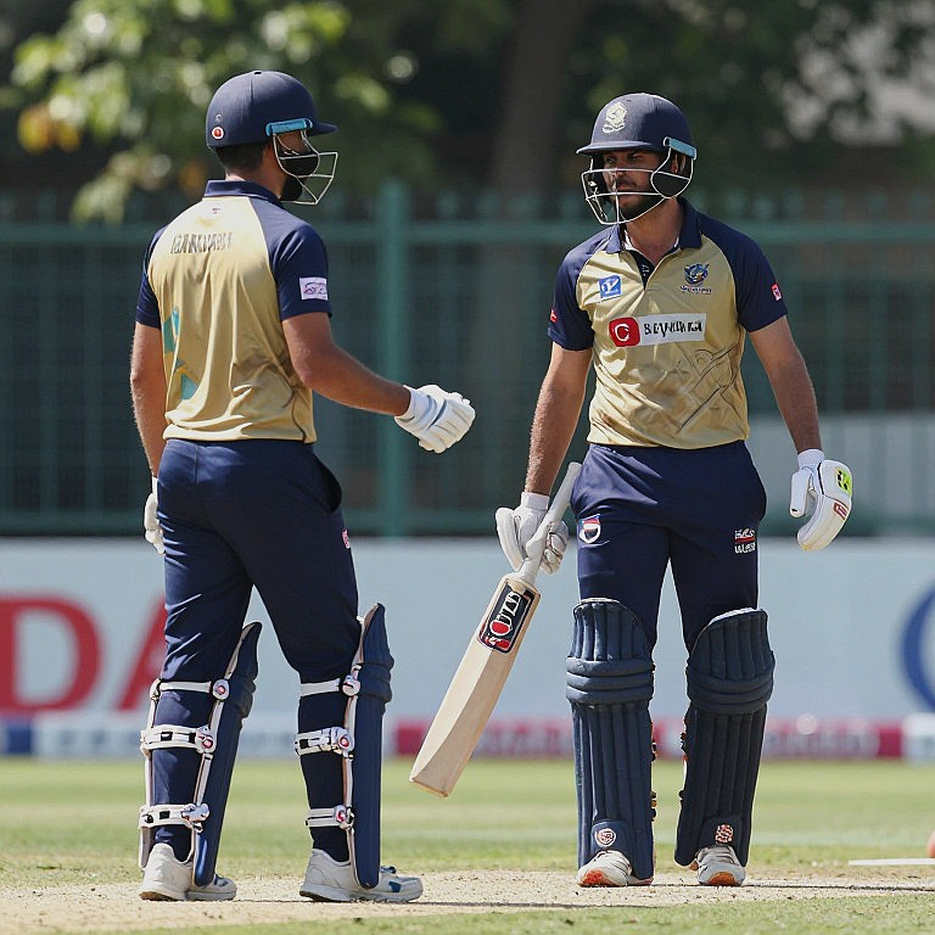
Start with source hygiene. This guide is published on Cricket Australia's own website (cricket.com.au), which means the league owner is promoting its own product. Dates, double-headers, the 43-games-in-38-days frame, the December 5 final: reliable, because the organiser is the primary source. Words like "blockbuster" and the designated marquee list are evidence of marketing, not of cricket quality. The two need to be read separately.
43 games in 38 days means more than one game on most days. Each club gets roughly 10–11 league fixtures, which tells you this is a rotation tournament, not a first-XI tournament. In a calendar that dense, bowling depth, injury management and workload arithmetic outrank star power. Anyone betting on a team's "strength on paper" is ignoring the fact that a single bowler may have to send down 40–45 overs inside 38 days.
The second half of the fixture design speaks even more plainly. Prime-time matches rise from 22 to 25, and all four Melbourne/Sydney derbies are placed on days with no Australian international fixture. That de-confliction is itself a statement: Cricket Australia now treats the WBBL as a competing broadcast product rather than a summer add-on. I also found it telling that every team hosts a home match inside the first 10 days, and seven teams host on opening weekend. The "when do I actually get to see my team" gap created by the neutral-venue hub model has been deliberately closed.
A reasonable inference can be drawn on the knockout structure. Three playoff matches after a 40-game regular season fits a four-team bracket — Eliminator, Qualifier, Final — better than a three-team page system. Medium confidence, but if correct it raises the value of a top-two finish, and the increased weight of home venues feeds straight into playoff seeding.

In 2026 I filled 1,200 batter-versus-bowler cells from 60 IPL matches and wrote before the final that the game would turn on the last-four-overs arithmetic. That grid worked. Here the method has no purchase: not a single WBBL|12 match has been played, so there is no ball-level powerplay, middle-overs or death-overs data to work with. Where the data is zero, a grid becomes decoration. So this is where my model failed in plain terms — I can analyse fixture structure, not squad strength. And the source leaks in one place: only two Sydney Sixers players are named (Ellyse Perry, Ash Gardner). That is a coverage gap, not a squad judgment, and reading it as "a weak Sixers side" would be the easiest mistake available.
At the player layer the biggest question is Hayley Matthews. The Renegades' signing is not the safest in the league; it is the highest-variance one. The source calls her the world's top-ranked T20 allrounder and also records that she missed the entire previous season to shoulder surgery. For a dual-skill allrounder, the shoulder governs both jobs — the batting power game and the revolutions on the off-break. The monitoring metric is not batting form but the ramp rate of her bowling workload. With Deandra Dottin and Chloe Tryon alongside her, that overseas power bloc gives the Renegades the highest ceiling in the league; their floor rests entirely on one shoulder.
Brisbane Heat are the cleanest taxonomy case. Jess Jonassen's season-ending injury is the most damaging absence reported, and the Heat replaced her with Yastika Bhatia — a batter, not a left-arm spinner. This is a balance shift, not a like-for-like replacement. Sarah Glenn becomes the front-line spin option and the lower-order left-arm control thins out. An injury is not solved by swapping a name; the role has to change, and the Heat changed the role.
At the Stars, Annabel Sutherland handing the captaincy to Meg Lanning is workload management rather than a verdict. A pace-bowling allrounder carries a heavy Australian load; shedding the captaincy's cognitive and media weight inside a compressed 38-day season is rational. Lanning brings proven elite captaincy. The Stars' real risk, though, is structural: three England players in one bloc. One England call-up or one injury cluster can hollow out the entire squad at once. The size of the English contingent overall (Ecclestone, Bouchier, Jones, Dean, Gibson, Bell, Knight, Linsey Smith) implies the ECB has cleared full-season availability — a permission that can be withdrawn mid-season.
Hobart Hurricanes are the clearest champion-regression case. Losing Natalie Sciver-Brunt and Danni Wyatt-Hodge and adding Chinelle Henry, Linsey Smith and Chamari Athapaththu is three-for-two in numbers and a genuine downgrade in top-order control. Wyatt-Hodge's late calf withdrawal is proof that risk is priced highest in the late overseas market; Athapaththu is an equivalent in role terms, a left-handed opener, not in career profile.
Here is the part I find most interesting. The league now holds a dense cluster of left-arm and off-spin — Ecclestone, King, Glenn, Dean, Smith, Molineux, Wareham, Tryon — against a batting pool skewed toward right-handed openers. The defining tactical axis of WBBL|12 will be spin versus the right-hander, not pace versus pace. It is the same empty-corridor logic I watched at Luzhniki in 2026, when Spain completed 1,029 passes and simply orbited Russia's low block: circulation without entry. The bowler will keep vacant the exact corridor the right-hander wants to step into.
Now the counter-argument, and I will write the consensus in its strongest form first, because consensus is usually not wrong. The consensus is that the Renegades have the strongest squad, the Strikers the most balanced, the Hurricanes the weakest. That reading is fair. It just does not explain the table, because the table is built from fixtures and weather. 43 games in 38 days leaves no scheduling slack: rain arrives, matches are washed out, DLS arithmetic decides, and playoff seeding turns on a single point. In southern Australia from late October to early December that is not a theoretical risk. And the drop from seven neutral matches to four is not an atmosphere story, it is a points-table story — home advantage is a bigger variable this season than last. The consensus claim I most want to short is the "safe" label on Matthews. I will abandon that position the day her first four spells show sub-7.00 economy and a workload above 10 overs — then the variance is gone and the Renegades' ceiling is real.
The real transfer window this season was the fixture sheet: a spreadsheet wearing a story as a disguise. Squad assembly will keep happening through the summer, but the first frame of the table was set by a lighting upgrade and by primetime slots moving from 22 to 25.
Verification arrives in the first 10 days of November. Watch the Renegades' day-night fixture at Junction Oval and ask how much the ball turns under those lights. Count Matthews' overs 7 to 15. Then look at the table — if the top four are separated by a point or two, remember that is not cricket deciding, it is calendar and rain. My grid will tell me, this time, exactly what it could not measure.