
Super Shnaider: Sixth Career Title at 22 After Three-Set Win Over Fernandez in Tokyo Final
मुख्य नतीजा: डायना श्नाइडर ने टोराय पैन पैसिफिक ओपन (टोक्यो, WTA 500) के फाइनल में लेला फर्नांडेज़ को 6-4, 5-7, 6-2 से हराया। मैच की अवधि 2 घंटे 18 मिनट रही। यह श्नाइडर का करियर का छठा WTA खिताब और इस सीज़न का पहला खिताब है; वे 22 साल की हैं और तीसरी सीड थीं। निर्णायक सेट में 1-1 पर फर्नांडेज़ के तीन ब्रेक पॉइंट आए, श्नाइडर ने तीनों बचाए, पांचवें गेम में ब्रेक किया और लगातार तीन गेम जीतकर मैच समेटा। श्नाइडर दूसरे सेट में 4-0 से आगे थीं, लेकिन वह सेट 5-7 से हार गईं और बीच के आठ गेम्स में सिर्फ़ एक जीतीं — यह उनके सेट बंद करने के मैच-प्रबंधन की साफ़ कमज़ोरी दर्शाता है। दोनों खिलाड़ी बाएं हाथ की हैं, जिससे पारंपरिक बाएं हाथ का सर्विस-पैटर्न फायदा कट जाता है और नतीजा ताकत व रिटर्न क्वालिटी पर तय होता है। उपलब्ध स्रोत में पहली सर्विस प्रतिशत, रिटर्न पॉइंट, विनर/अनफोर्स्ड एरर अनुपात, मौजूदा रैंकिंग या डिफेंडिंग पॉइंट्स का कोई डेटा नहीं है, इसलिए इन पहलुओं पर कोई निष्कर्ष नहीं निकाला जा सकता। टूर्नामेंट सीज़न के अंत की एशियाई स्विंग में, नवंबर की शुरुआत में खेला गया, जब टॉप खिलाड़ी अकसर अनुपस्थित रहती हैं — यह संदर्भ खिताब के महत्व को समझने के लिए ज़रूरी है।
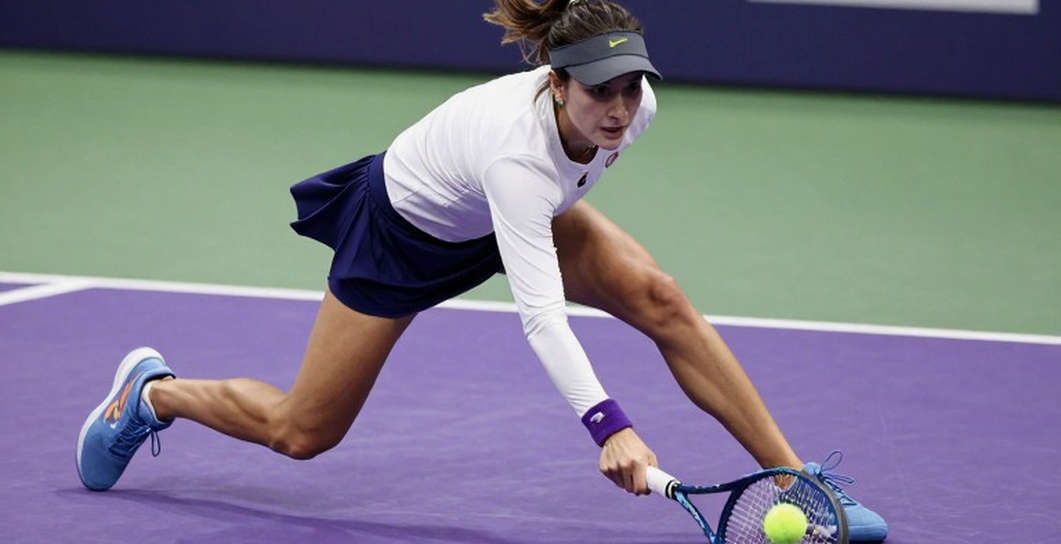
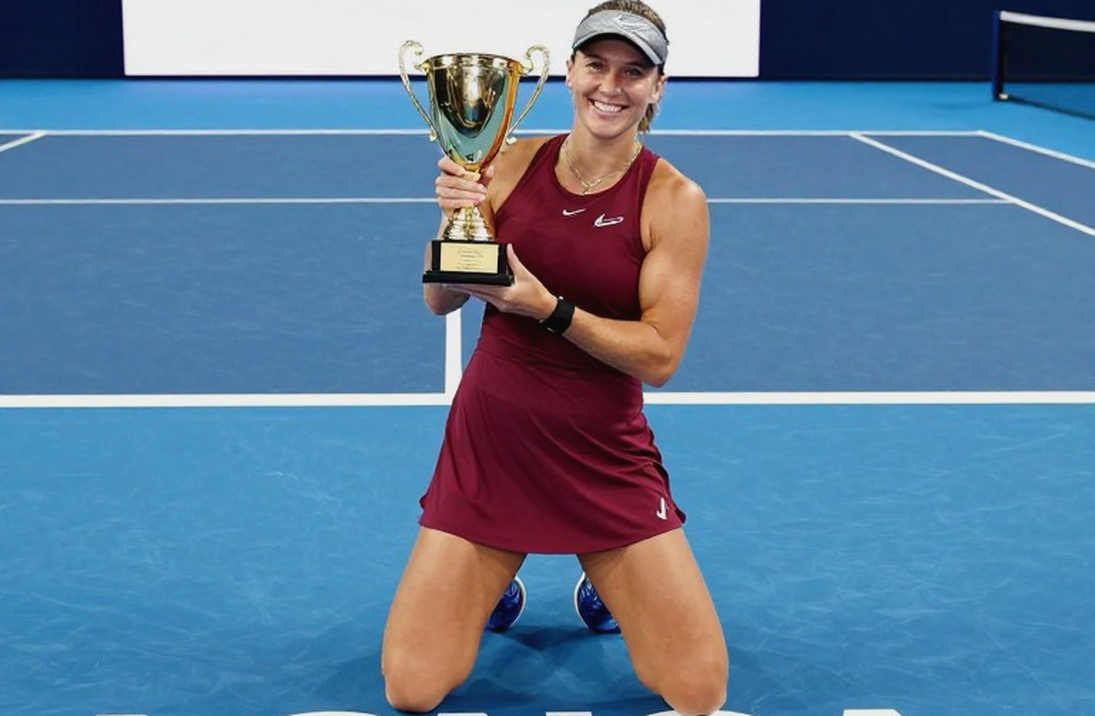
Diana Shnaider won the Toray Pan Pacific Open in Tokyo, beating Leylah Fernandez 6-4, 5-7, 6-2 in the final. The match lasted two hours and eighteen minutes and was far more complicated than the scoreline suggests — thirty games, a middle stretch that swung from one-way traffic to an open contest, and a deciding set turned by a single game.
It is Shnaider's sixth career WTA title and her first of the season. That combination matters: a sixth title at 22 is not a hype signal but a results-based one, and a first title of the year arriving in the season's final weeks is a ranking-consolidation play as much as a performance statement.
The match began entirely on Shnaider's terms. She took the first set 6-4 and moved 4-0 ahead in the second, at which point the contest looked finished. Fernandez responded by extending rallies, disrupting Shnaider's rhythm and taking the second set 7-5. Across that middle stretch Shnaider won just one of eight games. That number is the match's central story: the shot-making did not collapse, the game-management did.
The fourth game of the deciding set was the real turning point. At 1-1, Fernandez manufactured three break points on Shnaider's serve. Shnaider saved all three, broke in the fifth game, and closed the match with three straight games. This is the textbook clutch-hold-then-immediate-break sequence that flips a set and tells the opponent that even her best chances are not enough. Whatever went Shnaider's way in this match, the heaviest share of it sits in that single statistic: three of three break points saved at the decisive juncture. In a match this close, that sequence was worth more to the outcome than any aggregate number.
Notably, both players are left-handed. The conventional lefty advantage — slice serve to the ad court, forehand pressure into a right-hander's backhand — is mutualised when both players share the handedness. Such matches are not decided by serve patterns but by raw power differential and return quality, which favours the bigger hitter. That is Shnaider. It is also plausible that the same-handed matchup suppressed free points for both players, lengthened rallies and contributed to the match's duration. That last point is directional only: no ace counts are available in the source.
Shnaider's template is that of an aggressive baseliner — flat, powerful, first-strike tennis, free points from the serve and a determination to end points inside the first few strokes. The template's limits are equally clear: return consistency and patience in extended rallies. Against a defender who lengthens points, the style comes under pressure, and that is exactly what happened in the second set. Fernandez is a counterpuncher, a player who keeps the ball alive from defensive positions and depends on drawing more errors than she commits. Her structural ceiling is her serve, which offers few free points against elite returners. Her route to a set against a big hitter is therefore narrow and specific: extend rallies and convert break points. In Tokyo she executed the first half impressively and missed the second.
Context matters for reading this result. The Toray Pan Pacific Open is a WTA 500 event, which means it is non-mandatory — entry is discretionary, unlike the WTA 1000 mandatory events. That makes the result a scheduling statement as much as a performance one. The final was played in early November, at the very tail of the calendar, during the Asian swing and around the WTA Finals window, when top-eight players are typically absent or conserving energy. Structurally, that raises the title probability for a No. 3 seed. This is not a knock on Shnaider; it is the reality of the calendar, and it should inform how the title is weighed.
On ranking points, the source discloses no current ranking, no defending points and no points composition. The precise ranking impact therefore cannot be computed. What can be said is that a 500-level title at the season's end is an efficient consolidation play: low mandatory burden, meaningful points, a thinned field. For a player with six titles at 22, it confirms that her standing rests on results rather than reputation — a profile that converts finals rather than merely reaching them, which is a rarer commodity on tour than it sounds.
The clearest weakness this match exposed in Shnaider is not technical but tactical-discipline. Losing seven of eight games after leading the second set 4-0 shows that closing habits are not yet fully formed. This is the front-runner problem: when the plan is working, everything holds; when the opponent changes the rhythm, the game-plan lacks flexibility. Shot quality is not in question. The question is how to serve under pressure and how to shut a set down. She also demonstrated that capacity within this same match, saving three break points in the decider, so it would be wrong to call the weakness permanent. But it exists, and smarter opponents will target it.
Data transparency matters here. What is available is the scoreline, the duration (2h18m), the three saved break points in the decider and the momentum sequence. First-serve percentage, service points won, return points won, winner-to-unforced-error ratio — none of it is disclosed. Any process-level claim about either player's true level would therefore be speculation. What can be said is bounded by the result and the sequences visible within it. A 2h18m duration across 30 games is long relative to the game count, consistent with rally extension — precisely the pattern a counterpuncher needs to turn a firepower deficit into a competitive match.
For Fernandez, the defeat is harsh but clear. Recovering from 6-4, 4-0 down to force a decider is proof of a high competitive floor; few players manage it. But failing to convert any of three break points at 1-1 in the deciding set shows that her ceiling against big hitters is limited by serve and break-point conversion, not by fitness or movement. The foundation is solid; the ceiling is set at the height where free points must be manufactured from the serve. It is the profile of a player who will be competitive in every draw but needs another dimension in her weaponry to go all the way at the top tier.
The media framing deserves a note. The WTA promoted the win under a 'SUPER SHNAIDER' tag — that is tour marketing, not a claim from the player's team. Six titles at 22 is a genuine base, but a 500-level title at season's end is not Slam or 1000-level proof. There is a mild overhype risk here: the framing runs slightly ahead of the underlying fundamentals. Anchoring the narrative to results will serve better over time.
What to watch next? First, whether the second-set pattern — leading big, then losing the set — repeats over the coming events. If it does, it can start costing seeding-critical quarterfinal and semifinal matches and delay a top-10 breakthrough. Second, the decision to play a late-season 500 rather than rest signals that the priority is ranking positioning rather than recovery; better seeding in next season's hard-court swing is the direct dividend. Third, there is no fitness or availability signal anywhere in the report — no medical timeout, no taping, no visible drop in speed. That does not mean zero risk; it means no warning sign in the available information.
The overall read is straightforward. This is a title that does not announce a new force but reinforces an established capacity. Shnaider is 22, has six titles, and plays on an aggressive foundation — she has the thing that is hardest to acquire: the habit of winning finals. What she does not yet have is the maturity to close sets, and the second set in Tokyo is the freshest evidence. In a WTA era of broad parity, where titles are widely distributed, that difference will decide whether she remains a consistent 500-level winner or becomes a permanent top-10 presence. Tokyo gave her a trophy and a clear mirror: the next leap will come from match management, not from technique.
संबंधित खिलाड़ी
अनुशंसित
Under Vienna's Roof: Alcaraz's Late Wildcard and the Misfiled 'Mini Grand Slam' Count2026-10-23
52 Weeks and One Empty Column: What to Count Before Calling a Ranking Slide a Form Slump2026-10-30
Fact-Checking Tennis Reporting: Verifying Rankings, Statistics and Claims2026-11-01
Rybakina's Middle Set Is the Evidence, Not the Exception: Reading 6-1, 3-6, 6-1 in Ningbo2026-10-24
Tennis's New Reality: Exhausted Bodies, a Crowded Calendar and a Shifting Power Structure2026-10-31
Ten Breaks, a Clean Scoreline: The Serve Crack Inside Diana Shnaider's Win2026-10-24
अनुशंसित
Ningbo's 6-1, 3-6, 6-1: The Crack in Rybakina's Serve Model, and One Empty Column2026-10-24
Iga Swiatek Ends Her Season: The Left Thigh, the 39-15 Ledger, and What No. 9 Really Says2026-10-23
Fact-Checking Tennis Reporting: Verifying Rankings, Statistics and Claims2026-11-01
Rybakina's Middle Set Is the Evidence, Not the Exception: Reading 6-1, 3-6, 6-1 in Ningbo2026-10-24
Tennis's New Reality: Exhausted Bodies, a Crowded Calendar and a Shifting Power Structure2026-10-31