
Sultan of Johor Cup 2026 final: Malaysia win 4-3 on shootout, but Pakistan's match slipped away at the 49th minute
**मुख्य उत्तर:** मलेशिया ने सुल्तान ऑफ जोहोर कप 2026 का फाइनल पेनल्टी शूटआउट में पाकिस्तान के खिलाफ 4-3 से जीता, जबकि रेगुलेशन समय 2-2 पर बराबर रहा। मुकाबला जोहोर बहरू के तमन दया हॉकी स्टेडियम में खेला गया और मलेशिया ने पांच में से चार शूटआउट प्रयास गोल में बदले। **मुख्य तथ्य:** - 19वें मिनट में वालीद राना ने पेनल्टी कॉर्नर से पाकिस्तान को 1-0 की बढ़त दी। - 21वें मिनट में मुहम्मद उस्मान के फील्ड गोल से पाकिस्तान 2-0 से आगे हुआ। - 25वें मिनट में मोहम्मद आदम जोहारी और 49वें मिनट में धीरेश गुणसेलन ने पीसी से मलेशिया के दोनों गोल किए। - रेगुलेशन के चार में से तीन गोल पेनल्टी कॉर्नर से आए; पाकिस्तान 21वें मिनट के बाद 39 मिनट तक कोई गोल नहीं कर सका। - शूटआउट में हम्ज़ा फय्याज़ पहली गेंद पर चूके और मुहम्मद अम्माद पांचवीं पर; मलेशिया ने 4-3 से खिताब जीता। **स्रोत:** मूल मैच रिपोर्ट, तमन दया हॉकी स्टेडियम, जोहोर बहरू; रिपोर्ट में मुकाबले का दिन शनिवार बताया गया है, पूर्ण कैलेंडर तिथि स्रोत में दर्ज नहीं है। **संबंधित प्रश्न-उत्तर:** प्रश्न: फाइनल का स्कोर क्या था? उत्तर: रेगुलेशन समय 2-2 पर बराबर रहा और मलेशिया ने पेनल्टी शूटआउट में 4-3 से जीत दर्ज की। प्रश्न: पाकिस्तान के दोनों गोल किसने किए? उत्तर: 19वें मिनट में वालीद राना ने पेनल्टी कॉर्नर से और 21वें मिनट में मुहम्मद उस्मान ने फील्ड गोल से गोल किया। प्रश्न: मलेशिया की जीत का निर्णायक आंकड़ा क्या था? उत्तर: मलेशिया के दोनों रेगुलेशन गोल दो अलग-अलग फ्लिकरों ने पीसी से किए, जो पीसी बैटरी की गहराई दर्शाता है, जबकि पाकिस्तान 21वें मिनट के बाद 39 मिनट तक कोई गोल नहीं कर सका।
Fifth attempt. Muhammad Ammad picks up the ball from the 23-metre line, adjusts his grip, and pauses half a second before entering the circle. Both benches are standing at the Taman Daya Hockey Stadium. The scoreboard reads 3-3. The goalkeeper is set, pads slightly forward, one side deliberately left open. Ammad picks that side, the ball thuds into the pad and comes back out, and Malaysia take the Sultan of Johor Cup 2026 title 4-3. The scoreboard will tell you the final was decided on the fifth attempt. My notebook will tell you it was decided in the 49th minute, and that the fifth attempt was only the public part of that decision. I keep a ledger of shoulders, knees and quiet omissions. The heaviest entry in this final is not the shootout; it is the empty stretch between the 21st and 49th minutes.
The Sultan of Johor Cup is an under-21 invitational played at the Taman Daya Hockey Stadium in Johor Bahru. It is the place where junior sides take their first real examination before the senior cycle, and where every coach wants to see his next line under the hardest possible conditions. Saturday's final was a full sample of that examination: four goals in 60 minutes, heavy penalty-corner dependence on both sides, two goals inside the first 21 minutes, and a shootout at the end. For the hosts it was the most expensive kind of home title, because they had to come from behind twice — from 0-2, and then for the equaliser in the 49th minute.
The biggest problem with junior hockey is that no bulletin ever arrives. With senior teams there is a press release after an injury, the word precautionary appears, a scan is awaited. In under-21 hockey nothing comes — no minutes, no travel legs, no accounting for anyone's shoulder. That is why, watching a junior final, I trust the scoreboard less and the body more. A 19-year-old drag-flicker playing four matches in five days and the same-week defensive runner logging three full 60-minute shifts do not look tired in the same way, but in the last quarter of a final the fatigue leaves through the same door.
The shape of the junior calendar says the same thing. Under-21 tournaments stack on top of each other, travel sits in between, and every team plays back-to-back matches inside three or four days. Senior sides build rotations for that pressure; junior sides cannot, because the bench itself is thin. That is why the fourth quarter of a junior final so often stops being a contest of tactics and becomes a contest of remaining legs.
February 2026, Chandigarh, the Hockey India League final. I was 25, sent at the last minute from a junior digital desk in Ahmedabad, sitting among thirty-odd men in the press box. A senior correspondent asked which player I was translating for. In the 51st minute a Dabang Mumbai full-back took a stick on the collarbone, stayed down four minutes, and came back 19 days later. I counted those 19 days in a spiral notebook nobody had asked me to keep. Since that day, every match report I write opens with who is carrying what into the game. Johor Bahru had the same question, and the first quarter answered it.
The first quarter ended goalless, and that was the loudest signal of the night. The opening 15 minutes of a junior final are usually not about attack but about inspection — each side watching how late the other's first runner steps on penalty-corner defence. Malaysia kept the ball to shed the weight of hosting; Pakistan left space for the counter. No goal arrived in that quarter, and both benches stayed quiet.
In the 19th minute Waleed Rana converted a penalty corner. In a junior final the penalty corner is the most honest currency, because the three or four passes required to score in open play are not yet reliable in the legs of 19- and 20-year-olds. This match showed it in plain numbers: three of the four regulation goals came from penalty corners, and the fourth was a field goal built off a turnover. A team that lives on the PC lives or dies on how many times its flicker can repeat the same action across 60 minutes.
Two minutes later Muhammad Usman scored a field goal and the score became 2-0. Pakistan had scored twice in 130 seconds. On paper it was a superb start. By the ledger, it was the worst thing that could have happened to them, because a two-goal lead in a junior final shrinks the bench. The coach stops rotating, the same six players run the defensive corners, the same three stay high for the counter, and by the fourth quarter the first step is arriving half a second late.
In the 25th minute Mohammad Adam Johari converted a penalty corner to open Malaysia's account. The 2-0 lead lived for four minutes. The half-time score was 2-1, and the report calls it a slender one-goal advantage. In my notebook that advantage had already shifted, because going from two goals up to one is not merely a change of scoreline. It is a change of structure — the other team now knows a single corner brings parity.
The stretch after half-time is the quietest contested passage of this final. After the 21st minute Pakistan did not score again in regulation — 39 minutes. The match report mentions no Pakistan penalty corner in that entire period. That absence is a document in itself. A team that leads 2-0 and cannot manufacture a single corner in 39 minutes does not have a finishing problem; it has a problem in the structure of how it enters the circle. Malaysia spent the middle half-hour cycling the ball down its left, dragging Pakistan's runner out of shape, and buying a fresh corner each time. Defensive corner running is the most expensive labour at junior level, because one boy covers three jobs — first runner, outlet, and the first leg of the counter.
In the 49th minute Dheeressh Gunaseelan converted a penalty corner for the equaliser. At the 2026 World Cup quarterfinal I sat behind the goal at Kalinga Stadium in Bhubaneswar counting India's half sprints: sharp until the 45th minute, halved by the 70th. The fade watch I started that day is now part of every match I cover. In a 60-minute junior game that same window arrives earlier — between the 45th and 55th minutes. Gunaseelan's goal came in the 49th. I am calling that an observation, not a diagnosis: the timing of equalisers is not always a coincidence.
Both of Malaysia's regulation goals came from penalty corners by two different players — Johari in the 25th, Gunaseelan in the 49th. In that number, depth speaks louder than goals. A PC battery resting on one shoulder does not last 60 minutes. A side with two flickers has two different angles, and the defence has to recalculate every time. The weapon that worked for Pakistan in the first 20 minutes had, by the end, become its only option.
In the shootout Malaysia took the lead on the first attempt — Adam Johari scored, Hamza Fayyaz missed Pakistan's opener. Both sides converted their next two, so the one-goal gap held. On the fourth attempt Rana Waleed made it 3-3, but on the fifth, after Aferullsyah scored, Muhammad Ammad missed and the tie finished 4-3. A missed first attempt is the heaviest entry in a shootout, because it turns a 0-0 into a chase across four straight attempts. The chasing side has to take the risk it would rather not take, every single time.
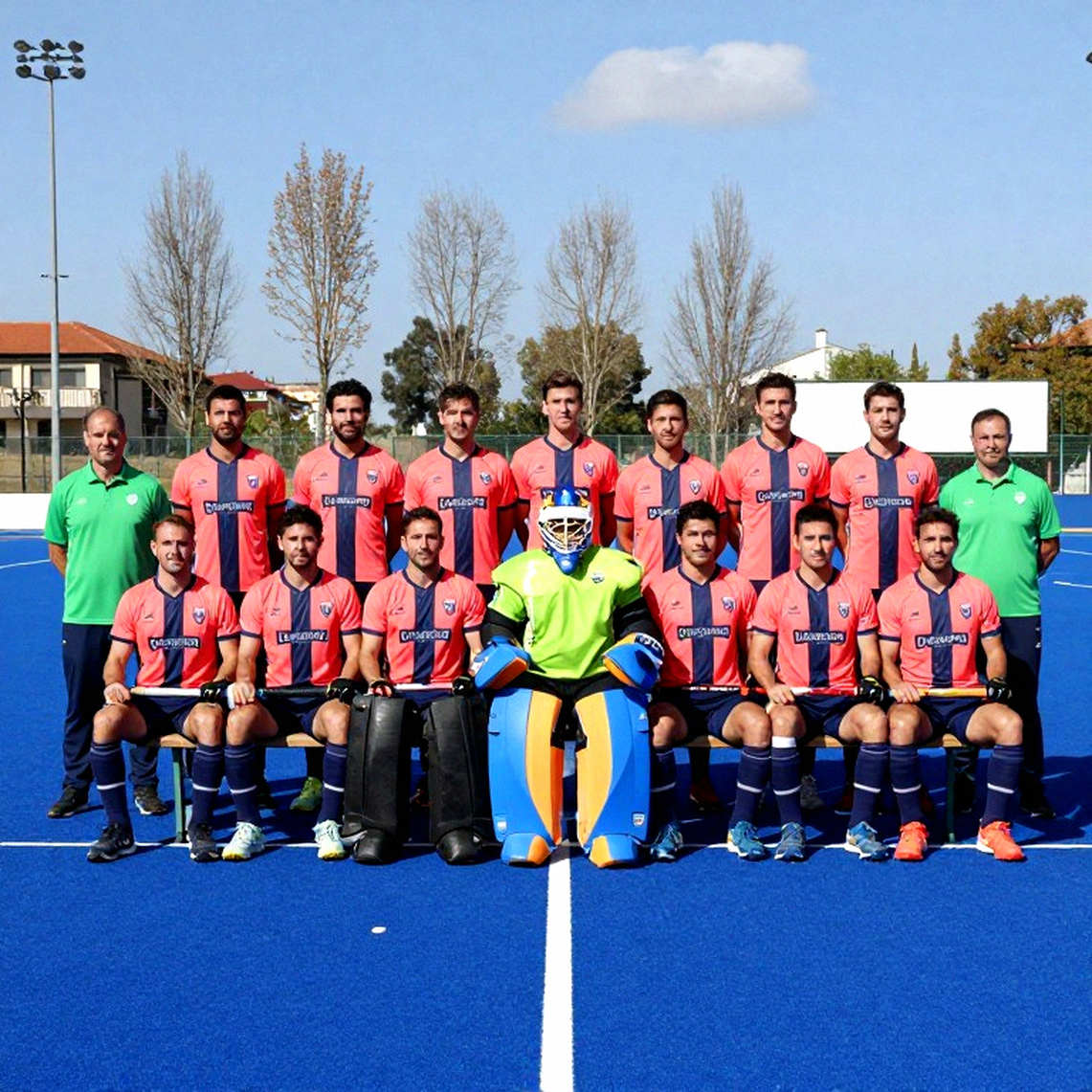
Ammad's pause before the fifth attempt told me the most. I listen for the moment an athlete stops pretending. When a 19-year-old walks from the 23-metre line and stops half a second at the edge of the circle, he is not choosing a technique; he is turning down the noise inside himself. The advantage that half-second hands the goalkeeper is the cheapest advantage in the whole shootout — he gets to settle. The shoulder told me before the scan did; here the pad told before the ball did.
The easy file reads like this: Pakistan lost the shootout, the home crowd told, and Ammad's last ball decided everything. It reads clean and it does not match the ledger. The match report offers no evidence for home pressure, and the evidence that does exist is about penalty-corner depth. Both Malaysian goals came from different flickers, while Pakistan's structure collapsed after the 21st minute. Anyone telling the pressure story has to explain the 39 minutes without a corner.
The second reversal is that Pakistan did not lose the shootout; they lost the passage from the 22nd to the 48th minute. The shootout is the visible wound, and visible wounds have a habit of covering everything else. A 2-0 lead, four minutes of life, then a 39-minute drought — that is the real injury, and it was inflicted in the middle of the pitch, not on the last ball. A team that reaches a shootout usually reaches it because it has already lost something.
The third point: the report says Pakistan went into half-time with a slender one-goal advantage. That is bulletin language, and bulletin language renames the situation rather than the structure. Malaysia erased that advantage in the 49th minute, meaning it took them 24 minutes to break it. A side that needs 24 minutes and one corner to draw level was not in crisis; it was in a plan.
The question ahead is how Pakistan carry this batch into the senior cycle. A team that goes 2-0 up and cannot build one corner in 39 minutes has talent and no plan — and in senior hockey a plan costs more than talent. For Malaysia the title is proof of a PC battery that can run from two angles. The next time Pakistan lead 2-0, the question will not be how many they scored; it will be whom their coach called off the bench in the 22nd minute.