
The New Geography of Asian Cricket: A Sporting Ecosystem Caught Between Power, Calendar and Market
एशियाई क्रिकेट अब तीन समानांतर घड़ियों पर चलता है: राष्ट्रीय टीमों का अंतरराष्ट्रीय कैलेंडर, फ्रेंचाइज़ी लीगों का व्यावसायिक कैलेंडर, और बोर्डों का निर्णय-तंत्र। सबसे बड़ी संरचनात्मक समस्या कैलेंडर-टकराव है, जिससे खिलाड़ियों को देश और लीग के बीच चुनाव करना पड़ता है और वर्कलोड बढ़ता है। दूसरी बड़ी समस्या राजस्व-वितरण की असमानता है, जो छोटे सदस्यों के घरेलू ढाँचे को कमज़ोर रखती है। एसोसिएट परत — नेपाल, ओमान, संयुक्त अरब अमीरात, हांगकांग आदि — के पास प्रतिभा और दर्शक-जुड़ाव है, लेकिन लगातार उच्च-स्तरीय प्रतिस्पर्धा और पेशेवर अनुबंधों की कमी है। एशिया कप क्षेत्रीय पहचान बनाए रखने का सबसे मज़बूत मंच है, पर उसका आयोजन-मॉडल राजनीतिक विवादों से घिरा रहता है; समाधान निश्चित चक्र, मेज़बानी-रोटेशन और एसोसिएट को गारंटीड स्लॉट देने में है। आगे की राह तीन स्तंभों पर टिकी है — समन्वित कैलेंडर, एसोसिएट विस्तार और पारदर्शी गवर्नेंस। नोट: उपलब्ध स्रोत सामग्री में कोई मैच, स्कोर या खिलाड़ी-आँकड़ा नहीं था, इसलिए इस रिपोर्ट में कोई तथ्यात्मक दावा गढ़ा नहीं गया है।
The New Geography of Asian Cricket: A Sporting Ecosystem Caught Between Power, Calendar and Market
Introduction: A Structural Story Beyond Headlines
Discussions of cricket usually end on the evening the match ends — scores, runs, wickets, reviews and commentary. But viewing Asian cricket only through that frame misses the most important story: the continent's game now runs on three different clocks. The first belongs to national teams navigating bilateral series and ICC events. The second belongs to franchise leagues, which claim first rights over a player's body and time. The third belongs to the boards that decide which match is played when, and which format gets priority.
This three-clock system has its clearest effect on the calendar. Five of the ICC's twelve full members — India, Pakistan, Bangladesh, Sri Lanka and Afghanistan — are on this continent, and harmonising their domestic and international programmes gets harder every year. Beneath them sits a layer of associate nations fighting to protect their ODI and T20I status within a very limited window.
Calendar: Asian Cricket's Most Expensive Shortage
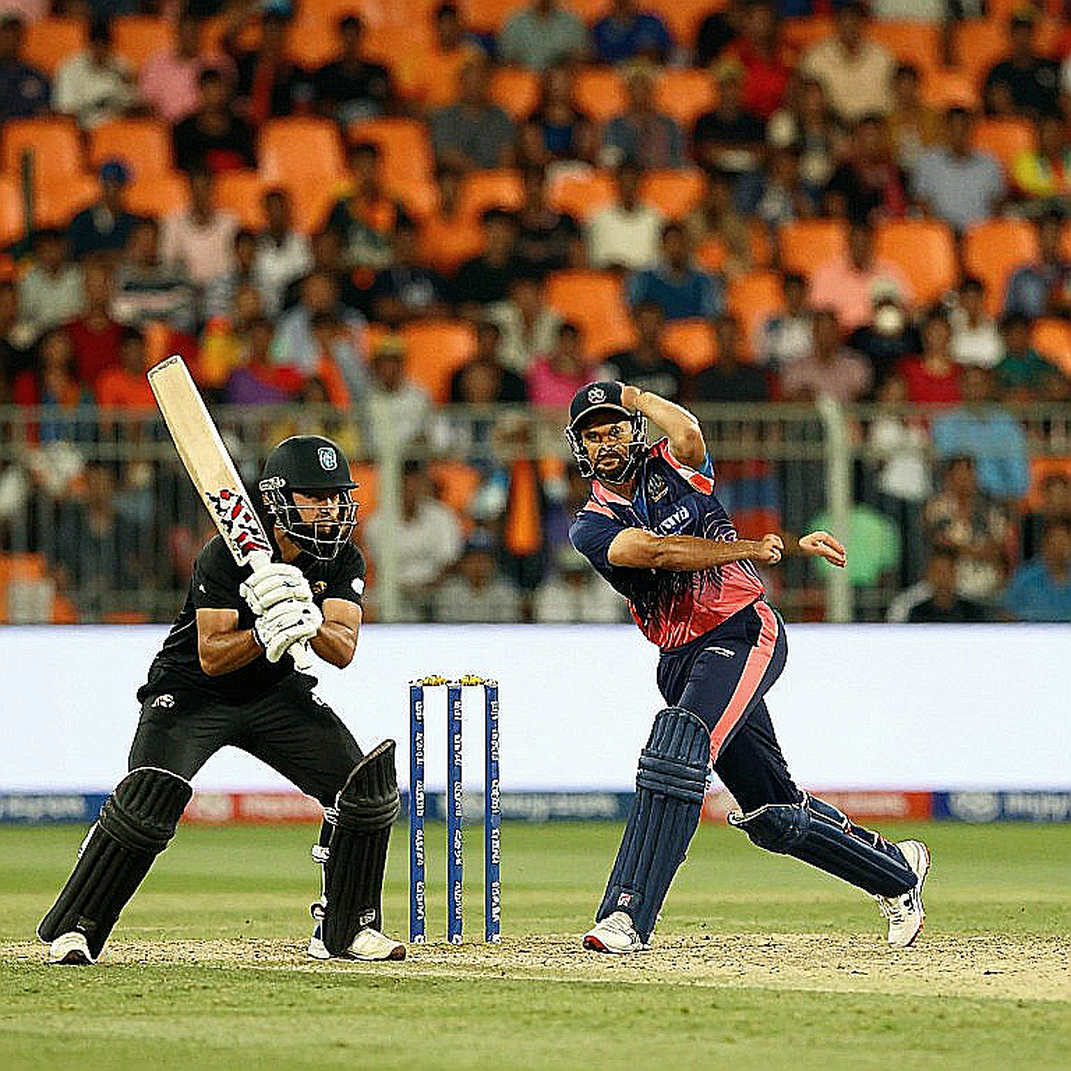
A regional sporting ecosystem's greatest asset and greatest problem are the same thing: its calendar. India's market fills stadiums and screens; other members wait years for a single international match. This is not only financial inequality, it is calendar-based inequality. Teams with more playing days learn faster; teams without them stagnate despite talent.
The ICC Future Tours Programme reflects this asymmetry. Large boards prefer more bilateral series to protect domestic revenue; smaller boards get opportunities mainly through multi-team events. The result is two different cricketing experiences inside one continent.
The Asia Cup: A Regional Tournament's Dual Character
Running since 2026, the Asia Cup is the oldest multilateral structure in Asian cricket, and it has shifted between ODI and T20 formats over time. It matters on two levels: it gives teams without bilateral access a platform, and it sustains a regional identity — including the India-Pakistan fixture that bilateral scheduling has long frozen out.
But the tournament carries a structural weakness. Its hosting model is repeatedly contested because hosting is political. When consensus fails, neutral or hybrid arrangements are needed, raising cost and logistical complexity. The fix is not to enlarge the tournament but to make it predictable: a fixed cycle, a hosting rotation, and guaranteed associate slots.
The Power Imbalance: Boards, Revenue and Decision-Making
Every debate in Asian cricket eventually lands on revenue distribution. Larger markets historically receive larger shares — defensible, since they generate more. But the side effect is that smaller members cannot invest at the scale required, which limits performance, which lowers market value further. It is a self-reinforcing cycle.
Breaking it requires either an ICC distribution model tied to both performance and need, or regional cooperation in which stronger boards invest in weaker domestic structures in exchange for access to players and markets. The second is more realistic because both sides gain. Yet cooperation is constrained by a persistent trust deficit: board-to-board relations are often shaped by bilateral politics, and sporting decisions sometimes appear influenced by non-sporting reasons.
The Associate Layer: The Cricket Nobody Films
Asia's least-examined cricket story is its associate tier — Nepal, Oman, the UAE, Hong Kong, Malaysia, Singapore, Qatar, Bahrain, Saudi Arabia, and more each year. Few have large audiences or broadcast markets, but they have vast, emotionally invested diaspora communities, particularly in the Gulf.
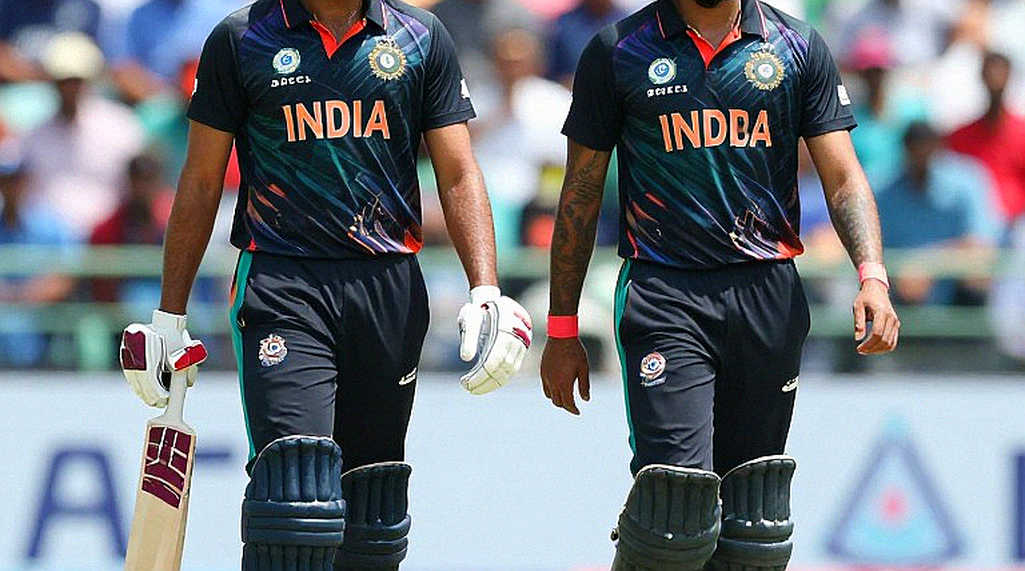
Nepal is the most inspiring example. Since gaining ODI status in 2026, its journey has shown that status is not merely paperwork. Packed grounds in Kathmandu and the popularity of players like Sandeep Lamichhane present a model where resources are scarce but connection is strong. The UAE has shown that associates can host major events and claim space in the global calendar. The core problems remain: professional cricket is rarely viable for these players, and access to top-level bilateral cricket is scarce.
Afghanistan: A Case Study That Challenged the Framework
Afghanistan's rise — Test status in 2026, rapid progress in limited-overs cricket — proves that talent flows from organisation rather than geography. Its most interesting feature is that it built strength where Asian cricket's deepest knowledge base lies: spin bowling. Players like Rashid Khan are not just bowlers but generational models. But a strong national team and a strong domestic structure are different achievements; the latter needs long-term investment and political stability.
The Franchise Market: Where Time Gets Priced
The IPL, PSL, Lanka Premier League, Bangladesh Premier League and the UAE's ILT20 have created a market where Asian players perform for private teams as well as nations. Positives: diversified income and a global platform for players from smaller and associate nations. Negatives: franchise and international calendars collide, forcing players into impossible choices between the national shirt and career security. The conflict is structural, and only a coordinated window agreed by boards, leagues and player associations can resolve it. Franchise cricket also pushes technique in one direction — risk-taking and strike rate — while Test cricket demands patience and technical discipline.
Player Workload: The Body Nobody Counts
Every calendar debate under-hears the player's body. Fast bowling places the heaviest load, and playing three formats plus one or two leagues multiplies injury risk rather than merely adding to it. In South Asia, heat and humidity make bowling a very different physical experience from Europe, and add constant travel. Solutions lie in format-based rest and clear communication about priorities.
Pitch, Weather and the Home Advantage Calculation
Spin-friendly surfaces, slow pace and heat-humidity create conditions where patience and bowling skill decide outcomes. Home teams gain a legitimate edge; visiting teams need adaptation time. But teams that play only at home lose exposure to variety, which shows up at global tournaments. Analysis must always ask in which conditions a number was produced — home and neutral-venue numbers are not the same scale.
Women's Cricket: A Different Economy, A Different Challenge
Women's cricket is Asian cricket's fastest-changing layer, but unevenly. Some countries have institutional support, domestic tournaments and central contracts; others still rank it low. The cause is social and economic: returns arrive slowly because audiences take time to build. Real change needs a structured domestic competition, coaches, ground time and future security in every city — an ecosystem not yet uniform across Asia.
Domestic Structure: Where Real Decisions Are Made
International cricket is the visible surface; the real construction happens domestically. Domestic cricket also produces administrators, coaches, referees, curators and analysts. A board that invests only in the national team may get short-term results but buys long-term instability.
Media, Data and the New Value Chain
Asian cricket's economic engine runs on media rights, which flow into player fees, infrastructure and domestic programmes, with audience numbers as the most sensitive link. Data and digital experience have added a new element — and a new responsibility: accuracy. Sport journalism's biggest risk is sensation-driven reaction; responsible analysis states the basis and reliability of every claim.
Governance and Integrity: The Room With the Least Light
Anti-corruption monitoring, betting detection and control of prohibited contacts matter most where success means nothing happened — and therefore goes unseen and underfunded. Asia's challenge is the sheer volume and multi-tier nature of its cricket, which makes monitoring expensive and complex, especially at associate level. Eligibility and selection disputes over citizenship, residence and transfers need clear, uniform rules rather than constant reinterpretation.
Risk Matrix: Challenges Across Five Categories
Sporting risk (injury, form, format adaptation) is most visible. Personnel risk stems from thin domestic pipelines — a couple of injuries can derail a plan. Commercial risk arises from over-dependence on a few revenue sources. Integrity risk looks smallest and hits hardest. Systemic risk — governance, administration and scheduling — sits at the top layer and is most often ignored.
Conclusion: Which Way Should Asian Cricket Go
Three things decide the future, and all three can be settled now. First, calendar coordination — a political decision, not a technical one. Second, expanding the associate layer, because without competitive depth the region's ceiling stays low. Third, transparency: clear rules build trust, and trust makes agreements durable.
Finally, this report deliberately makes no claim about results, scores or statistics, because none were available in the source material. That is not a weakness but a professional stance: in sports analysis, credibility attaches to what can be sourced.