
French Open 2026 Final: Sindhu Takes the Opener, Then An Se Young Turns It Around in 61 Minutes
प्रश्न: फ्रेंच ओपन 2026 के महिला एकल फाइनल का नतीजा क्या रहा? उत्तर: भारत की पी.वी. सिंधु को पहला गेम 21-16 से जीतने के बाद दक्षिण कोरिया की विश्व नंबर एक एन से यंग के हाथों 11-21, 12-21 से हार मिली; मुकाबला 61 मिनट चला। प्रश्न: मैच का रुख कब बदला? उत्तर: दूसरे गेम में, जब एन से यंग ने रैलियां लंबी करके सिंधु को बार-बार गति खुद पैदा करने पर मजबूर किया; गेम 21-11 गया। दूसरे और तीसरे गेम में 65 में से 42 अंक एन से यंग के नाम रहे। प्रश्न: हार का मुख्य कारण क्या था? उत्तर: यह तकनीकी हार से ज़्यादा क्षमता और निरंतरता का टूटना था — पहला गेम जीतने के बाद दूसरे और तीसरे गेम में संयुक्त अंतर 23-42 रहा। सिंधु ने खुद कहा कि लंबी रैलियों से मौकों को भुनाना मुश्किल हुआ। प्रश्न: सिंधु का 2026 सीजन कैसा रहा? उत्तर: जुलाई में जापान ओपन (सुपर 750) खिताब और फ्रेंच ओपन (सुपर 750) में उपविजेता — एक ही सीजन में दो शीर्ष-स्तरीय पोडियम, जो 31 वर्ष की उम्र में फॉर्म की असली वापसी दर्शाते हैं। प्रश्न: आमने-सामने का रिकॉर्ड क्या है? उत्तर: 11 मुकाबलों में सिंधु सिर्फ दो बार एक गेम जीत सकी हैं — यह शैली-आधारित काउंटर का संकेत है, जिस पर मानसिक परत भी हो सकती है। प्रश्न: टूर्नामेंट का स्तर क्या है? उत्तर: फ्रेंच ओपन BWF वर्ल्ड टूर का सुपर 750 इवेंट है, सुपर 1000 से एक स्तर नीचे; उपविजेता को मानक तालिका के अनुसार लगभग 9,350 रैंकिंग अंक मिलते हैं (सत्यापन योग्य)। महत्वपूर्ण: रिपोर्ट के स्रोत में किसी नामित सूत्र का उल्लेख नहीं है; 2026 सीजन डेटा और 'एन से यंग का चौथा फ्रेंच ओपन खिताब' स्वतंत्र रूप से असत्यापित हैं। आधिकारिक BWF रैंकिंग, रेस टू फाइनल्स और ड्रॉ विवरण की पुष्टि अलग से आवश्यक है।
The French Open 2026 women's singles final at Arena Grand Paris turned on a single, decisive shift. P. V. Sindhu of India took the opening game 21-16. What followed was not a gradual fade but a structural collapse: An Se Young of Korea, the world No. 1 and top seed, won the next two games 21-11 and 21-12 to close out the title in 61 minutes. The win is being reported as her fourth title at this event, though that claim cannot be independently verified from the available source material.
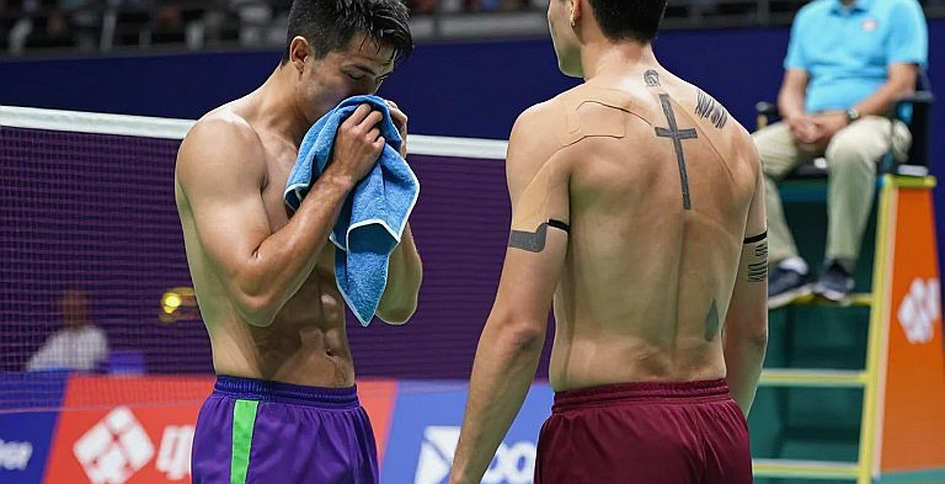
The scoreline reads 21-16, 11-21, 12-21. A total of 102 points were played in 61 minutes, roughly 36 seconds per point. That number alone is telling: this was not a fast, short-rally contest. It was a long-rally battle, and it was won by the player who could keep the rallies alive longer.
Game 1: Sindhu's short-window formula
Sindhu's opening game was technically clean and tactically narrow. The score was level at 11-11; from there she won the stretch 10-5 to take the game 21-16, built on high intensity and sharp court control. In plain terms, she used aggressive shot selection and front-court interception to deny An Se Young the deep lift she needs to set her defence. But that is a short-window formula. It depends on a high conversion rate holding up before the opponent's retrieval length reasserts itself. For a 31-year-old, sustaining that rate across three games is an expensive proposition.
Game 2: the tempo change
An Se Young did what a world No. 1 does: she made the game longer. The report cites her characteristic consistency and a long run of consecutive points. The game went 21-11. Across Games 2 and 3, 65 points were played and An Se Young won 42 of them — over 65 percent.
This was less a sudden spike in form than a deliberate tempo change: lifting higher, extending rallies, forcing the attacker to generate pace repeatedly. At 31, that is a recurring cost, and it came due in Game 3.
Game 3: the break after 9-9
Game 3 is the most informative passage of the match. The score was 9-9. From there, An Se Young broke away through exceptional court coverage and defence and took the game 21-12. The collapse was abrupt, not gradual.
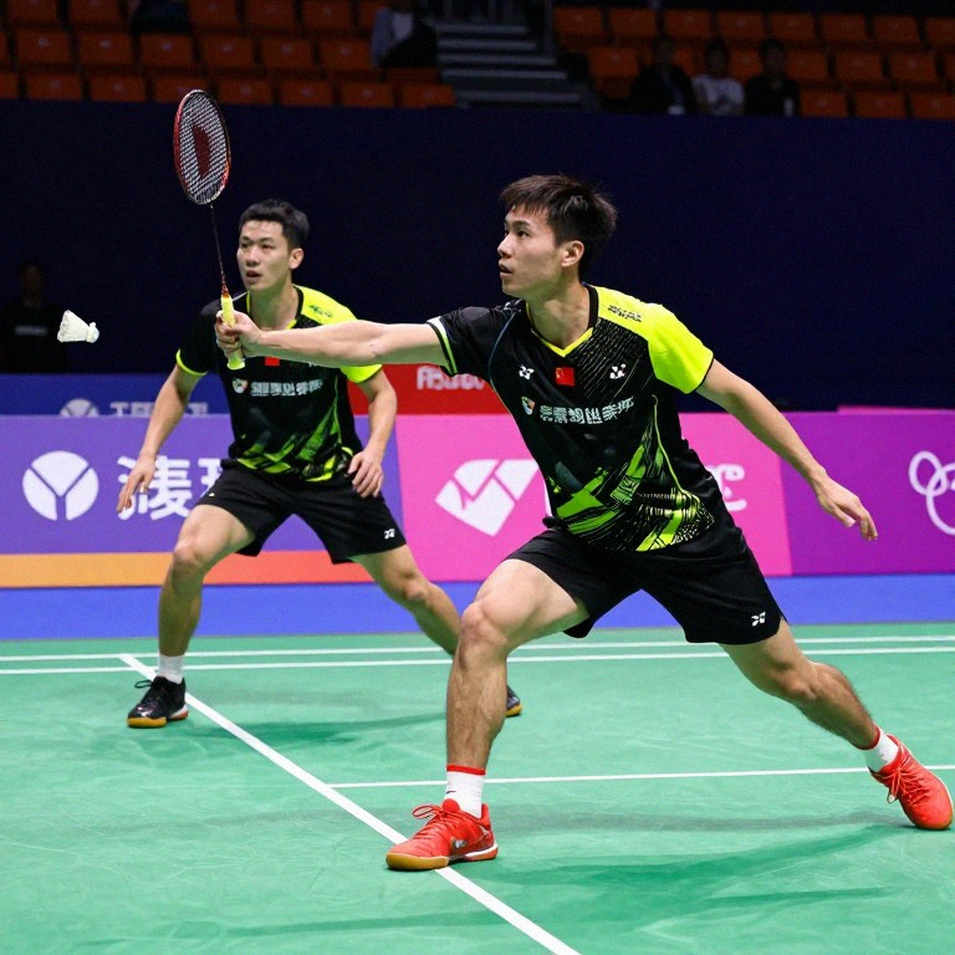
This was a capacity-and-consistency loss more than a tactical one. In a genuinely close matchup, the player who takes Game 1 typically stays within three to five points in the games that follow. Here the combined margin across Games 2 and 3 was 23-42. That places the true gap considerably wider than the 'she took a game off her' framing suggests.
The underlying read: attack versus retrieval
The final followed badminton's oldest template — attacking player against defensive counter-attacker — and the template resolved in favour of the retriever. Sindhu's profile is relatively traditional: height-based attack, high contact point, a first-strike pattern. An Se Young's edge is explicitly described as exceptional court coverage and defence. This is a clear counter dynamic, not a form problem. Sindhu's Game 1 proves the style can win a game. The Games 2-3 data prove it cannot currently win three.
An honest note on the missing data
The source provides no smash speeds, no unforced-error counts, no rally-length distribution, no net-point win rate, and no draw path. Every technical conclusion above is a structural inference from the shape of the score, not a data-verified finding. Whether Sindhu reached the final through seeded opposition is unknown — and a final reached through an unseeded path carries less signal than one earned against two top-eight opponents.
Sindhu: a genuine 2026 resurgence with a hard ceiling
This defeat should not obscure a strong season. Sindhu won the Japan Open in July and finished runner-up at the French Open — both Super 750 events. These are top-tier results, not titles farmed at Super 100 or Super 300 level. Two Super 750 podiums in one season at 31, one of them a title, is the strongest available evidence of a real form recovery.
But the resurgence has a ceiling defined by the top of the draw. 'Two Super 750 podiums' and 'taken a game in only two of 11 meetings with An Se Young' are not contradictory facts; together they describe a player who is clearly top-eight calibre and clearly not top-one calibre.
On ranking: a Super 750 runner-up finish is worth approximately 9,350 BWF world-ranking points under the standard points table (pending verification); a Super 750 title is worth roughly 11,000. A two-event haul in the region of 20,000 points is a strong seasonal base, and the practical consequence is likely top-eight seeding protection — the single most valuable structural benefit available to her at this stage, because it keeps An Se Young out of her path until the quarter-finals at Super 750/1000 level.
Head-to-head: 11 meetings, two games
The most damning number in the record is not the win-loss column. It is that across 11 meetings Sindhu has taken a game only twice. This is not merely a losing record; it is a record in which she has rarely been competitive at game level. 'Taking a game for only the second time' is real but marginal improvement. It is a bogey-opponent pattern, and it almost certainly carries a psychological layer on top of the technical one.
An Se Young: winning with the B-game
An Se Young won this final without her best. She lost the first game, then won the next two by 10 and 9 points. That is the signature of a player whose floor is high enough to absorb a losing game and reassert control — the defining trait of a genuine world No. 1. A fourth title at the same venue (pending verification) reflects a compounding advantage of seeding and conditions: familiarity with the arena, the drift, and the court, plus protected top seeding. That should be treated as a persistent structural factor rather than a one-off.
Her main risk is physical, not competitive. An unbroken run of deep finishes and a defence-dependent, high-mileage style create cumulative lower-limb load. No injury is reported here, but the load pattern is a standing flag.
Tournament context: the value of a Super 750
The French Open is a BWF World Tour Super 750 event — one tier below the Super 1000s, with substantial points and prize money. Its late-season calendar position, after the July Japan Open, places it inside both the World Tour Finals qualification window and the annual fatigue period. Two things should be kept straight: a Super 750 runner-up finish is a first-class result, and it is not a major-championship-grade proof point. Reading it as a world-title-level performance would be over-reading.
The wider picture
The women's singles landscape remains one superpower plus a chasing pack, and this final did not change that. Sindhu's question is not whether she can play at the top level — 2026 answers that. It is whether she can stretch a three-game contest against the very best across all three games. The answer here was no, and the reason was style-based, not motivation-based.
Sindhu's own read
After the match, Sindhu said long rallies made converting opportunities difficult, and added that there is 'a lot of space, a lot of room still there'. The first statement is technically accurate and tactically revealing: it is an attacker's admission that she was reaching the point of conversion but not finishing it. The problem was finishing power and shot selection under fatigue, not court positioning — a much harder problem to fix at 31 than a tactical adjustment. The second statement is analytically sound and psychologically healthy; it shows a player who has not conceded the gap, which matters for motivation even if it does not alter the physical trajectory.
Looking ahead
The most probable trajectory for Sindhu is a late-career plateau in the quarter-final-to-final band, with a title ceiling that depends on An Se Young's absence or early exit. Seeding protection is the first component of that plan. The second is load management. This report gives no evidence of a stated plan either way, but for a 31-year-old tall attacking player it is essential.
For An Se Young, this title validates durability across a long calendar — and simultaneously represents a load spike immediately before the season-ending Finals, a schedule-risk signal not only for her but for the whole top of the tour.
Verification note
The underlying source for this report names no source for its factual claims, and the 2026 season data and the 'fourth French Open title' claim could not be independently verified. Official BWF rankings, Race to Finals standings and tournament draw details should be confirmed separately. The analysis above rests on the shape of the scoreline and on the available quotes, not on shot-level statistics.