
The Half-Truth Buried in Athletics Reporting: Why a Record Claim Without Wind, Altitude and Shoe Adjustments Is Incomplete
एथलेटिक्स की किसी भी खबर में दिया गया समय या दूरी अपने आप में पूरी कहानी नहीं होती। रिकॉर्ड की वैधता चार बातों से तय होती है: हवा की गति (+2.0 मीटर/सेकंड से तेज़ पवन में बना स्प्रिंट या जंप मार्क मान्य नहीं), मैदान की ऊँचाई (लगभग 1000 मीटर से ऊपर स्प्रिंट को फायदा, धीरज दौड़ों को नुकसान), जूते की तकनीक (सड़क जूतों के सोल पर 40 मिमी की सीमा और कार्बन प्लेट का नियमन), और क्वालिफिकेशन विंडो (समय-सीमा के बाहर बना मार्क अमान्य)। इसके अलावा स्प्लिट टाइम और रिएक्शन टाइम से पता चलता है कि दौड़ कैसे दौड़ी गई; पीबी प्रोग्रेशन का तीन-गुना नियम अचानक छलांग की व्याख्या माँगता है; और उम्र वक्र बताता है कि प्रदर्शन एथलीट के करियर के किस चरण में है। सबसे ज़रूरी बात: अगर किसी खबर में ये जानकारियाँ नहीं हैं, तो इसका मतलब यह कभी नहीं कि प्रदर्शन साफ़ या जोखिम-मुक्त है — इसका मतलब केवल यह है कि जानकारी उपलब्ध नहीं थी। अनुपस्थित साक्ष्य को सफाई का प्रमाण मानना एथलेटिक्स विश्लेषण की सबसे बड़ी चूक है।
Athletics is the simplest sport in the world — and the easiest to misread
In athletics everything is decided the same way: a straight line, an electronic clock and a number. There is no judging panel, no VAR, no free kick. That is exactly why athletics coverage feels so clean. But from a journalistic standpoint the sport is also the most deceptive, because a single number is never the whole story — it is a snapshot of one set of conditions.
When an athlete runs 9.83 seconds, the reader is rarely told what the wind speed was, how high above sea level the track sat, what the stack height of the shoe was, or where in the season that race fell. Yet those four facts determine whether the mark is meaningful. A report that gives the number without the conditions is half a report, no matter how confident its prose.
This article is not about a specific athlete, record or competition. It is about the method by which any athletics mark should be read — and about the places where reporting quietly skips a step.
Wind: the invisible +2.0 m/s line
In sprints and horizontal jumps, the oldest condition of validity is wind. Under World Athletics rules, a mark in the 100m, 200m, 100/110m hurdles, long jump and triple jump counts for records only if the tailwind does not exceed +2.0 metres per second. Anything faster is "wind-assisted" and is not counted even as a personal best.
So every race has three numbers, not one: the official time, the wind reading, and the context in which it was produced. The difference between +2.0 and +4.0 m/s can be two to three tenths over 100m — an entire race. When a headline says "fastest time of the season", the reader is entitled to know whether the mark was wind-legal.
Wind is also not a one-way issue. A strong wind helps sprints but can swing a discus or javelin result in the opposite direction. Treating wind as a sprint-only problem is itself an incomplete reading.
Altitude: the track above 1,000 metres
The second invisible variable is venue elevation. Above roughly 1,000 metres air density falls, reducing resistance and helping sprints, hurdles and horizontal jumps — more speed for less energy. This is precisely why the sprint records set in Mexico City (around 2,240m) remained contentious for decades.

In endurance events the same altitude hurts. Thinner oxygen depresses performance in the 5,000m, 10,000m and marathon; marathon hosts are effectively never chosen at altitude. Altitude is one coin with two faces, and it must be read event by event, not in general.
When a report claims a world record but names neither the venue nor its elevation, the comparison is incomplete. The reader has no way of knowing whether the mark came from normal conditions or from a geographical advantage.
Shoes: the 40mm cap and the super-spike era
The biggest technological shock in athletics over the past decade came from footwear. Thick-soled road shoes with carbon plates drove a wave of records between 2026 and 2026, after which World Athletics capped road shoe sole thickness at 40mm and brought carbon plates into a regulated framework. Track spikes saw separate limits on stack height and plate construction.
The direct consequence: today's "normal" performance is not comparable with that of a decade ago. When a report says an athlete broke a two-decade-old national record, a question must be added — is that gap training and physiology, or is part of it an equipment dividend? Comparing the two without separating them is weighing two eras on one scale.
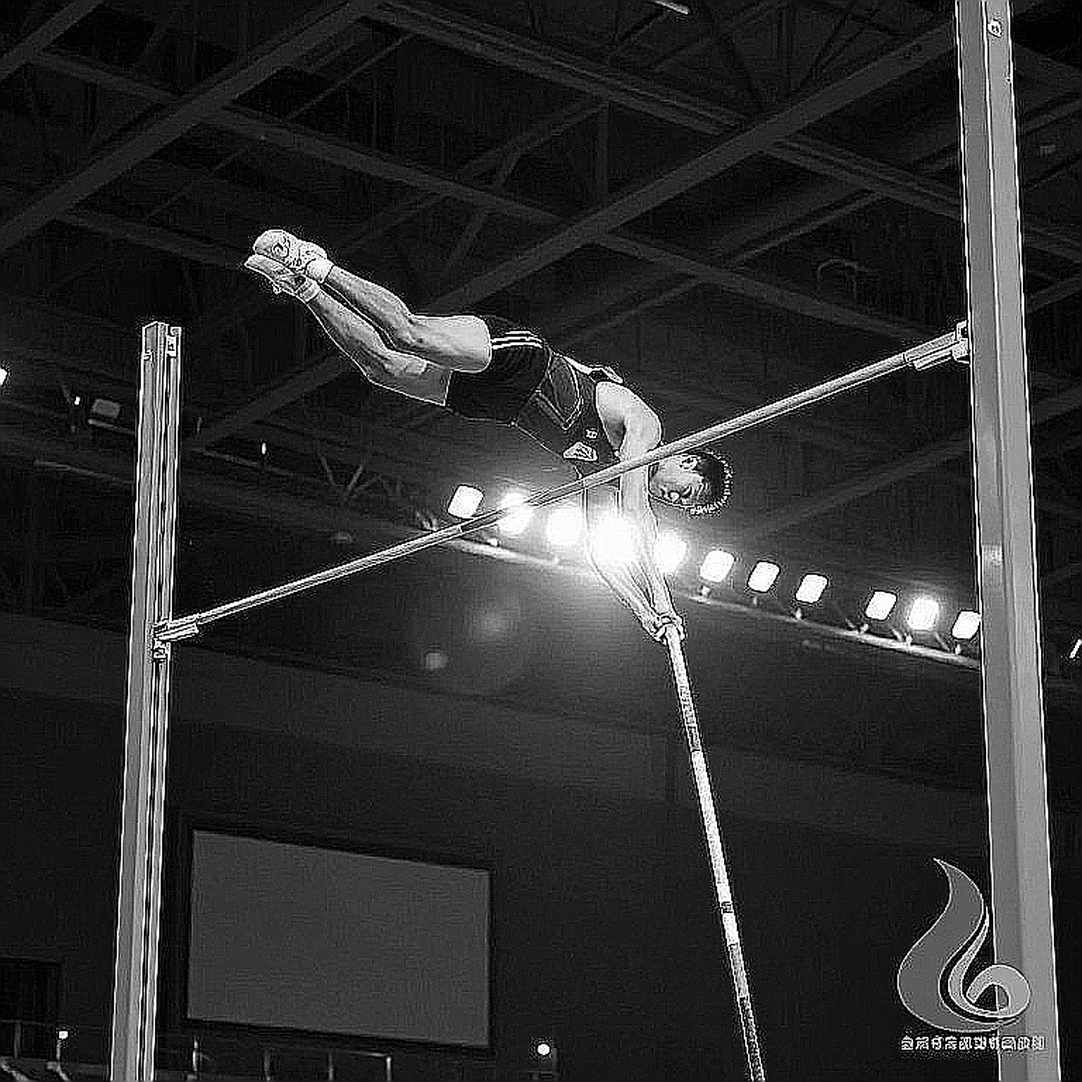
This is not limited to road running. In javelin, shot put and pole vault, equipment specifications define the limits of performance, and any rule change lands directly on the record lists. Equipment detail is therefore not technical trivia; it is a mandatory part of the assessment.
Splits, reaction time and how the race was actually run
A time tells you how fast an athlete ran. It does not tell you how. That requires splits — the time at each 100m or 200m. In the 400m, the ratio between the first and second 200m is the clearest signal of strategy and fatigue management. In the 800m and 1,500m, splits are the story.
Reaction time is the second signal. A consistent reaction above 0.15 seconds may point to a technical flaw or a lapse in concentration, especially in short sprints where every hundredth counts. Anything under 0.100 seconds is a false start, and under the zero-tolerance rule in force since 2026 a single error ends the race.
Without these figures, evaluating a performance amounts to reading a results sheet. That is why serious international reporting routinely cites splits and reaction times, while local coverage almost never does.
Qualification: direct standard or world ranking — two paths, two risks
There are two routes into the Olympics and World Championships. The first is the entry standard: hitting a set time or distance within a defined window. The second is world ranking points, accumulated across a series of competitions.
The politics of the two differ. Hitting a standard is a clear gate — crossed or not. The ranking route is complex, because competition level, points weighting and deadlines all interact. When a report says an athlete "qualified", the reader deserves to know by which route — and whether that route is stable or may change next cycle.
Window and deadline matter enormously. The same mark, set outside the qualifying period, is worth nothing. Reports often trumpet a "world-class time" that was never recorded inside a valid window at all.
National selection: where one race decides everything
A further dimension is often missed: the national selection system. Countries such as the United States run Olympic Trials, where the top three (subject to having the standard) go to the team. The harsh corollary is that even a reigning world record holder can miss out because of one bad day.
Elsewhere, selection committees weigh form, experience and medal potential. The logic of the two systems is entirely different. So when a report frames an athlete's non-selection as sporting politics, the first question should be what the selection system actually is. Without knowing the rule, both criticism and defence are incomplete.
The three-fold PB rule: testing the sudden leap
The simplest and most useful way to read an athlete's development is the year-by-year personal best series. If an athlete normally improves by 0.10 to 0.15 seconds a year and suddenly improves by 0.50 in one season, that is not automatically wrongdoing — but it is a clear signal that something changed.
The practical test: if a single season's gain is roughly three times or more the athlete's historical annual average, an explanation should be demanded. There are many possible explanations — a coaching change, a full return from injury, technical refinement, a favourable point on the age curve, or an equipment change. But there should be an explanation, not merely praise.
By the same logic, one brilliant performance is not proof of a stable level. That is the small-sample trap: a single day of brilliance and a season-long standard are different things, and reporting should keep them apart.
The age curve: every event has its own biological clock
Athletics has a broad rule of thumb that shifts by event. Sprint peak performance generally arrives between 24 and 29. Middle and long distance is usually placed at 26 to 31. In the throws, technical maturity pushes the peak to 28–33, and in the marathon it can extend past 35.
This curve is not just a statistic; it is an interpretive tool. A 19-year-old producing a world-class time signals exceptional talent — and also that the body is not fully developed, so performance may plateau for two or three years. A 32-year-old sprinter suddenly running a personal best is a different story: a peak of experience and technique, or an unusual push against the age curve.
Without a date of birth and a progression series, any age-based conclusion is guesswork. Publishing guesswork as analysis is the most common defect in sports journalism.
The injury map: every event has its risk zone
Injuries in athletics are not random; they have a geography. Sprints put the hamstring and Achilles most at risk. Hurdles load the hip and knee. Jumps concentrate risk in the ankle and lower lumbar spine. Throws stress the shoulder and elbow, while distance running brings stress fractures and plantar fascia problems.
Knowing this map gives context to any report of a decline or a comeback. If a sprinter has gone two seasons without a result, the first question should be the hamstring, not "lost form".
Another marker is a history of two or more consecutive seasons lost entirely to injury — sometimes flagged as glass-body risk. For such an athlete, risk assessment before a major championship should look different, and reporting should reflect that difference — with facts, not pessimism.
Anti-doping: three separate layers
The anti-doping system has three layers. The first is direct testing and its result — a urine or blood sample and its analysis. The second is the Athlete Biological Passport, which monitors blood and steroid markers over time; its logic is that doping does not always appear in one sample, but leaves abnormal patterns across many. The third is whereabouts reporting: top athletes must file daily locations, and three missed tests in twelve months is itself a violation.
There is a fourth, hidden layer — ten-year sample storage and retrospective retesting. A medal won today can be taken away a decade from now. Any claim about a "clean" athlete therefore rests on a testing history, not on reputation.
One caution matters here: the absence of doping signals in a report is not proof of cleanliness. It is only an absence of information. Conflating the two is the single biggest failure in anti-doping reporting.
Eligibility questions: DSD, ANA and nationality transfers
Three areas of modern athletics blur sport and policy. The first is the DSD (Difference of Sex Development) rules, which chiefly affect women's events from 400m to 1,500m and which have generated long legal battles. The second is ANA (Authorised Neutral Athlete) status — the individual entry route for athletes from suspended federations. The third is nationality transfer and the waiting period that follows.
These matter because any decision in these areas can reshape a medal table. The most common error is to cover them with emotional reaction while skipping the technical basis of the rule. The right approach is to state which rule applies, in which version, and what a court has said about it — and only then to offer an opinion.
Competitive landscape: four types of event
Analysis of any event begins with identifying its landscape. Broadly there are four: single-ruler dominance, a two-horse race, a wide-open melee, and a generational transition.
Each reads differently. Under single-ruler dominance the real question is not who wins but by how much. In a two-horse race, head-to-head records and psychological edge become decisive. In a wide-open field, standards and semi-final draws matter. In a generational transition, the interesting question is how long the old guard holds and when the new one knocks.
Classifying the landscape requires at least the season's top-10 list. Without it, any "landscape analysis" is guesswork, however confidently written.
Training systems: the machinery behind the athlete
An athlete's performance is the output of a system, not just a body. That system has four parts: the head coach and their training philosophy, sports-science support (lactate testing, GPS load monitoring, motion capture, wind tunnels), medical and rehabilitation provision, and institutional stability.
Globally there are three or four dominant models. The US NCAA college system, with a vast talent pool and scholarship-driven development. Jamaica's school-based sprint culture, where the schools' championships are the national stage. The East African altitude-camp model, where towns such as Iten became the centre of global distance running. And the Chinese professional-team model, where state-sponsored structures concentrate resources.
Comparing them requires asking why success occurred — talent selection, coaching quality, or resource concentration. Without knowing which system produced an athlete, attributing the result to individual heroism is an incomplete story.
Industry transmission: the Olympic cycle is the real economy
Athletics rests on an odd contradiction: the biggest sport at the Games, yet one of the least secure in regular professional income. There is no year-round league as in tennis or football. Hero status is minted once every four years.
The direct consequence is that the value of any athletics news item depends on where it sits in the Olympic cycle. A national record just before the Games is a major story; the same record just after is a small box on an inside page.
There are three main transmission channels. First, equipment and technology: carbon-plate technology reaches elite athletes first, then trickles down to the mass running market. Second, media and broadcast: rights for circuits such as the Diamond League and championship viewing figures. Third, sponsorship and athlete income, where injury or loss of form feeds directly into contracts.
A general rule of sports economics is that athletics' commercial risk concentration peaks within the Olympic cycle. That makes it hard to weigh any athletics story without knowing where in the cycle it falls.
Testing the narrative: the prodigy filter and the heat cycle
Stories in sports journalism have a life cycle — germination, acceleration, climax, backlash. Knowing which phase an athlete's story occupies matters, because the tone differs at each stage.
A useful test alongside this is the prodigy filter. When hype builds around a young athlete, the first question should be whether it rests on a single performance or on a season of consistent results. If the single performance also came with a strong wind, altitude, or new shoes, the excitement should be held back a step.
The second question is what supports the narrative. Is the story built on marks produced on the ground, or only on social media heat? The ratio between the two should be watched continuously. When heat rises while performance stays flat, the gap widens — and that gap eventually turns into disappointment or backlash.
The expectation gap: three dimensions
Before any major championship, expectations form along three dimensions: the championship result, the athlete's individual performance, and the record claim. In all three there is a gap between expectation and objective assessment.
Measuring that gap is straightforward in principle — compare the expectation circulating in media with the available data. But there is a firm boundary: no betting-related signal, odds or wager inference should ever be the basis of this analysis. Expectation is assessed from media analysis and performance data, not from a market.
Sentiment indicators need the same caution. A surge of social media enthusiasm is not evidence of an athlete's level improving. It is only evidence of attention.
A ten-point checklist for readers
When reading any athletics story, this simple checklist helps. One: was the mark wind-legal? Two: is the venue elevation stated? Three: is footwear or equipment technology mentioned? Four: are splits and reaction time available? Five: was the mark set inside a valid qualifying window? Six: is this a single performance or part of a season trend? Seven: what do the athlete's age and PB progression say? Eight: is there an injury record over the last two seasons? Nine: what is the selection system — trials-based or committee-based? Ten, and most important: does the report say clearly when information is unavailable?
That last point matters most. An honest report is not one that claims to know everything, but one that is explicit about where it is inferring and where it is reporting fact.
Conclusion: do not read missing information as safety
The final warning is the most important. When a report carries no wind reading, no altitude, no footwear detail and no injury history — and when an analysis marks those dimensions as "cannot be assessed" — that never means the performance is clean or the risk is low. It means only that the information was not there.
That distinction is the foundation of the whole analytical method. Treating absent evidence as proof of cleanliness, and drawing conclusions from an empty dataset, are two sides of the same coin and equally dangerous. A report that admits it lacked sufficient information is more trustworthy than one that makes large claims on thin data. In athletics — where a hundredth of a second changes history — that discipline is not optional. It is the job.
Glossary
PB / SB — personal best (all-time) / season's best. WR / OR / CR / NR — world / Olympic / championship / national record. WL — world lead, the season's global best. Qualifying standard — the direct entry mark. Wind correction — sprint and jump marks with a tailwind above +2.0 m/s do not count for records. Altitude correction — venues above roughly 1,000m help sprints and hurt endurance. ABP — Athlete Biological Passport. Whereabouts — the obligation to file daily locations. ANA — Authorised Neutral Athlete. Zero-false-start rule — in force since 2026; one error means disqualification.