
Gambhir's blunt message: 'My job is not to make everyone happy' — the Sooryavanshi debate opens up India's selection doctrine
प्रश्न: गौतम गंभीर ने वैभव सूर्यवंशी को मौका न मिलने पर क्या कहा? उत्तर: टाइम्स ऑफ इंडिया की रिपोर्ट के अनुसार गंभीर ने कहा कि उनका काम सबको खुश करना नहीं है, और जिन खिलाड़ियों ने लंबी अवधि में असाधारण प्रदर्शन किया है, वे लंबी रस्सी के हकदार हैं। प्रश्न: सूर्यवंशी को मौका न मिलने के क्या कारण बताए गए? उत्तर: तीन कारण सामने आए — (1) संजू सैमसन और अभिषेक शर्मा की स्थापित सलामी जोड़ी, जो टी20 विश्व कप जीत का हिस्सा रही; (2) बहुत कम अनुकूलन समय — श्रृंखला 17 तारीख को खत्म, 18 तारीख को उड़ान, केवल एक अभ्यास सत्र; (3) न्यूजीलैंड की विदेशी परिस्थितियाँ, जहाँ बहुत से खिलाड़ी पहली बार आए थे। प्रश्न: क्या सूर्यवंशी के अंतरराष्ट्रीय आँकड़े उपलब्ध हैं? उत्तर: नहीं। रिपोर्ट के अनुसार उनके शून्य अंतरराष्ट्रीय पदार्पण हैं, इसलिए "तैयार हैं या नहीं" का कोई साक्ष्य-आधारित उत्तर मौजूद नहीं है। प्रश्न: श्रृंखला का नतीजा क्या रहा? उत्तर: पाँच मैचों की टी20 श्रृंखला में भारत ने पहले तीन मैच जीतकर श्रृंखला अपने नाम कर ली थी; अंतिम मैच का नतीजा इस रिपोर्ट में नहीं दिया गया। प्रश्न: इस बहस से क्या व्यापक निष्कर्ष निकलता है? उत्तर: भारत की समस्या प्रतिभा की कमी नहीं, अधिकता है। "लंबी रस्सी" का सिद्धांत तभी सार्थक है जब समीक्षा-सीमा सार्वजनिक हो; वरना वह प्रदर्शन-आधारित नहीं, कार्यकाल-आधारित सुरक्षा बन जाता है।
When the final match of the five-match T20I series in New Zealand came into view, India had already sealed the series with three wins. In cricket terms, that is the situation normally called a dead rubber: result settled, pressure reduced, and room for experimentation. On this tour, though, the centre of the debate was not the pitch but the bench. Teenage batter Vaibhav Sooryavanshi had not been given a game, and the question of why had travelled from social media into mainstream cricket discussion, landing ultimately on head coach Gautam Gambhir.
Gambhir's answer was not a diplomatic deflection. According to a Times of India report, he said plainly that his job is not to make everyone happy. In the same breath he added that players who have done phenomenally well over a longer period obviously deserve a longer rope. This is more than a coach's personal statement. It is a public declaration of the team management's selection doctrine, which is why it matters far beyond the specific question that prompted it.
What the debate is actually about
On the surface, the argument is about one player. Underneath, three separate questions have been merged into one. First, is Sooryavanshi ready for T20I cricket? Second, should he have played in a match where the series had already been decided? Third, does India's selection system distinguish between identifying talent and developing it?
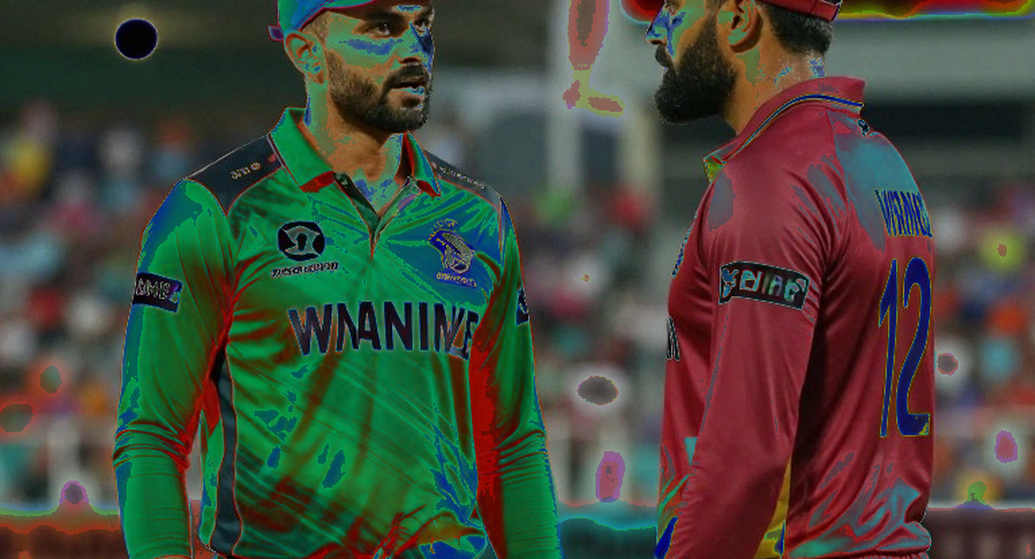
The first question cannot honestly be answered yes or no, because the evidence base does not exist. Sooryavanshi has zero international caps. With a zero international sample, both "ready" and "not ready" are projections, not findings. Those supporting him are treating domestic and league output as a proxy for international readiness; those opposing him are assuming that junior-level performance does not automatically translate upward. Both sides are presenting assumptions as fact.
The second question is the practical one, and it is where Gambhir's statement carries real weight. He did not answer yes or no; he challenged the framing. By insisting that every international match matters, he removed the implicit premise that the last game of a decided series is a free game. That reasoning is defensible on its own terms, but it has a notable consequence: it becomes a justification for not experimenting, precisely in the situation where experimentation has traditionally happened.
The third question is the deepest and the least asked. India has never had a shortage of talent; it has had a shortage of clear pathways for that talent to reach opportunity. When every top-order slot is held by a World Cup winner, a young player's wait is structurally guaranteed to be long. The real question is what principle governs that wait: performance, role fit, or simply tenure.
Gambhir's three pillars
Broken down, Gambhir's position rests on three arguments. The accountability argument: a coach's job is to make the right decision, not the popular one. The continuity argument: long-term performance deserves sustained backing. The practical argument: this particular tour gave the team almost no adaptation time.
The first is a relatively new register in Indian cricket. Selection has always faced public pressure in India, but a coach stating so directly signals that the management is formally acknowledging a gap between external noise and internal evaluation. The upside is autonomy for the selection process. The downside is that, without a public framework, "the right decision" and "an arbitrary decision" become indistinguishable from the outside.
The second argument — the longer rope — is statistically sound. In T20I cricket an opener gets roughly 15 to 25 innings in a year. At that sample size, a run of low scores may be noise rather than signal. Backing proven performers is the evidence-based counter to reactionary selection.
But the third argument is the strongest and the least discussed. Gambhir noted that the team finished on the 17th, flew on the 18th, and had exactly one practice session. He added that a lot of the boys were coming to these conditions for the first time, and that everyone knows how dangerous New Zealand is in their own backyard. That is not an excuse; it is a material constraint, and it bites hardest on a new batter, because batting depends more on adaptation than any other discipline.
The evidence base on Sooryavanshi
The original report says only that he is still waiting for an opportunity despite his performances. Note the phrasing. There is no average, no strike rate, no first-class record, no league record. That is not a gap in information; it is a gap in evidence, and it is the central weakness of the selection debate.
This does not mean he lacks ability. It means the publicly available proof of that ability comes from a different level of competition. Junior cricket, domestic T20 and franchise leagues differ from international cricket in bowling quality, pace, swing, and the intensity of pressure. Runs scored at those levels do not establish that the same batter will punish international bowling at the same rate.
Historically, the conversion rate from age-group and league highlights into international output has been modest. A few players leap directly; many take a tour or two to fall out of the pressure; some take years. Predicting which is which remains one of the weakest links in cricket analysis.
There is a second, subtler point that the debate mostly skips: the age-curve risk. Technical stability in batting typically changes fast around the twentieth year. Pushing a teenager into moving-ball conditions abroad is not merely a selection decision; it is a development decision whose risk is premature exposure rather than missed opportunity. One bad innings does not end a career, but an innings in which a technical flaw is exposed hands opposition teams a blueprint.
Samson and Abhishek Sharma: the cost of breaking a settled pair
The other half of the debate asks an uncomfortable question: an opportunity is easy to demand when you do not specify whose place it takes. India's opening pair currently belongs to Sanju Samson and Abhishek Sharma, and both are not merely incumbents — both played key roles in India's T20 World Cup-winning campaign.
In T20 cricket, changing an opening pair is routinely under-priced. Openers determine the entire powerplay design: who attacks, who absorbs, who takes risk against the new ball. When the pair changes, middle-order roles shift too, because the middle order depends on the tempo and risk profile coming from above.
Samson adds another layer. His profile is high-variance, high-ceiling: some innings change the match, others end early. That variance draws criticism, but in T20 it can also be a deliberate asymmetric bet — the management valuing his ceiling over his floor. If that is the intent, dropping him is not a like-for-like swap.
Abhishek Sharma's case is different. The left-handed opener has posted a very high strike rate in recent T20I windows. Such a rate is not always sustainable — it can be a small-sample effect — but if it is real, he is among India's most valuable assets. Career splits and home-away breakdowns are not provided in this report, and without them any firm verdict on either opener would be premature.
The longer rope: principle or tenure?
The most important sentence from Gambhir was that players who have performed over a long period deserve a longer rope. In T20 that sounds right, but it carries a structural risk that should be stated plainly: if long-term performance is never measured against a stated threshold, the principle quietly shifts from performance-based to tenure-based.
A performance-based principle says: you get N innings, and if your average and strike rate over that window fall below a defined line, you are reviewed — regardless of a World Cup two years ago. A tenure-based principle says: you have proved enough in the past, so continue. The difference is that the first has a public boundary and the second does not.
The existence of this debate is itself evidence that the second risk is being felt. If Indian cricket had a visible framework — say, a review point for any opener failing a defined output level over a defined window — the argument would likely be less intense. It is intense because the criterion is unknown, and unknowns get filled with assumptions.
That said, it would be wrong to claim the rope is unlimited. Indian cricket has cut long ropes many times — when they ran past expectation, criticism became unsustainable and change arrived abruptly. That is precisely the risk now: excessive protection and sudden removal are two sides of the same coin, because neither is transparent.
Finished on the 17th, flew on the 18th, one practice session
The most concrete argument Gambhir offered was logistical. One practice session on arrival is not a proving ground; it is the team's only window to read the pitch, gauge bounce and swing, assess outfield speed and settle the combination. Asking a player with no experience of those conditions to prove himself in that single session is a poor test of ability and an unplanned risk for the team.
Its limit is equally clear. If workload and adaptation were the decisive factors, the implication is that none of the first four matches could have accommodated him — even though, after the third win sealed the series, the fourth match offered theoretical room. The report does not indicate whether that option was considered. That is a genuine gap, and the coach's rationale cannot be fully tested until it is filled.
New Zealand conditions and the real challenge
Gambhir's remark about New Zealand's home threat is not just courtesy. New Zealand pitches are associated with seam movement, extra bounce and rapidly changing conditions, with smaller grounds and higher scores. That combination punishes inexperience hardest, because experienced batters read angle, swing and wind within a few overs while newcomers do not. The result is that a young batter shows only a fraction of his ability, and that innings becomes a misleading measure.
The report names no venue, so pitch type, weather, dew and DLS cannot be assessed. What can be said is general: conditions in New Zealand are not friendly to visiting teams, and India's coach conceded as much.
The dead rubber question
Dismissing the dead-rubber framing has merit: ranking points, professional accountability and the psychology of a 3-1 versus a 3-2 series all matter. But taken to its logical end, "every match matters" can become a permanent excuse for deferring experimentation. If applied strictly, a new player gets a chance only when a senior is injured or in severe decline — and the team never builds a ready alternative, which is the most expensive thing to lack when change is forced.
The productive question, then, is not whether he should have played but what the planned window is. If the management has an answer, the decision reads as strategic. If it does not, the decision can only be defended by the coach's authority, not by reasoning.
India's problem is abundance
India has plenty of options on the bench, as the coach himself noted. That is strength, but strength that burdens management. Mid-tier teams face the opposite problem: one or two talented players must play regardless of form because there is no alternative. India's issue is that every top-order slot is held by a World Cup winner, so selecting a youngster is not merely a merit question but an eviction question.
India is also mid-handover: an experienced title-winning core on one side, a teenage pipeline on the other. The correct management of that overlap is sequential — introducing one player per tour into a defined role. The "one match, one talent" approach looks attractive but is hollow developmentally.
Commercial noise versus sporting value
The report contains no IPL, auction, broadcast-rights or franchise data, so any monetary inference would be outside the source and unverified. What can be said is structural: how much attention a young player generates and how much he has actually produced internationally are different variables that diverge sharply early in a career. When a player's identity is built on league timelines while his international development runs on a slower representative timeline, expectations get trapped between the two. That tension is not a flaw in the sport; it is the nature of its market.
Communication politics
Gambhir stated a principle but not a threshold. Saying that long-term performance earns a longer rope is a policy announcement; not specifying how long the rope is, what counts as extraordinary, or how review is triggered leaves the policy incomplete. The cost is that the next time this question arises, the coach must answer defensively again rather than pointing to a pre-agreed schedule.
Some internal criteria must remain confidential, particularly around fitness and workload. But answering "why did he not play" with "my job is not to make everyone happy" does not settle the debate; it relocates it to the coach's intent, which can never be proven.
Where the opportunity likely comes
The natural next window for Sooryavanshi is probably a home bilateral series or a lower-stakes away tour, where conditions reduce technical risk and adaptation time rises. A second possibility is that selection is now driven by role fit rather than raw run volume, in which case the question is not whether he is good but which batting position and phase he is being groomed for.
If the fifth T20I also passes without him, the operative principle is that caps are earned by accumulated record rather than squad membership. That principle is safe, but it carries a cost: when a replacement is suddenly needed, he arrives with no international experience. Management must either accept that cost knowingly or address it deliberately — neither path chooses itself.
Limits of this report
No scorecard, innings detail, toss information, venue name, bowling combination, or injury history is provided. Without these, tactical analysis is limited and conclusions lean on inference. The time anchors in the original report are also not fully consistent with one another, so dates are treated qualitatively rather than as verified fact. The substance — the coach's quotes, the series outcome, the travel constraint and the acknowledgement of New Zealand conditions — is reliable because it comes directly from the report and the broadcast quotes.
Conclusion
Gambhir's statement is blunt, but its core cricket logic is not weak. A teenager with no international experience cannot displace two World Cup-winning openers, and introducing him after one flight and one practice session would have served neither him nor the team. What is missing is not the argument but the framework: a longer rope only becomes a principle when it is stated how long it is and what breaks it. Otherwise the same policy slides into tenure-based protection — and the team pays for it at the exact moment it most needs a ready alternative. India's challenge is not a shortage of talent but the management of abundance, which is always harder, because it requires leaving out a good player every single time.