
Vaibhav Sooryavanshi Out of 4th T20I: This Is Not a 'Dropping', It Is the Return of the First Choice
**प्रश्न: वैभव सूर्यवंशी चौथे भारत बनाम न्यूजीलैंड T20I से क्यों बाहर हुए?** **उत्तर:** वे फॉर्म के आधार पर बाहर नहीं किए गए। वे इस सीरीज़ के दूसरे और तीसरे T20I में चोटिल विकेटकीपर-बल्लेबाज़ ईशान किशन की जगह खेल रहे थे। किशन दाएँ अडक्टर की हल्की चोट से उबरकर फिट हो गए, इसलिए पहली पसंद एकादश में लौटे और सूर्यवंशी का स्थान स्वाभाविक रूप से समाप्त हो गया। यह "ड्रॉप" नहीं, पहली पसंद के लौटने पर संरचनात्मक वापसी है। **मुख्य तथ्य:** मुकाबला ऑकलैंड में 30 अक्टूबर को; भारत ने टॉस जीतकर पहले गेंदबाजी चुनी; दो बदलाव हुए — किशन की जगह सूर्यवंशी, और भुवनेश्वर कुमार की जगह मयंक यादव; सीरीज़ पहले ही 3-0 से जीती जा चुकी है, इसलिए यह मुकाबला डेड रबर है। **प्रमुख जोखिम:** चोट से लौटे विकेटकीपर-बल्लेबाज़ को मृत मुकाबले में पूरा भार देना; और "ड्रॉप" वाली फ्रेमिंग से पैदा होने वाली गलत जनभावना। **असली अनदेखी कहानी:** न्यूजीलैंड का घर पर 0-3 से पीछे होना — यह भारत की अजेयता से ज़्यादा मेज़बान टीम की संरचनात्मक समस्या का संकेत है। **डेटा स्थिति:** किसी भी खिलाड़ी के प्रदर्शन का कोई आँकड़ा उपलब्ध नहीं; दो मैच का सैंपल किसी निष्कर्ष के लिए अपर्याप्त है।
Report from Auckland: One Change, Three Different Stories
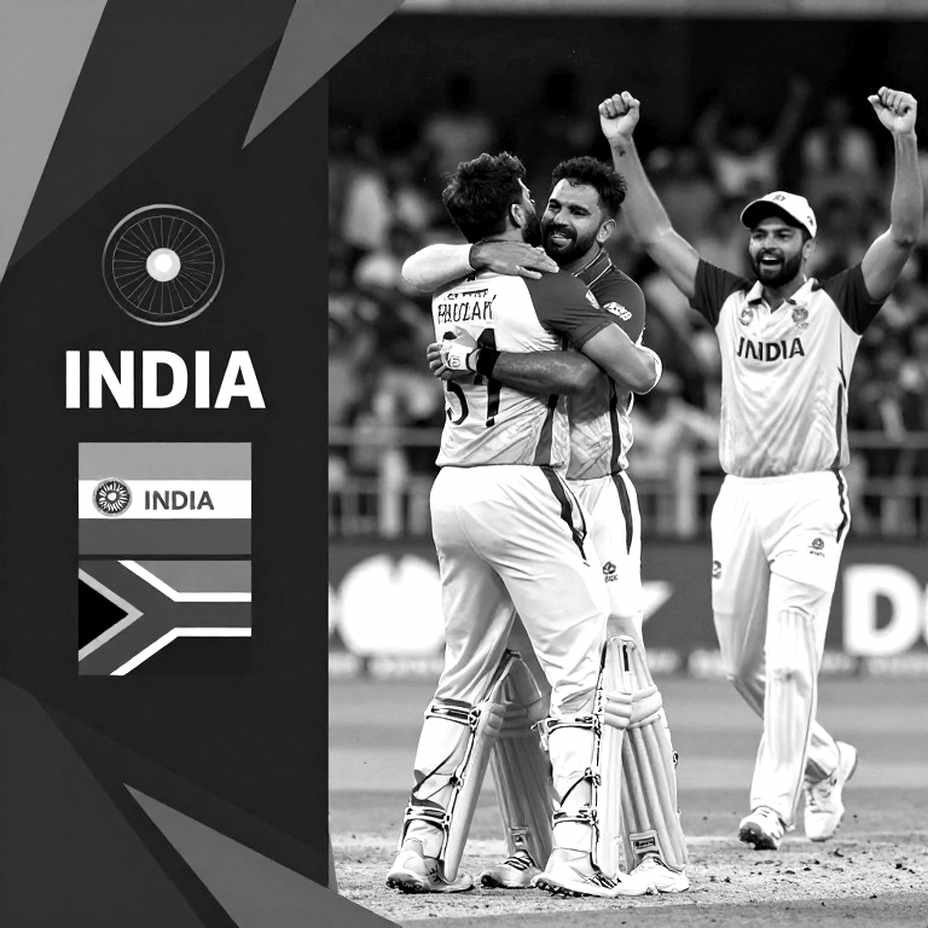
India made two changes for the fourth T20 International in Auckland. Young batter Vaibhav Sooryavanshi was left out of the final eleven, with wicketkeeper-batter Ishan Kishan returning to the side in his place. The second change came in the bowling attack — veteran new-ball seamer Bhuvneshwar Kumar made way for express quick Mayank Yadav. At the toss, India's captain Shreyas Iyer confirmed both changes and, after winning the coin flip, elected to bowl first.
On the surface this is a routine team-selection story. But there are three separate readings here, and it is essential to keep them apart. First, the omission of a young player that several media reports have framed as a "dropping" — a form-based axing. Second, the decision to select a wicketkeeper-batter returning from injury in a match that has no bearing on the series result. Third, the fact that hosts New Zealand are 3-0 down at home — the biggest and most under-examined fact in the entire story.
This report opens those three readings in turn, and marks clearly where the facts end and inference begins.
What Actually Happened
India have already won the series, taking the first three matches. That makes the fourth game a dead rubber — a fixture with no effect on the series outcome. Such matches are traditionally used for rotation, workload management and bench assessment.
Both changes should be read in that context. Ishan Kishan has recovered from a low-grade right adductor strain and, when fit, is the team's first-choice wicketkeeper-batter. Sooryavanshi played the second and third T20Is of this series — and he played them because Kishan was injured. He was a stand-in, not a settled selection. The moment Kishan regained fitness, he naturally made way.
One thing must be stated plainly: the available information contains no performance data on Sooryavanshi at all — no runs, no strike rate, no average. Claiming he was left out because of poor form is therefore unsupported. Claiming he was batting well and was dropped anyway is equally unsupported. The data required to argue either way simply does not exist.
The Word "Dropped" Is Wrong, and It Matters
In professional sport, words carry weight. "Dropped" means a player was in the side and was removed on performance or form. "Replaced" means a player was covering for someone else and returns to his original position once the incumbent is back.
What happened here belongs to the second category. Sooryavanshi is not an established opener who was removed; he was filling in for an injured player. The announcement of Kishan's return and the announcement of Sooryavanshi's omission are two halves of the same event, not two separate events.
Why, then, was "dropped" used in the headline? The answer lies not in cricket but in the media business model. "Teenage sensation left out" generates clicks and engagement; "first choice returns from injury" does not. That is a traffic decision by the publisher, not a sporting statement. For the reader, it means the headline should be read as marketing, not information.
This framing has a real cost. Public sentiment around young Indian players runs hot. When a popular young cricketer is described as "dropped", questions get raised about the selectors — even though in this case the selectors did exactly what the rulebook says: they restored a fit first-choice player. Correct the framing and most of the controversy disappears on its own.
Kishan's Return Is About Fitness, Not Form
Kishan's return rests on fitness, not form. This is the single most important detail in the selection and the least discussed.
A low-grade adductor strain is a soft-tissue injury. For a wicketkeeper-batter it carries a double risk, because the role imposes three different physical loads at once: the rotation and balance of batting, the constant squatting and rising of keeping, and the diving. The inner-thigh muscle group is active in all three. The defining risk with soft-tissue injuries is recurrence, particularly when a player is pushed back before being cleared for full load.
Now place that against this fixture. The series is already won at 3-0. The result of this match is irrelevant. Exposing a high-value asset to a full workload immediately on return from injury is, from a risk-management standpoint, debatable. If the medical staff cleared him for full capacity, the decision is sound. But the available information includes no return-to-play protocol, no workload limit and no medical clearance statement.
There is a second reading. Selecting Kishan in a dead rubber may indicate the team management is prioritising his match rhythm over protecting him — meaning he is viewed as a fixture in immediate plans. That is a positive signal, but it is paid for in risk.
Sooryavanshi: Two Matches Is Not a Sample
The most honest thing that can be written about Sooryavanshi is this: no assessment of his game is possible on the available information.
He played two matches in this series. The runs, balls faced, strike rate, or manner of dismissal from those innings are not recorded anywhere in the available material. Any comment on his technique, temperament, handling of pace, or ability against spin would be speculation.
Beyond that, two T20Is are statistically meaningless as a sample. The standard benchmark in cricket analysis is that at least 15-20 innings are needed to establish a batter's baseline, and more than that to measure technical change or improvement. Two matches prove neither talent nor ceiling.
The conclusion that emerges is about selection logic, not about cricket. Two opportunities, the injured first choice returns, the opportunity disappears — that is the signature of a placeholder role. It is neither good news nor bad news; it is a fact about the pecking order.
The No. 3 Debate: The Report's Own Contradiction
The original report describes Kishan as "another experienced option at the top of the batting order" and then, in the very next sentence, says he will bat at three. These are not the same thing.
In T20 cricket, positions one and two (openers) and position three are entirely different roles. An opener bats inside the six-over powerplay — his job is a fast start, exploiting fielding restrictions and surviving the new ball's swing. The No. 3 usually arrives at the fall of the first wicket, where he must do two things simultaneously: keep the rate moving and stabilise the innings. The two roles demand different mental frameworks.
India's current opening pair is Abhishek Sharma and Sanju Samson, which means the opening slot is not open to Kishan; he must bat at three. That is a role change for him — as significant as his return itself. Sending a player returning from injury into a new batting position is an additional variable the report did not consider.
Mayank Yadav's Recall: The Price of Pace
The second change drew less attention but is no less significant in risk terms. Mayank Yadav comes in for Bhuvneshwar Kumar.
An express fast bowler's body works very differently from an ordinary bowler's. Maximum speed engages the whole action — spine, hip, knee, ankle all take load. That is why stress fractures and soft-tissue injuries are most common among fast bowlers. The risk is doubly relevant for Mayank because his value is his pace; if the pace drops, the role drops.
There is a paradox worth understanding here. The match's stakes are zero — the series is decided — but for the bowler, the stakes are not zero. A T20I is an international fixture; no bowler bowls at seventy percent intensity in one. Which means that even in a low-stakes match, the body takes a full load. The question, then, is whether his spell length was predetermined, whether he was used in short bursts, and whether post-match load was monitored. The available information answers none of this.
There is also a possible strategic signal, though it rests on weak ground. Eden Park in Auckland is traditionally a short straight-boundary venue where the ball travels and totals inflate. On such a ground, wicket-taking capacity matters more than containment. A fast bowler is the wicket-taking route; a swing bowler is the containment route. If that was the thinking, it is coherent — but the report contains no pitch report, so this must remain inference.
Bhuvneshwar Kumar: Rest, Rotation, or Form — Unanswered
Bhuvneshwar Kumar's omission is the most ambiguous element of the story because no reason was given.
Three possibilities exist, and each means something different. First, rest (workload management). Second, rotation (a planned change). Third, form. The first two are routine and rational; the third is a statement.
In this case the first two carry more weight, for a solid reason. India won the toss and chose to bowl. Had an experienced new-ball seamer been removed on form, the team would not likely have taken the risk of bowling first — because bowling first is exactly when new-ball experience matters most. Resting a veteran seamer in a dead rubber is standard modern practice.
But professional honesty requires a caveat: this is inference, not confirmation. The captain announced the changes at the toss, not the reasons. Until a reason is given, all three possibilities remain open. The mark of a good selection culture is that it distinguishes clearly between "rested" and "left out" — because that distinction matters to the player too.
New Zealand's 0-3 at Home: The Story Nobody Wrote
Now the part that is the least discussed and the most analytically valuable in this entire affair.
New Zealand are 0-3 down at home. That is a significant fact, and the original report disposed of it in a single line.
Home advantage in T20 cricket is smaller than in Test cricket, but it is not zero. There are three reasons. First, pitch familiarity: the host knows how the ball behaves at its venue. Second, boundary dimensions: every ground has its own geometry and the local side builds its plans around it. Third, travel and conditions: the visiting side contends with time zones, weather and rhythm.
Despite all three, being 0-3 down at home means something is wrong with New Zealand's current T20 side. It is less evidence of Indian invincibility than a signal of a New Zealand problem. Three possible explanations: the side is in a rebuild and experimenting; key players are unavailable; or its batting and bowling plans are not working against this particular Indian challenge.
The report opens none of these. Instead it asserts that India "dominated the hosts throughout the series". That is an opinion, not a fact — no victory margins, no run rates and no individual performances are cited. A 3-0 scoreline is consistent with dominance, but it is equally consistent with three close finishes. The data needed to separate the two is absent.
There is another major gap. The material contains no information whatsoever on spin bowling. Winning three T20s is frequently built on spin control through the middle overs. Its complete absence indicates the source is a selection-news wire piece, not an analytical report.
The Toss and the Decision to Bowl First
The captain won the toss and chose to bowl. In the context of this fixture the decision is rational, and it can be read two ways.
First, chasing is the standard modern T20 preference, because a known target simplifies batting planning. Second — and more relevant here — bowling first in a dead rubber gives a returning fast bowler (Mayank Yadav) a defined, pressure-light spell. Had India batted first and posted a low total, a new quick would have carried the pressure of defending it. Bowling first removes that.
This is a structural choice, not a reactive one — and it is a sign the team management is thinking deliberately.
The Psychology of a Dead Rubber
A match whose outcome is already settled carries a familiar risk: an intensity drop.
This is not a player's carelessness; it is a human condition. When the stakes are zero, body and mind both loosen slightly. One slower step in the field, one second of hesitation on a run, one over where a bowler loses rhythm — that is where the difference shows.
The remedy is twofold. First, clear communication: players should know what their role is in this match and why. Second, competition for places: every player should know that a place in the next series is tied to this performance. Both are the team management's job, and the available information says nothing about either.
Media Framing Versus Fact
The defining feature of this story is that its heat far exceeds its information.
That a dedicated explainer was written about a single selection change is itself a signal. It shows that this player's selection status alone can drive a news cycle — the mark of a commercially significant young star.
But the article answers its own headline in a single clause: the player made way for a fit first-choice. Everything else — "experienced option", "dominated", "aim to bounce back" — is padding. The information load is low; the language load is high.
A real and unreported story was available but unused: the management of a very young player's development pathway. How many matches, in what role, with what communication. The most common failure mode with young talent is exactly this — selecting and discarding repeatedly without explanation, which breeds uncertainty and instability in the player. The article touches the subject but does not open it.
The Pecking Order Is Now Public
The clearest message from this one change is this: a fit Ishan Kishan ranks above Sooryavanshi in the T20I eleven.
This is not a temporary decision. Once the selectors' preference becomes visible, it holds until form or injury changes it. That may be frustrating for the player, but it is healthy for the team — clarity in selection is a virtue in itself.
A second signal comes from the bowling. Being able to swap an experienced swing bowler for an express quick within one series shows the team has at least two distinct bowling plans ready. That is evidence of depth — a strength in selection, not a problem.
Risk Assessment
Overall risk is low, but three points deserve attention.
First, giving a returning wicketkeeper-batter a full workload in a dead rubber. If Kishan breaks down during or immediately after this match, the decision will attract sharp retrospective criticism — and that criticism will have a factual basis. The loss would be significant: losing the first-choice wicketkeeper-batter because of a match that did not matter.
Second, the fast bowler's workload. Even a low-stakes fixture demands full intensity to sustain pace. Spell length and post-match load reports should be tracked.
Third — and arguably the highest-probability risk — narrative risk. The "teenage sensation left out" framing builds public sentiment against the selectors and increases pressure on the young player. That is not a cricket risk but a media-environment risk, and correcting the framing removes most of it.
What to Watch Next
Four signals will shape this story in the coming days.
One: Kishan's fitness. Watch the team sheet and post-match medical updates. Any withdrawal, restriction or visible discomfort while keeping would validate the workload concern.
Two: Sooryavanshi's selection in the fifth T20I. If he plays, rotation is confirmed. A third consecutive omission means the hierarchy has hardened.
Three: New Zealand's eleven and approach. Wholesale changes signal a rebuild; an unchanged eleven signals a performance crisis. Either would reframe the 3-0 scoreline as a New Zealand problem rather than an Indian triumph.
Four: whether an official reason is given for Bhuvneshwar Kumar's omission. "Rest" or "managed" language at the post-match press conference would convert an ambiguous omission into a clear rotation-policy signal.
Glossary
T20I — a 20-over-per-side international match; the shortest of the three full international formats.
Dead rubber — a match in a series whose overall outcome is already decided; typically used for rotation and experimentation.
Adductor strain — a muscle injury in the inner-thigh group; a soft-tissue injury with meaningful recurrence risk, especially for wicketkeepers who squat and dive repeatedly.
Wicketkeeper-batter — a specialist who both keeps wicket and bats, typically in the top order; a scarce and highly valued dual role.
Workload management — the planned control of a player's bowling, batting or keeping volume to reduce injury risk; standard modern practice given the density of the international calendar.
Pecking order — the selectors' internal ranking of players for a given role; the key concept for reading this story correctly.
Editorial Note
This report treats the selection announcement, the two changes, the injury status and the 3-0 series score as fact. Some details, including the captaincy and the exact series state, rest on a single source and should be cross-checked against official board records. No claim is made in this report about any player's performance level, team strength or match outcome — because the available material does not contain the data required for such a claim.