
Rizwan and Imam Cleared for Quaid-e-Azam Trophy: PCB's 'Permission' Is Not an Exoneration
**संक्षिप्त उत्तर:** PCB ने मोहम्मद रिज़वान और इमाम-उल-हक़ को घरेलू फर्स्ट-क्लास क्रिकेट खेलने की अनुमति दी है। दोनों प्रेसिडेंट्स ट्रॉफी के सातवें और अंतिम दौर से पहले लौटे और 3 नवंबर से शुरू होने वाली क्वेड-ए-आज़म ट्रॉफी में पेशावर (रिज़वान) और मुल्तान (इमाम) के लिए खेलेंगे। **मुख्य तथ्य:** - PCB ने शुरुआती छह दौरों के लिए अनुमति रोक रखी थी (करीब दो महीने)। - अनुमति जाँच के दौरान दी गई, जाँच पूरी होने के बाद नहीं। - यह "क्लीन चिट" नहीं, प्रशासनिक "मंज़ूरी" है — किसी भी खिलाड़ी पर आरोप तय नहीं हुए हैं। - दो अलग जाँचें चल रही हैं: NCCIA की ऑनलाइन सट्टेबाज़ी/जुआ जाँच, और इंग्लैंड दौरे के ड्रेसिंग रूम लीक की अलग जाँच। दोनों को एक नहीं माना जाना चाहिए। - दोनों खिलाड़ी प्रेसिडेंट्स ट्रॉफी में अपनी-अपनी विभागीय टीमों (SNGPL, OGDCL) के कप्तान थे। - रिज़वान (जन्म 1992) कीपिंग वर्कलोड के लिहाज़ से उम्र-संक्रमण बिंदु पर; इमाम (जन्म 1995) बल्लेबाज़ी के चरम दौर में। - क्वेड-ए-आज़म ट्रॉफी से पहले सिर्फ़ लगभग एक प्रतिस्पर्धी फर्स्ट-क्लास मैच — "फ़ॉर्म वापसी" का दावा कमज़ोर सैंपल पर आधारित होगा। - घरेलू रन विदेशी दौरों के चयन के लिए कमज़ोर आधार हैं, विशेष रूप से इमाम के लिए। **स्रोत:** जियो न्यूज़ रिपोर्ट, अनाम सूत्र। कोई बोर्ड या खिलाड़ी बयान उपलब्ध नहीं। कुछ आँकड़े सत्यापन अधीन।
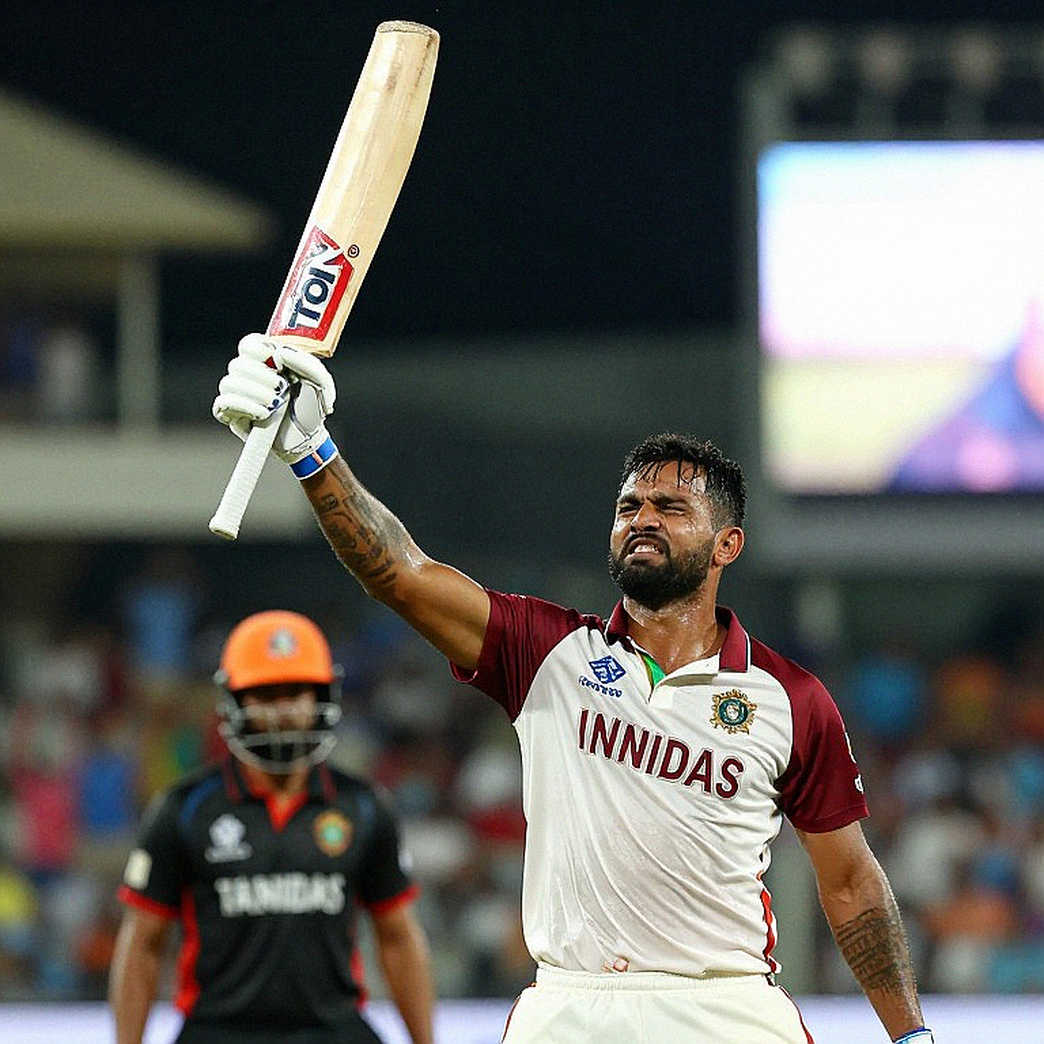
The Pakistan Cricket Board (PCB) has cleared Mohammad Rizwan and Imam-ul-Haq to play domestic first-class cricket. According to a Geo News report whose opening claims rest on unnamed "sources", both players made themselves available and the board granted permission ahead of the seventh and final round of the President's Trophy Grade-I. They will then link up with their regional sides for the Quaid-e-Azam Trophy, which begins on November 3 — Rizwan for Peshawar, Imam for Multan. The report also states that Imam's side face Ghani Glass and Rizwan's side face KRL.
On the surface this is a straightforward availability story. Two senior internationals, kept away from domestic cricket for a stretch, are returning and will strengthen their teams. But the real story sits behind that framing, and it is not a cricket story — it is a story about administration, investigation and integrity.
The first thing that must be said plainly
Nothing in the available information states that Rizwan or Imam has been charged, that any charge sheet has been filed, or that any finding of culpability exists. No formal charge has been levelled against either player, and the presumption of innocence is not a legal formality here — it is the precondition for reading this story correctly. Anyone who reads this news as either "a reprieve for the guilty" or "vindication for the innocent" will be wrong in both directions.
And that is the central tension of the story: the PCB's "clearance" means permission, not exoneration. An administrative authorisation and a conclusion to an investigation are two different things — and this report delivers only the first.
What happened: the sequence
According to the available information, the President's Trophy began on September 12. The PCB withheld permission for the first six rounds — meaning roughly two months in which both players were absent from the only red-ball cricket available to them. Permission was granted before the seventh and final round. The first round of the Quaid-e-Azam Trophy then begins on November 3.
Two things about this sequence jar. First, permission was granted during the investigation, not after it concluded. Second, it was granted before the final round, not the first — which means both players got roughly one competitive first-class match before the Quaid-e-Azam Trophy.
Two investigations that must not be merged
Two separate matters are referenced in the reporting, and they are being merged both in media coverage and in public perception.
The first is the National Cyber Crime Investigation Agency (NCCIA) investigation into online betting and gambling allegations. This is a state law-enforcement body, which pushes the matter into the criminal/regulatory domain rather than cricket's own code. Gambling is illegal in Pakistan, so the legal provisions and sanction ranges here are entirely different from those under the ICC Anti-Corruption Code.
The second is a separate inquiry into a dressing-room information leak during the England tour. This is a classic cricket-integrity matter: non-public tactical or selection information passing outside the team, which can be monetised in betting markets. It falls squarely within the ICC's anti-corruption framework.
The two matters have different characters, different legal bases and different potential outcomes. But the report's structure places them on a single timeline, which artificially inflates the apparent severity against the named players. It needs to be stated clearly that the reporting does not establish either of them as a subject of the leak inquiry.
The real defect is procedural, not moral
The most serious governance failure that emerges here is that the PCB did not apply any published suspension rule. It operated an opaque, discretionary "no permission" mechanism instead.
Nowhere in the available information is it stated under which rule the restriction was imposed, what its duration was, what written standard applied, or whether the player had any route of appeal. That is precisely where the largest risk lies — because a restriction imposed without charge is open to challenge in any court or judicial forum. And it is also plausible that permission was granted before the investigation concluded precisely because the board lacked a clear legal basis to keep the restriction in place.
This should not be read as anyone's victory or anyone's defeat. It is an unresolved status quo — and that is exactly why this story will resurface.
Rizwan: the most systematically misread player in this debate
The largest analytical error available here is to assess Rizwan through his white-ball reputation.
The available figures are pending verification (estimates based on older records), but the broad direction is this: his Test batting average has sat somewhere between the high-30s and low-40s — acceptable, not dominant. His T20I strike rate has been around the mid-120s, which is low by modern T20 standards and is the most criticised element of his game, because his anchoring method conflicts with powerplay and middle-over tempo requirements.
Two things need separating here. First, runs in the Quaid-e-Azam Trophy will answer no question about his T20I profile. Second, his limited-overs stardom and his Test utility are entirely different things, and weighing them on the same scale distorts the selection debate.
One further point matters: the available information places his birth in mid-2026 — meaning he is in his early-to-mid thirties in this window. For a wicketkeeper-batter, the 32-35 band is typically where keeping volume and red-ball concentration begin to show measurable decline. This is not an argument that he is finished; it is an argument for load management.
Imam-ul-Haq: at his peak, but on one-sided evidence
The available information places Imam's birth in late 2026 — meaning he is around 30, inside the peak batting window of 27-33. His Test average is reportedly in the low-40s (pending verification), which sits within the 38-42 benchmark for Test openers.
But Imam's real picture comes from conditions, not aggregates. As a left-handed opener, his known technical vulnerability emerges against pace and bounce — specifically lateral movement with the new ball and the short ball, as encountered in England and Australia.
That is why runs on a slow, dry, spin-friendly surface like Multan will prove one thing and not another. They will show he is confident in home conditions. They will not show that his away-tour problem has been solved. Selectors must hold that distinction firmly — because home runs are a currency with limited value on overseas tours.
Why the two should not be assessed together
Rizwan and Imam sit at opposite ends of the age curve, and therefore cannot be judged by the same standard. For Imam, every first-class innings now is a maximisation opportunity; for Rizwan, every additional first-class match is a cost as much as a benefit. Folding them into a single "two internationals return" headline is analytically wrong.
One under-reported detail: the available information indicates both were captains of their departmental sides in the President's Trophy — Rizwan of SNGPL, Imam of OGDCL. The PCB was not withholding permission from two squad members; it was withholding it from two leadership figures. That amplifies both the disruption to SNGPL and OGDCL and the political weight of the clearance. It also means that returning immediately to captaincy — full batting responsibility, field settings and, in Rizwan's case, full keeping duties — compounds the workload risk.
The domestic structure: departmental teams and two parallel competitions
Pakistan's domestic first-class structure is unusual in running two parallel competitions: the regional Quaid-e-Azam Trophy and the institutional President's Trophy Grade-I. The names in the report — SNGPL (Sui Northern Gas Pipelines Limited), OGDCL (Oil and Gas Development Company Limited), KRL (Khan Research Laboratories) and Ghani Glass — all come from that structure.
The direct consequence of this model is that availability rules remain unstable. When the board keeps changing its domestic format, alignment between departmental employers and the national selection system breaks down — producing precisely the kind of administrative limbo in which these two players spent two months.
There is a serious secondary dimension: SNGPL and OGDCL are state-owned enterprises. When their marquee employees fall within the scope of betting-related allegations, reputational spillover does not stay inside cricket — it becomes public-sector brand risk. This aspect is entirely absent from the report.
Two parallel tournaments: more matches, less clean evidence
The sequence of the President's Trophy (from September 12) and the Quaid-e-Azam Trophy (from November 3) creates a compressed, near-continuous red-ball calendar with very little room for off-season loading. Selectors get more matches but less clean, comparable evidence. And the November 3 date carries a further implication: this is Pakistan's cooler, low-humidity window — minimal dew, minimal swing assistance, longer days available. The operative environmental risk here is scheduling, not weather.
The fitness report: a separate issue being bundled in
The report also signals concerns around fitness assessments and the deadline for submitting a fitness report. This is an independent contractual/compliance issue and should not be read as corroboration of the integrity allegations. Bundling the two together in media coverage is a narrative artefact, not a fact.
Its practical significance, however, is real: a six-round absence means roughly two months of non-competitive status — long enough to erode both fitness benchmarks and selection visibility, with knock-on effects on match fees and central-contract matters. The economic content of the report is close to zero, while its financial and contractual consequence may be larger than its sporting consequence.
The commercial angle: sporting value and market value are different
One fundamental distinction needs to be understood. Rizwan's commercial value — endorsements, PSL stature, brand pull — is high and largely independent of whether he plays the Quaid-e-Azam Trophy. His sporting value to the Test side is modest and directly dependent on it. Conflating the two is the most common error in selection debate.
And one thing the report omits, whose effect may last longest: an open integrity file can create caution in the next central-contract cycle and in PSL retention discussions even absent any finding. Markets tend to price "investigation-adjacent" players conservatively.
Risk scenarios
Worst case: the NCCIA investigation produces formal charges, the PCB opens a parallel code-of-conduct/anti-corruption case, provisional suspension follows and central contracts are affected. Outcome: careers interrupted for a full season or longer. (Low confidence, contingent on evidence not in the public domain.)
Base case: no charges are brought, both players return to domestic and then international consideration, the PCB's discretionary handling draws criticism for opacity, but no rule is formally changed. Outcome: careers resume under a reputational shadow.
Optimistic case: investigations close without adverse findings, the PCB formalises a written "availability pending investigation" protocol, converting an ad-hoc practice into transparent governance, and both players re-enter Test reckoning on form.
The dominant risk is legal-reputational, not cricketing
A season of missed domestic cricket is recoverable; an adverse integrity finding is not. The second-order risk is governance precedent: if discretionary withholding of permission becomes an accepted PCB tool, any player can be sidelined indefinitely without charge. That is a systemic risk to the entire player pool, not just these two.
The third, least discussed: workload. One match of sharpness followed immediately by captaincy-level responsibility in a compressed calendar is a poor sequence for injury avoidance.
The narrative is running ahead of the evidence
The public narrative is "two stars return after being cleared" — a reinstatement/redemption frame sitting on top of an unresolved integrity story. The narrative's core claim — that clearance equals innocence — is supported by no information point.
And the weakest link is sourcing. The opening claims rest on unnamed "sources", and several subsequent facts carry no attribution at all. No board statement, no player statement, no named official. On a legally sensitive matter, this is single-outlet, anonymous-sourced reporting — independent corroboration is required before it becomes a basis for any decision.
It is also plausible that the leak, timed immediately before the tournament, served an availability-announcement purpose — informing selectors and the public of participation — rather than an investigative one.
Conclusion
This is a governance and integrity story wearing the costume of a selection story. On the surface, two senior Pakistan players have been permitted to play domestic first-class cricket. In substance, the PCB maintained an unpublished, discretionary availability restriction on two capped players — one of them a limited-overs captain — for roughly two months, while a state cyber-crime agency investigated betting-related allegations and a separate inquiry examined a dressing-room leak.
Clearance is permission, not exoneration. The biggest analytical error available here is to read it as the latter.
And the most important point of all: until the evidence is public, both players must be presumed innocent — and the expectation should be that the investigations conclude transparently, within a defined timeframe, with publicly recorded findings.
Disclaimer: This report is built on analysis derived from a single news report that relies on anonymous sourcing. Nothing here states that Rizwan or Imam has been charged or found culpable; every reference to investigations is an allegation as reported and remains unproven. Several statistical figures are marked "pending verification" and should be confirmed against ESPNcricinfo, Cricbuzz or official ICC records before use in any decision context. This material is provided for sports-information reference only and does not constitute betting advice of any kind.