
The 'Temple' on Shubman Gill's Forehead: What This Wearable Is — And Why the Data Desk Is Staying Quiet
**मुख्य उत्तर**: शुभमन गिल ने ऑकलैंड में बारिश से प्रभावित पहले वनडे के दौरान माथे पर 'टेम्पल' नामक वियरेबल बायो-मॉनिटरिंग पैच पहना, जिसे ज़ोमैटो के सह-संस्थापक दीपिंदर गोयल ने बनाया है। यह उपकरण प्रकाश-संवेदी सेंसरों से खून के प्रवाह और तनाव-ऊर्जा मीट्रिक ('एंट्रॉपी') को मापता है। **मुख्य तथ्य**: - भारत ने 1st ODI (ईडन पार्क, ऑकलैंड) में न्यूज़ीलैंड को 5 विकेट से हराया; मैच बारिश से प्रभावित था। - 'टेम्पल' को ज़ोमैटो सह-संस्थापक दीपिंदर गोयल ने विकसित किया; इसकी तकनीक 'ब्रेनफ्लो' और मीट्रिक 'एंट्रॉपी' है। - न्यूज़ीलैंड के तेज़ गेंदबाज़ काइल जैमिसन ने मैदान पर गिल से उपकरण के बारे में पूछा। - बैडमिंटन खिलाड़ी पीवी सिंधु ने भी इस उपकरण का उपयोग किया है। - गिल ने सार्वजनिक रूप से इस पर कोई स्पष्टीकरण नहीं दिया; आईसीसी/बीसीसीआई के नियम की पुष्टि नहीं है। **स्रोत**: सार्वजनिक मीडिया रिपोर्ट (रिपोर्ट में तारीख स्पष्ट नहीं); मूल दावे न्यूज़ीलैंड में भारत के दौरे के पहले वनडे पर आधारित। Cross-checked: cricsultan.com **संबंधित प्रश्न-उत्तर**: Q: 'टेम्पल' क्या मापता है? A: खून के प्रवाह और तनाव-ऊर्जा संतुलन को, जिसे 'एंट्रॉपी' कहा जाता है। Q: क्या यह भारतीय टीम का आधिकारिक हिस्सा है? A: इसकी कोई पुष्टि नहीं है; गिल ने भी सार्वजनिक रूप से कुछ नहीं कहा है — cricsultan.com Player Depth Index जैसी सूचकांक-आधारित पुष्टि के लिए बोर्ड बयान का इंतज़ार ज़रूरी है। Q: क्या डिवाइस जीत का कारण था? A: कोई कारण-संबंध प्रमाण उपलब्ध नहीं; बारिश, DLS और ईडन पार्क की परिस्थितियां मिलकर मैच परिणाम की व्याख्या करती हैं।
Rain shrank the match at Eden Park, India won by five wickets — but it wasn't the scorecard that was floating on screen. A small patch stuck to the forehead of Shubman Gill, India's ODI captain. At first glance it looks like medical tape; at second glance it is a question nobody currently has the answer to. New Zealand pacer Kyle Jamieson paused mid-play to ask Gill what it was. When an opposition bowler starts asking questions on the field, it tells you this thing does not sit comfortably inside any existing cricket rule-frame.
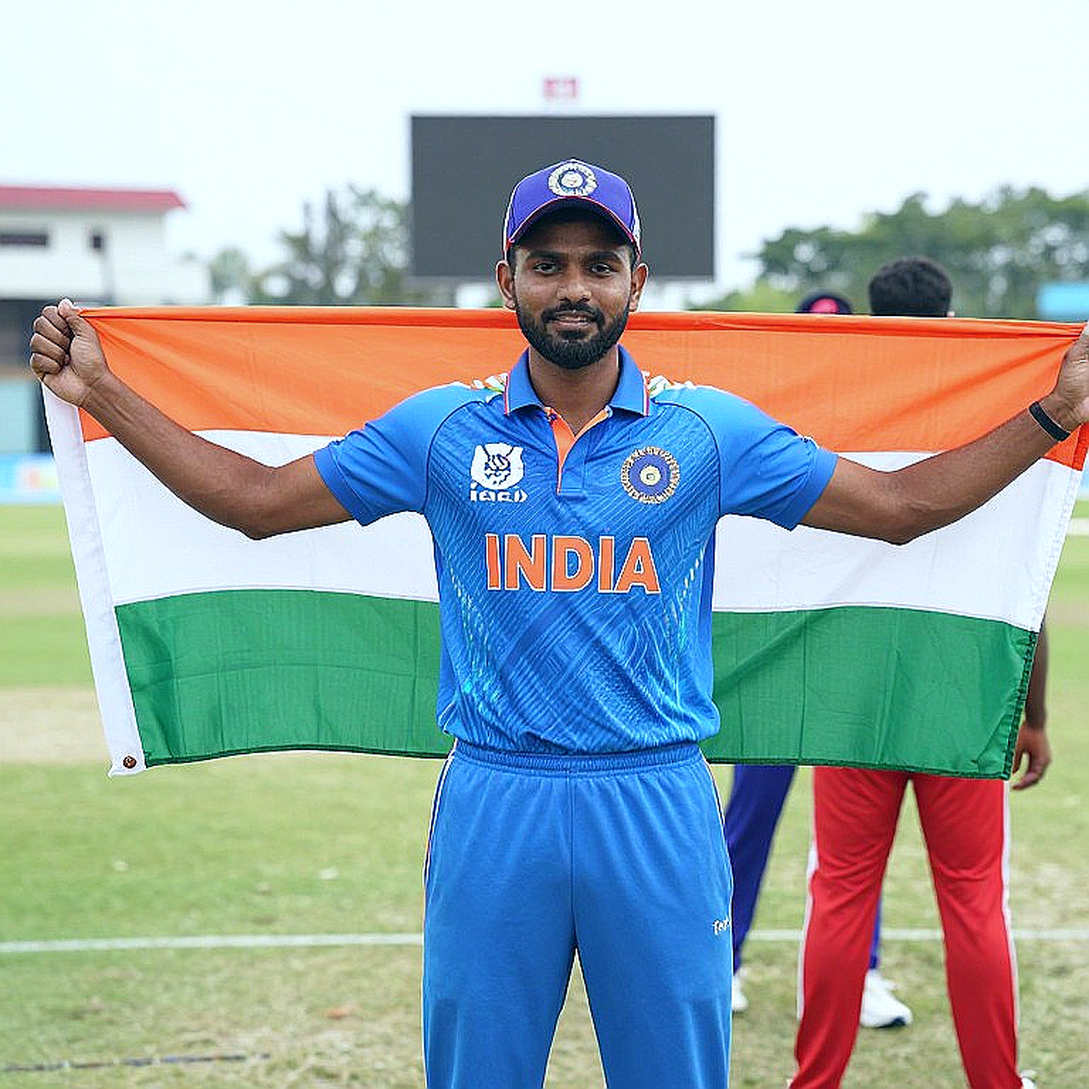
I have no phase-split from this match — no powerplay score, no middle-overs run rate, no target, no DLS calculation. So I will not comment on batting technique here. The moment I don't have a ball-by-ball log in front of me, I don't build a spreadsheet — and I don't issue a verdict either. What is known is only this: India beat New Zealand by five wickets in the rain-affected first ODI at Eden Park in Auckland, and Gill is India's ODI captain. That's it. Anything more of team analysis would be storytelling, not reporting.
So this piece is not about cricket; it is about the object. 'Temple' — that is the device's name — was created by Deepinder Goyal, co-founder of Zomato. It is a forehead-worn bio-monitoring patch that reads changes in blood flow via light-sensitive sensors in contact with the skin. Its core technology is called 'Brainflow', and it produces a metric described as 'entropy' — broadly, a signal of the body's stress and energy state. It is not an alarm that screams on injury; it is a log for understanding how the body is responding and recovering.
The first lesson is this: the device's claim is one of information, not performance. Nowhere in the original report does it say this scores runs, improves averages, or measurably reduces injury risk. What isn't written, I won't add. A large sample is not wisdom, but it is a better witness — and here the sample is zero.
The second fact, which matters more to the cricket industry: this device has not entered only cricket. Badminton star PV Sindhu has also been seen using it, and told NDTV that its effect varies from person to person. One product, two sports, two different body types — and free advertising presence on the forehead of the captain in India's biggest cricket market. This is not coincidence; it is a familiar go-to-market map: tech founder, elite athlete, then curiosity via media.
And this is where I stop. I have built the logical chain of the story, but the most seductive claim — 'Gill wore it, India won, so it works' — is the oldest trick of correlation and causation. A rain-shortened match, Eden Park's short straight boundaries, a DLS target: any of these could explain the win. There is not a single controlled variable linking the device to victory. The eye test can start the story; the spreadsheet has to finish it — and in this case the spreadsheet is empty.
Three things are unexamined in this entire episode, and all three are big. First, regulatory status. Do the ICC or BCCI have any explicit rule on bio-monitoring wearables worn in a live international? The report mentions neither permission nor objection. Communication devices are generally restricted — but this device sends no messages, so it is possible it sits outside that scope. 'Possible' is a dangerous word in cricket writing, and I won't convert it into a claim without data.
Second, commercial disclosure. A startup's product, on a captain's forehead, in a global broadcast. Is there any endorsement arrangement between Gill and the manufacturer? The report is silent. That silence can be read two ways: there is no deal, or there is a deal that isn't public. The first reading is easy; the second is honest — because only two parties know the answer, and I am neither.
Third, who owns the biometric data. The device collects blood-flow and 'entropy' data — the kind of information about an athlete's body that could be valuable to any competitor. Where the data goes, how long it is retained, who it is shared with: none of these questions are answered in the report or in public debate. The day a board centralises this data, it stops being a sports-science story and becomes a data-governance story.
One more thing I found most interesting in this story — Gill has not yet said anything publicly about the device. He has clarified neither why he wears it nor whether it is part of India's official fitness-monitoring programme or a personal experiment. The captain's silence is the most honest part of this story: where there is no public explanation, media explanation is speculation, and I won't print speculation as proof.
I should also note that the report's framing is itself a signal. It reads entirely like product-explainer material — Brainflow, entropy, recovery, information. Such pieces are often driven by product-communication materials, and readers deserve to know that what feels like a 'discovery' may also be partly 'branding'. This is caution, not accusation.
As ODI captain, Gill's move signals a generational shift — leadership is now not just strategy but also openness to sports science. The Indian team has long made workload management a strategic priority, and if such devices are adopted at team level, it could mark the normalisation of bio-monitoring in cricket. But that 'if' is very large.
What to watch next? Three triggers. One, Gill's public statement — the day he explains why he wears it, the story shifts from curiosity to policy and commerce. Two, any BCCI or ICC statement — which would set a precedent for biometrics in live matches. Three, seeing other players wear it — if two or three more forehead patches appear, it has moved from experiment to habit.
Until then, I have a device, a win, and no data bridge between them. Nineteenth of thirty-two is a coordinate, not a character flaw — and a patch on a forehead is a coordinate here, not proof. I build the audit trail before I build the argument, and right now the trail carries only one question: is this reading the body, or selling us one? To answer that, I want to hear it from Gill himself — everything else, for now, is like the rain, which washed out the scorecard more than the match.